Under the current framework, management plans for demersal stocks and deep-water red shrimp in the Strait of Sicily are due to enter a new phase from 2027. Scientific assessments will inform annual effort or catch limits, with particular implications for GSA 16 and the Sicilian fleets operating in these fisheries.

This summer brought the annual return of one of the most debated measures affecting professional marine fisheries: the mandatory temporary closure of trawl fishing.
The closures apply across Italy’s seas, with different periods for designated maritime areas, in accordance with the provisions of multiannual fisheries management plans.
The 2026 ministerial decree regulating Italy’s temporary trawl fishing closures refers to a 2024 directorate decree concerning national management plans and annual fishing effort reductions. These cover GSA 9, the Ligurian Sea and northern and central Tyrrhenian Sea; GSA 10, the central and southern Tyrrhenian Sea; GSA 11, Sardinia; GSA 16, the Strait of Sicily; GSAs 17 and 18, the northern, central and southern Adriatic Sea; and GSA 19, the western Ionian Sea.
This reference provides a starting point for examining the role of management plans in modern fisheries policy, from setting objectives to putting them into practice.
How fisheries management plans developed
In Italy, the innovative Law No 41 of 1982 introduced three-year planning for fisheries measures, with the rational management of marine biological resources as its primary objective.
The same year saw the adoption of the United Nations Convention on the Law of the Sea, UNCLOS, which entered into force in 1994. The Convention requires states to cooperate in conserving and managing the living resources of the high seas. Article 118 specifically provides for cooperation in establishing regional or subregional fisheries organisations.
Among the regional fisheries management organisations, the one most directly relevant to the Mediterranean is the General Fisheries Commission for the Mediterranean, GFCM.
The Commission adopts binding recommendations on conservation and management measures for its contracting parties. Their purpose is to ensure the long-term sustainability of fisheries in the Mediterranean, the Black Sea and connecting waters, protecting both marine living resources and the sector’s economic and social viability.
To address regional and local conditions, the GFCM uses geographical subareas, or GSAs. Stock assessments and the resulting management decisions are organised around individual GSAs or groups of subareas.
For more than two decades, these areas have provided a geographical framework for measures such as catch limits, fishing closures and stock recovery plans.
A significant milestone was the 2017 Malta MedFish4Ever Ministerial Declaration. Representatives of 16 Mediterranean countries, together with the European Commission, reaffirmed the central role of FAO and the GFCM in supporting cooperation on sustainable fisheries and aquaculture.
The declaration called for full implementation of GFCM management measures and its medium-term strategy for 2017–2020. It also set out a ten-year commitment to improving Mediterranean fisheries through stronger management and governance, with multiannual plans among its principal commitments.
In 2021, the GFCM adopted its 2030 Strategy for sustainable fisheries and aquaculture in the Mediterranean and the Black Sea. Built around five targets, the strategy provides a shared vision and guiding principles for safeguarding fisheries and aquaculture as pillars of coastal livelihoods.
The European Union’s role
The European Union became a contracting party to both UNCLOS and the GFCM in 1998, through two separate decisions. It therefore took on the responsibility of coordinating marine resource management with the other contracting coastal states.
As a GFCM member, the EU must incorporate the Commission’s conservation and management measures into Union law so that they apply to EU fishing vessels.
Two regulations are particularly relevant to this framework.
Regulation (EC) No 2371/2002 reformed the Common Fisheries Policy, strengthening its approach to long-term management. It provided for management and recovery plans alongside technical measures and rules governing the allocation of maximum fishing effort, with prior consideration of their likely economic and social effects.
That regulation was subsequently replaced by Regulation (EU) No 1380/2013, which provides the current basic framework for the Common Fisheries Policy.
Regulation (EC) No 1967/2006, meanwhile, established provisions for fisheries management plans in the Mediterranean. These include EU-level plans for specific fisheries operating wholly or partly beyond waters under member states’ sovereignty, as well as national plans for certain fishing gears, including trawls, within territorial waters.
Within this broader framework, the GFCM’s recommendations on multiannual management plans have particular importance for the fisheries operating in the different GSAs.
GSA 16 and the challenges facing Sicilian fleets
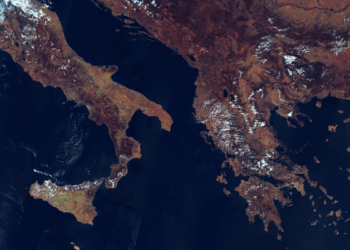
To examine the practical implications, I will focus on one of the most complex, and perhaps most debated, subareas affecting Italian fisheries: GSA 16, off Sicily’s southern coast.
Two major trawl fishing communities operate in this area: Mazara del Vallo and Sciacca.
Since 2018, the GFCM has adopted recommendations establishing and updating management arrangements for GSAs 12 to 16, covering the Strait of Sicily. Separate plans address demersal stocks and deep-water red shrimp, specifically giant red shrimp and blue and red shrimp.
The amendments adopted in 2025 extended the transitional period through 2026. The plans therefore follow a two-stage approach:
- A transitional phase, covering 2023–2026, during which catch limits, fishing effort measures where applicable, and spatial and temporal measures are implemented.
- A subsequent phase expected from 2027, informed by new scientific data and stock assessments from the GFCM’s Scientific Advisory Committee on Fisheries, SAC.
The longer-term management framework extends towards 2030. Annual measures are to be determined using updated scientific advice: effort or catch limits for the principal demersal stocks, and annual catch limits by species for deep-water red shrimp.
At national level, Italy has adopted management plans for GSA 16 since 2011, through ministerial decrees implementing international provisions. These apply to trawlers registered in the Sicilian maritime districts concerned.
The plan was updated in 2018, approved alongside those for the other GSAs by the European Commission in 2019, and subsequently subject to extensions, including provisions adopted in 2024.
The fleet segments covered by the plan were selected on the basis of their contribution to production. The threshold was at least 2% of the total production of one of the species concerned: deep-water rose shrimp, European hake, red mullet and giant red shrimp.
These species were selected because of their importance in terms of both the volume and economic value of landings.
For demersal fisheries, the plan’s stated objective is to improve spawning stock biomass by reducing exploitation rates. Using European hake and deep-water rose shrimp as reference species, it seeks to bring fishing pressure into line with the sustainability standards of the Common Fisheries Policy.
Maritime boundaries and fair treatment
Another issue that deserves careful consideration is the geographical extent of the GSAs. Their boundaries can extend beyond territorial waters, across areas with different legal regimes, including exclusive economic zones and the high seas.
For Sicilian fishing fleets, including those operating in GSA 16, fisheries management therefore intersects with the geopolitical questions surrounding exclusive economic zones, EEZs, in the Mediterranean.
UNCLOS provides the legal framework for these zones. Their declaration and delimitation by North African coastal states have raised concerns for Sicilian operators, a subject addressed in an earlier analysis.
Italy’s diplomatic relations with Algeria, Tunisia and Libya are consequently relevant to questions of fishing access and maritime jurisdiction. The relationship between these issues and GFCM fisheries management also deserves attention.
Although maritime delimitation falls within the framework of international law, its practical consequences extend to access to fishing grounds and the exploitation of marine resources.
The development of multiannual management plans demonstrates the international community’s substantial efforts to achieve shared, sustainable management of fish stocks, supported by advances in science and technology.
Those efforts must also take account of their economic and social effects. Management measures should avoid excessive negative consequences for the fishing sector and, above all, the risk of unequal treatment between fleets from different Mediterranean states.
In my view, that risk has yet to be fully addressed. Much remains to be done to ensure that the commitment required to achieve sustainable fisheries is shared across the region.