


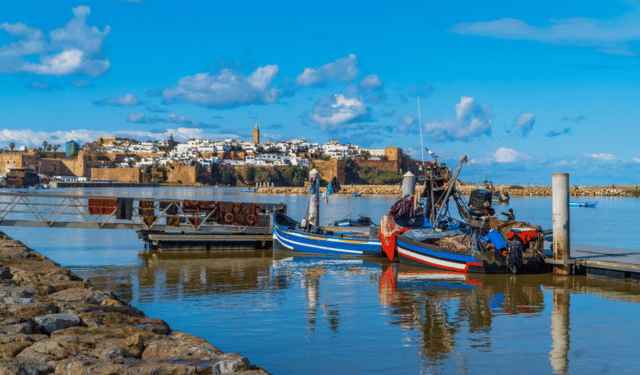

European fishing ports are once again looking south with cautious optimism, as negotiations for the EU–Morocco Fisheries Agreement 2026 officially resumed yesterday, Tuesday 27 January 2026, in Rabat. The first long-awaited technical negotiating round between the European Union and Morocco marks the beginning of a race against time to restore operational certainty for more than 120 EU vessels, which have remained idle since the expiration of the previous protocol.
The meeting in Rabat represents more than a routine diplomatic step. It signals the concrete reopening of a strategic dossier that directly affects the future of EU fishing fleets operating in the Atlantic waters off the Moroccan coast.
Green Light from Brussels
The decisive acceleration came only a week ago. On 20 January 2026, the Council of the European Union formally granted the European Commission the mandate to negotiate a new Sustainable Fisheries Partnership Agreement (SFPA).
This legal step finally unlocked a stalemate that had lasted nearly three years, following rulings by the Court of Justice of the European Union in 2024, which cast doubt on the validity of previous agreements due to unresolved issues related to Western Sahara.
The strategy now under discussion follows a dual-track approach: securing a long-term framework agreement while, at the same time, defining an operational protocol capable of guaranteeing access to Morocco’s Atlantic waters in full compliance with updated international legal requirements.
The Core Dispute: Fees Versus Sustainability
The negotiating table opened yesterday is far from straightforward. Morocco has entered talks with a clear request: an upward revision of access fees. Rabat points to global inflation and rising maritime surveillance costs to justify an increase in financial compensation, which under the previous protocol exceeded €100 million.
On the opposite side, the EU delegation is placing strong emphasis on green conditionality. Brussels has signaled its willingness to maintain financial commitments, but only if funds are strictly tied to robust resource management rules and full catch traceability. This balance is also seen as strategically necessary to counter growing competition in the region, particularly from Russia, which has recently strengthened its maritime presence in the area, limiting room for maneuver for EU fleets.
What Changes for Industry Operators?
For vessel owners and seafood supply chain companies, the 2026 protocol is expected to introduce several structural innovations:
-
Digitalisation: real-time satellite monitoring and next-generation electronic logbooks.
-
Origin labelling: reliable mechanisms to certify catch provenance, following the model successfully introduced in the EU agricultural sector in late 2025.
-
Blue Economy cooperation: a broader partnership extending beyond fishing activity to include scientific research and ecosystem protection.
The Roadmap Ahead
If the technical discussions launched yesterday in Rabat proceed smoothly, the objective is to sign the new protocol by spring 2026. This would allow the first fishing licences to be issued in time for the summer 2026 season, finally bringing Moroccan Atlantic seafood back to European markets under clear, verifiable standards of sustainability and legality.
For more insights on the future of Italian and European fisheries and the blue economy, follow ongoing coverage and analysis on Pesceinrete.