



The message shared on social media by the President of Oceanus, published on January 2, is more than a personal reflection. It opens a collective question and sparks a broader debate that runs through the entire seafood sector: what future are we building for the Mediterranean, and for those who depend on the sea for their livelihood?
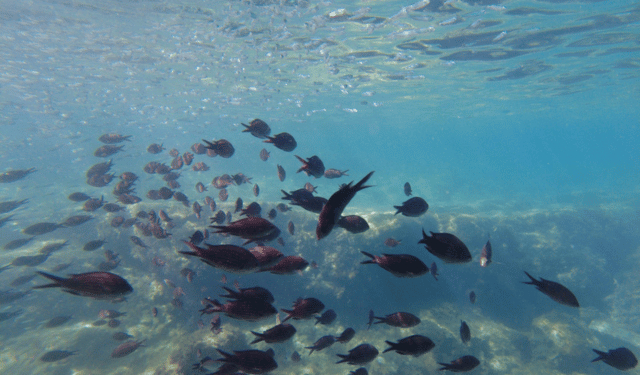
There is a strange silence beneath the surface of the water, a silence immediately recognized by those who live by the sea. The Mediterranean’s breath is turning into a whisper. There is less fish. Fishermen returning to port say it, the data confirms it, and those who, like us at Oceanus, have observed and protected the sea for decades feel it deeply.
Today, fishing is facing an invisible storm. On one side lies the need to protect nature; on the other, the necessity of putting food on the table. This tension is slowly wearing down coastal communities.
The ecological transition cannot be reduced to a list of prohibitions or bureaucratic deadlines. “Do not touch” is no longer enough. We must care. Nature needs to be regenerated.
Regenerating the sea is not an option. It is the only choice left. The tools exist. The funding exists. Yet too often they remain blocked. Every day lost is an opportunity that will not return.
Fabio A. Siniscalchi – President of Oceanus Fabio A. Siniscalchi
Read at the beginning of the year, these words carry the weight of both hope and responsibility. Because the decline in fishery resources is no longer a future scenario: it is already shaping work conditions, coastal economies, and the stability of the supply chain.
A reflection concerning the entire sector
Siniscalchi’s message resonates with a growing awareness among operators: fisheries management in the Mediterranean has so far focused primarily on containment. Less fishing effort, more constraints, more controls. Necessary tools, but insufficient if not paired with actions capable of rebuilding the biological foundations of the sea.
Without this second pillar, the transition is perceived as unbalanced. Protection advances, while natural productivity continues to decline. And when the sea produces less, economic pressure increases across the entire value chain.
From limits to perspective
It is here that the concept of regeneration becomes central. Not as a rhetorical term, but as an operational approach. Regeneration means actively restoring ecosystems, habitats, biodiversity, and the reproductive capacity of fish stocks.
Without this vision, regulation remains defensive and fails to build a future. With regeneration, protection stops being merely a constraint and becomes a medium-term investment.
Time as a critical factor
Another often-overlooked element emerges clearly: time. Financial resources and tools exist, but are frequently stalled by administrative delays and postponed funding calls. For the sea, lost time cannot be recovered. Every season without intervention reduces the chances of biological recovery.
This makes the issue urgent and non-deferrable. It explains why the message released at the start of the year sounds less like a reflection and more like a call for concrete decisions.
A hope that demands action
Taken as a whole, the President of Oceanus’ reflection does not merely describe a problem. It challenges the current Mediterranean management model and highlights the need to complement protection with a real regeneration strategy.
Protection remains essential. But without restoring the sea’s vital capacity, the supply chain remains exposed, fragile, and without a clear horizon. January 2 thus becomes a symbolic date: the beginning of a year that asks the sector, institutions, and research to move from emergency management to the construction of balance.
Because giving the sea its voice back means giving a future to those who live from it every day.
For more insights on the future of Italian fisheries and the blue economy, follow ongoing coverage and analysis on Pesceinrete.