


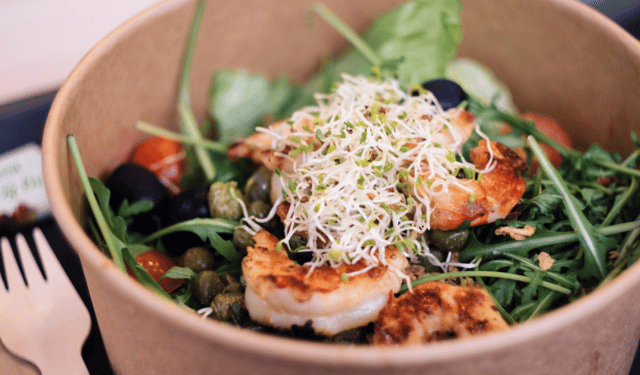

Asian influence on seafood consumption in Italy is shifting the benchmark toward something very concrete: fish must no longer be just good, it must be designed to perform in fast, repeatable consumption contexts with high expectations of consistency. In 2026, the difference between a product that merely “exists” and one that truly “moves” is measured in details that are anything but secondary for the supply chain: cut, size, stability, packaging, and performance in recipes.
For years, the debate stopped at the most visible label: raw fish. Today, raw is no longer the sole driver but rather an accelerator of standards. The real change is that consumers now expect a consistent experience every time—whether they buy at a deli counter, eat out, or order food. This is rewarding a concept of seafood that is closer to “precision industry”: uniform portions, single-serve grammages, consistent texture, and a flavor profile that is deliberately constructed.
This is where umami comes into play—not as a buzzword, but as a taste register that makes fish immediately “readable.” Marinades and glazes, sweet-salty components, fermented or smoked notes, sauces and seasonings that enhance fat content and juiciness: these are levers that simplify choice and, above all, encourage repeat purchases. Seafood increasingly becomes part of a ready-to-use system, where companies sell not just raw material but predictability of results.
This demand puts pressure on processing. In foodservice and ready-to-eat formats, what matters is performance over time: color stability after hours in refrigeration, structural integrity in bowls or trays, marinade retention without excessive drip, odor control in packaging, and juiciness maintained after transport. Here, decisions about portioning, cut selection, temperature management, and packaging become integral parts of the product itself, not accessories. Modified atmosphere packaging, film barriers, the balance between oxygen and stability, and compatibility between sauces and protein matrices are variables that determine whether a reference becomes a category or remains a trial.
The need for trust is also increasing, because the culture of lightly cooked or raw consumption automatically raises expectations around guarantees. There is no need for alarmism—only acknowledgment that when a product is intended for raw or near-raw consumption, the supply chain must be able to manage and communicate the correct steps, from processing to consumer information. In a market demanding intensity and convenience, reputation is built on solidity: traceability, standards, controls, cold-chain management, and coherence between intended use and processing methods.
For Italian companies, the most interesting point is that this evolution goes far beyond “salmon and tuna.” The opportunity window is wider: from bowl mixes and ready preparations to processing of Mediterranean species that, when enhanced with a modern flavor direction and functional formats, can compete in both experience and convenience. Ingredients also matter: preserved and semi-preserved products as recipe components, toppings, “chef-ready” lines for foodservice, and solutions that reduce preparation time and waste. In other words, value increasingly lies not in storytelling, but in the ability to bring to market a product that truly performs.
In 2026, winners will not be those who make seafood more exotic, but those who make it easier to choose, simpler to use, more stable to replicate, and safer to serve. It is a silent transformation, but one of the most concrete for the supply chain: shifting the focus from commodity to product design, and from emotional seasonality to routine purchasing.
Raw consumption, umami, and ready-to-eat formats are imposing new standards: portioning, stability, packaging, and processes are becoming decisive growth factors across both retail and foodservice.
For more insights on the future of Italian fisheries and the blue economy, follow ongoing coverage and analysis on Pesceinrete.