


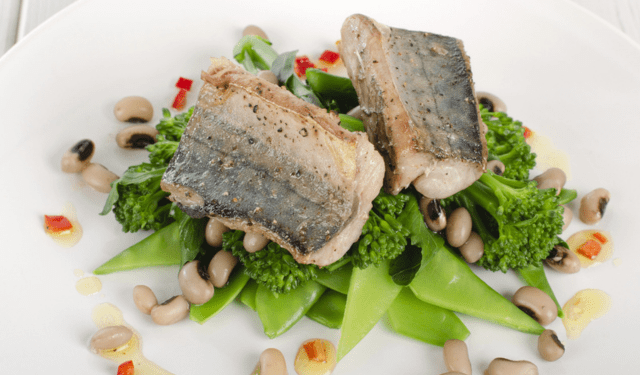

Fish provides essential fatty acids EPA and DHA, high-quality proteins, and precious micronutrients for heart and brain.
Vegetables supply fiber, minerals, vitamins, and antioxidants with minimal calories and great satiety.
The healthy fats in fish increase the bioavailability of vegetable carotenoids, while the “meat factor” enhances the absorption of plant-based iron.
Scientific Evidence and Proven Benefits
The Mediterranean model rich in fish and vegetables reduces cardiovascular events, as shown by the PREDIMED trial.
Two servings of fish per week improve cardiometabolic parameters, especially species high in omega-3.
Global health authorities such as WHO, FAO, and EFSA confirm that the benefits outweigh the risks for the general population.
The Healthiest Pairings
-
Salmon and asparagus: omega-3 and folate, with carotenoids better absorbed.
-
Mackerel and broccoli: healthy fats and sulforaphane, proven antioxidant action.
-
Sea bream and zucchini: lean proteins and fiber, filling with a low glycemic load.
-
Anchovies and chicory: iodine and calcium from fish with enhanced plant iron absorption.
-
Tuna and tomatoes: lycopene more bioavailable thanks to fish fats and EVOO.
-
Sea bass and spinach: lutein and vitamin K boosted by marine fats.
From Theory to the Plate
A portion of fish is about 85 grams cooked. Guidelines recommend at least two servings per week.
Vegetables should exceed 400 grams daily, with varied colors and types.
Gentle cooking methods – steaming or slow baking – best preserve nutrients and omega-3. Extra virgin olive oil completes the dish and enhances carotenoid absorption.
The synergy of fish and vegetables is backed by clinical trials, guidelines, and solid nutrition data. A simple, sustainable, and ready-to-serve strategy.
Stay updated with the latest seafood and nutrition insights – subscribe to receive weekly highlights.