


Mediterranean White Seabream: A Complete Guide to Species in the Mediterranean – The white seabream is a marine bony fish belonging to the Sparidae family, like the dentex, gilthead seabream (orata), and pagro. In the Mediterranean Sea, five species of white seabream are commonly found: white seabream (Diplodus sargus), sharpsnout seabream, zebra seabream (Diplodus vulgaris), annular seabream, and the rare zebra seabream (Diplodus cervinus).
These species differ significantly in appearance, size, habitat, and diet, making identification essential for both fishermen and consumers. Among them, the white seabream (Diplodus sargus) is considered the most valuable, followed by the increasingly rare Diplodus cervinus. The sharpsnout and annular varieties are less appreciated: the former for its flavor, the latter for its small size.
Fresh white seabream can be identified by its silvery body, firm and curved flesh, purple-red gills, clear protruding eyes, and well-attached shiny scales.
Nutritional Properties
White seabream meat contains about 5–6% fat, classifying it as semi-fat fish. Rich in minerals, it’s ideal for adolescents, athletes, recovering patients, and the elderly. It provides 103 kcal per 100 grams of fresh product.
Sharpsnout Seabream (Diplodus puntazzo)
Also known as sharpsnout white seabream, this species stands out for its pointed snout and prominent vertical stripes that remain visible even hours after death. It can reach 40 cm in length and weigh over 1 kg.
-
Distribution and Habitat: Common in the Mediterranean, Black Sea, and Eastern Atlantic. It inhabits rocky seabeds, often found in ports and artificial reefs between 20 and 50 meters.
-
Fishing: Rarely caught with gillnets, more often by hook and line, using both animal and plant baits. It has low market value, sometimes mislabelled as more prized white seabream species.
-
Diet: Mainly algae, similar to the salema (Sarpa salpa), occasionally mollusks and small invertebrates.


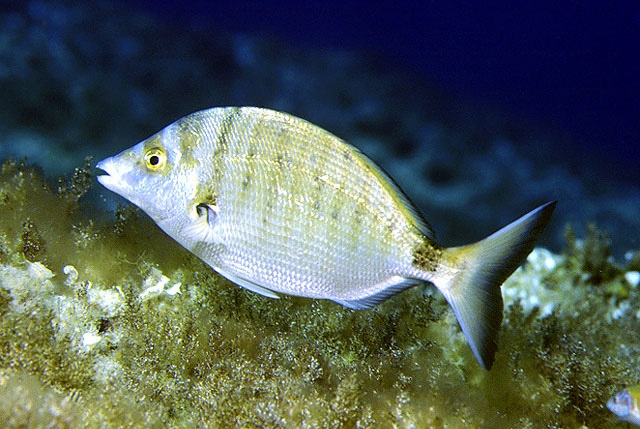
Annular Seabream (Diplodus annularis)
The annular white seabream is the smallest species in the Mediterranean, rarely exceeding 25 cm and 300 g. It features a silver body with yellowish hues, yellow ventral fins, and a distinct black spot on the caudal peduncle.
-
Distribution and Habitat: Present throughout the Mediterranean, Black Sea, and some Atlantic coasts. Prefers shallow coastal zones (0–20 m), particularly Posidonia oceanica and Zostera meadows.
-
Fishing: Caught using all recreational fishing techniques with natural bait and frequently in gillnets. Not commercially valued due to bland flavor and small size.
-
Diet: Feeds on algae, nematodes, mollusks, crustaceans, and echinoderms.

Zebra Seabream (Diplodus vulgaris)
Often referred to as striped white seabream, this species is recognized by its two vertical black bands—one near the gill cover, the other near the tail—and a dark band above the eyes.
-
Distribution and Habitat: Found in the Mediterranean, Black Sea, and Atlantic Ocean, generally in rocky coastal waters down to 30 meters, though it can reach depths of 160 meters.
-
Fishing: Highly prized by both amateur and professional fishermen, caught with gillnets, longlines, and handlines.
-
Diet: Classic sparid diet—crustaceans, mollusks, cephalopods, and marine worms.
-
Size: Can grow up to 45 cm and 1.3 kg.

White Seabream (Diplodus sargus)
The true white seabream (Diplodus sargus) is the most iconic and valued species in Mediterranean cuisine. It has a grey-silver body, with five black vertical stripes (more visible in juveniles) and a black blotch before the tail.
-
Distribution and Habitat: Widespread in the Mediterranean and Eastern Atlantic, inhabiting rocky bottoms, sandy substrates, Posidonia beds, and even brackish lagoons.
-
Size and Lifespan: Reaches up to 45 cm, 2 kg, and lives up to 10 years. Juveniles are gregarious, while adults are typically solitary.
-
Diet: Prefers sea urchins, especially when mature enough to crush their spiny shells. Also consumes crustaceans, benthic invertebrates, and some algae.
-
Fishing: Caught using gillnets, longlines, traps, and rods. Its flesh is highly prized in the seafood market.
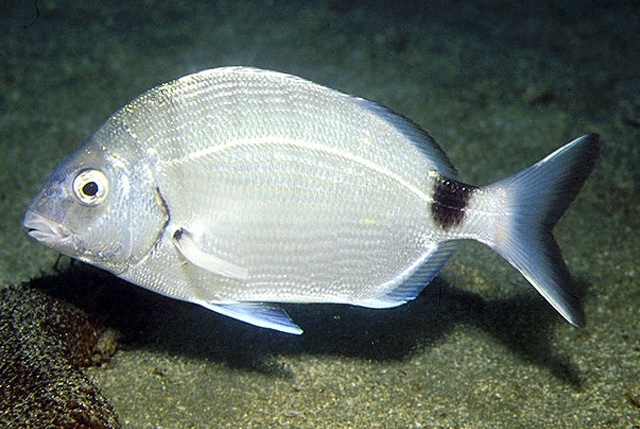
Zebra Seabream (Diplodus cervinus)
The largest and rarest white seabream in the Mediterranean, Diplodus cervinus is also known as the zebra seabream. It features 5–6 broad dark vertical bands and prominent lips.
-
Distribution and Habitat: Found in the North-East Atlantic and Mediterranean, more common along North African coasts, rarer in Italy but occasionally found in Sicily. Lives on natural rocky seabeds up to 200 meters.
-
Size: Can grow up to 55 cm and 3 kg.
-
Diet: Omnivorous, feeding on aquatic plants and small invertebrates.
-
Fishing: Rarely caught via gillnets, longlines, traps, and lines. Its rarity makes it a highly sought-after delicacy.

Among the various types of white seabream in the Mediterranean, Diplodus sargus stands out for its culinary quality, nutritional benefits, and market popularity. Understanding how to distinguish these species is key for ethical fishing, responsible consumption, and avoiding commercial mislabeling.
Subscribe to the Pesceinrete weekly newsletter for exclusive seafood industry news.
Mediterranean White Seabream: A Complete Guide to Species in the Mediterranean