


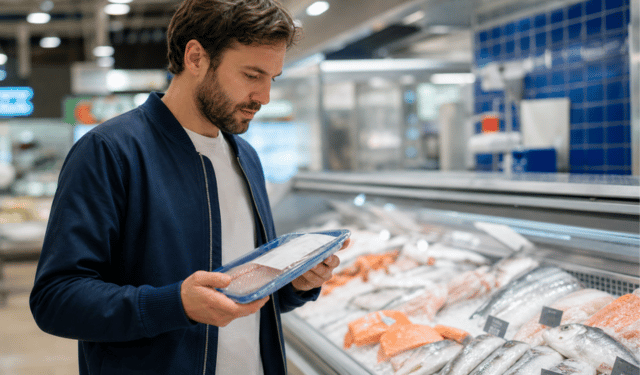

In front of the seafood counter, many consumers ask themselves the same question: is wild fish better, or farmed fish?
It is an understandable question. Behind it lies the desire to make the right choice, to bring home a product that is healthy, tasty, safe and, if possible, sustainable. There is also a deeply rooted idea: wild fish is perceived as more natural and therefore better, while farmed fish is seen as more controlled and therefore less authentic.
But this contrast, however convenient, no longer reflects reality.
Today, the real difference is not simply between “wild” and “farmed”. It is between transparent and opaque supply chains, between well-managed fisheries and fishing on stocks under pressure, between controlled aquaculture and farms with weak standards, between products that are clear on the label and products about which consumers know little or nothing.
The point is not to convince anyone that farmed fish is always better than wild fish. That would be false. But it is equally false to continue thinking that wild fish is automatically the superior choice. In many cases, it is not. In others, it is. It depends on the species, origin, production method, certifications, controls and the consumer’s ability to read the information available.
In 2022, for the first time, aquaculture overtook capture fisheries as the world’s main source of aquatic animals for food: 94.4 million tonnes of farmed aquatic animals, equal to 51% of total production. This was a historic shift, because it confirmed that farmed fish is no longer a marginal solution, but a structural part of the global food system.
The appeal of wild fish, and its limits
Wild fish has real value. It grows in its natural environment, feeds according to what the ecosystem provides and follows biological cycles that are not planned by humans. For many species, this translates into highly appreciated sensory qualities: leaner or firmer flesh, more pronounced flavours, and clear differences from season to season, from area to area and from one specimen to another.
This is also why wild-caught fish continues to hold strong appeal. When it is fresh, well managed, sourced from healthy stocks and caught through responsible fishing systems, it can represent one of the finest expressions of Mediterranean food culture. It should not be demonised or treated as a problem in itself. Fishing is history, work, protection of coastal territories and real economy.
The problem begins when the word “wild” is given absolute value. Wild does not automatically mean sustainable. It does not automatically mean safer. It does not automatically mean better from a nutritional point of view. It only means that the fish was caught in nature.
And nature, today, is not an untouched and infinite place.
In the Mediterranean, pressure on fish stocks remains one of the major unresolved issues. Fifty-eight percent of Mediterranean fish stocks are classified as overexploited. This is a significant figure, especially in a sea where fishing, climate change, habitat degradation and human pressure all overlap. Hake, sardine, deep-water rose shrimp, purple shrimp and red mullet are among the species most frequently mentioned when discussing fishing pressure and the exploitation of Mediterranean resources.
This figure is not intended to frighten consumers, but to bring the choice back to a concrete level. Wild fish can be an extraordinary product, but it must be chosen carefully. The species matters. Size matters. The FAO fishing area matters. The fishing gear matters. The condition of the stock matters. The supply chain that brings the fish from the sea to the counter matters.
There is also another element that is often underestimated: variability. In wild-caught fish, quality can change significantly. Two fish of the same species can have different characteristics depending on diet, season, catch area, time elapsed since landing, cold chain management and transport methods. This variability is part of its richness, but it also makes it harder to guarantee the same consumer experience every time.
Wild fish, therefore, should not be idealised. It should be understood.
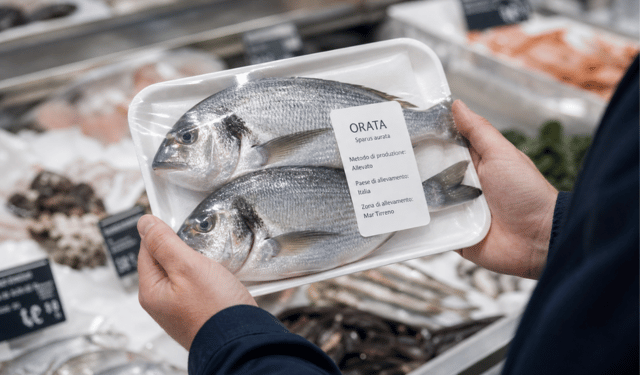
Farmed fish is not all the same
Farmed fish suffers from the opposite misconception. Many consumers imagine it as a single category: fish raised artificially, perhaps in overcrowded tanks, always fed in the same way, far removed from the idea of the sea and naturalness.
But talking about “farmed fish” as if it were one single block is misleading.
There are extensive, semi-intensive and intensive farms. There are offshore farms, coastal farms, lagoon systems, freshwater farms, land-based tanks and recirculating aquaculture systems. There are farms with high standards, veterinary controls, environmental monitoring, precise traceability and independent certifications. And there are, in some parts of the world, more problematic production models, with weaker rules and less transparency.
The difference is enormous. And this is exactly where consumers need to shift their attention: not “farmed yes” or “farmed no”, but “which farm, where, with what controls and under what standards”.
In a well-managed farm, the supply chain is more predictable. The origin of the animals, the production cycle, the feed, the health conditions, the growth times, the controls carried out, any treatments, and the route to processing and sale are all known. This often allows for more linear traceability than in many wild-caught fish supply chains.
Quality is more consistent. The product reaches the market with more uniform sizes, more regular availability and prices that are less exposed to the fluctuations of fishing. For consumers, this means finding fresh fish more easily throughout the year. For restaurants and retailers, it means being able to plan. For the supply chain, it means reducing part of the pressure on natural stocks, provided aquaculture is developed according to serious criteria.
In Italy, aquaculture plays an important production role, but it must be described accurately. If the entire sector is considered, including fish, shellfish and other aquatic production, national output exceeds 100,000 tonnes per year, with shellfish farming accounting for a major share. If, on the other hand, only farmed fish is considered, the most recent production data indicate more than 51,000 tonnes, with trout, gilthead seabream and European seabass among the main species.
This distinction is important because it avoids confusing aquaculture as a whole with fish farming alone. Saying “farmed fish” does not mean talking about mussels, clams, oysters, trout, seabream, seabass, sturgeon or salmon as if they were the same thing. These are different supply chains, with different impacts, different rules and different markets.
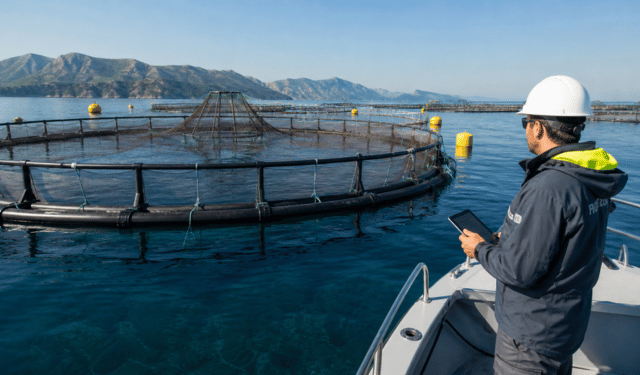
The problems of aquaculture exist, but they do not define the entire sector
Saying that farmed fish can be a good choice does not mean denying the problems of aquaculture. Some exist and must be named.
In some parts of the world, especially where rules are weaker or controls less frequent, intensive farms can generate localised environmental impacts. These include the accumulation of nutrients beneath cages, waste management, the risk of escapes, pressure on coastal ecosystems, improper use of medicines, feed quality and the relationship between farmed fish and the marine ingredients used in their diets.
These are real issues. And precisely because they are real, the most advanced part of the sector has had to address them. In recent years, aquaculture has worked on more efficient feeds, reducing the use of fishmeal and fish oil from unsustainable sources, environmental monitoring, biosecurity, animal health, welfare, traceability, water management and stricter voluntary standards.
Aquaculture is not an automatic solution free from critical issues. However, it is one of the central tools for responding to the growing demand for aquatic foods, provided its growth is regulated, monitored and oriented towards sustainability.
This is where the comparison changes perspective. The problem is not choosing between “good” fishing and “bad” aquaculture, or the opposite. The problem is distinguishing between responsible production systems and weak production systems.
A controlled, traceable and certified farmed product can be a stronger choice than a wild product of uncertain origin. A local, well-managed wild-caught fish from a transparent supply chain can be an excellent choice compared with a farmed product that provides insufficient information.
Quality is not in the word. It is in the supply chain.
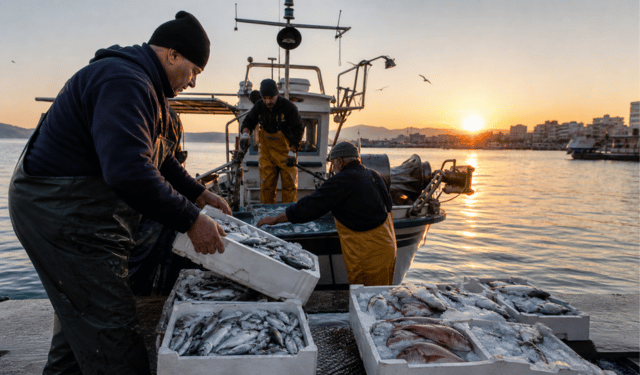
Certifications and controls: why they make the difference
For consumers, certification should not become a fetish. Seeing a label is not enough to stop asking questions. However, serious certifications play an important role: they turn a promise into a system of requirements, checks and controls.
In aquaculture, the Aquaculture Stewardship Council, or ASC, is now one of the most recognisable international standards. Its new Farm Standard defines requirements for responsible farming practices, including animal welfare, farm management, human rights and environmental protection. The value of this type of standard lies in the fact that it does not simply claim that a product is “sustainable”; it requires evidence, procedures, audits and compliance with verifiable criteria.
EU organic certification is another reference point to consider. In the case of organic fish, consumers should not imagine a vague idea of “naturalness”, but a regulatory framework with specific criteria for production, certification, labelling and controls.
This distinction is essential. Each guarantee system covers a different scope. Some relate to farming, others to fishing, and others to specific aspects of the supply chain. No label, on its own, frees consumers from the need to read the product information. But a certified product, especially when the certification is serious and verifiable, offers a higher level of information than a product without clear references.
For this reason, at the counter, the question should become more concrete: does this product have a recognisable certification? Does it tell me where it comes from? Does it tell me whether it is wild or farmed? Does it say in which country it was farmed or in which area it was caught? Does it give me the tools to understand whether I am choosing out of habit or based on knowledge?
Nutrition: wild fish does not always win
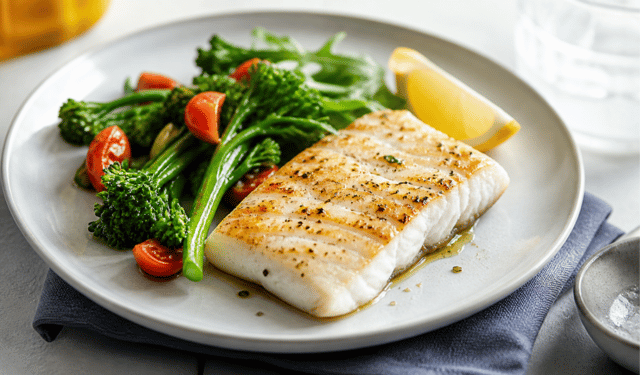
From a nutritional point of view, a sharp contrast between wild and farmed fish is misleading. Both can be excellent sources of high-quality protein, omega-3 fatty acids, iodine, selenium, B vitamins and, in some species, vitamin D.
But the nutritional profile changes greatly depending on species, size, age, season, fat content and diet.
Wild fish can have a very interesting profile because it feeds in its natural environment. But precisely for this reason, it is more variable. Farmed fish, on the other hand, has a controlled diet. This can affect fat content and the composition of fatty acids, including omega-3s. It is not correct to say automatically that farmed fish is nutritionally poorer.
In some cases, farmed fish can have a higher fat content and a significant presence of omega-3s precisely because of managed feeding. In other cases, the profile of wild fish may be particularly interesting because of its natural diet, season and growing environment. Here too, there is no single answer: the species and supply chain must be considered.
The issue of contaminants must be addressed with the same care. Some species, especially large predators such as swordfish, some tuna and sharks, can accumulate more methylmercury. For children, pregnant women and women of childbearing age, health authorities often recommend moderating consumption of species with higher mercury levels and, where appropriate, preferring smaller fish that accumulate less.
This means that consumers should not ask only whether a fish is wild or farmed. They should ask what fish it is.
A small oily fish raises different questions from a large predator. A gilthead seabream farmed in a controlled supply chain should not be generically compared with “wild fish”, but with a precise species, a precise origin and a precise method. Tuna or swordfish require different evaluations from trout, seabass, amberjack or branzino.
Nutrition, like sustainability, cannot be judged by slogans.
Price is not a secondary detail
In public debate, sustainability is often discussed as if it were only a moral choice. But if sustainability is to work in practice, it must also deal with accessibility.
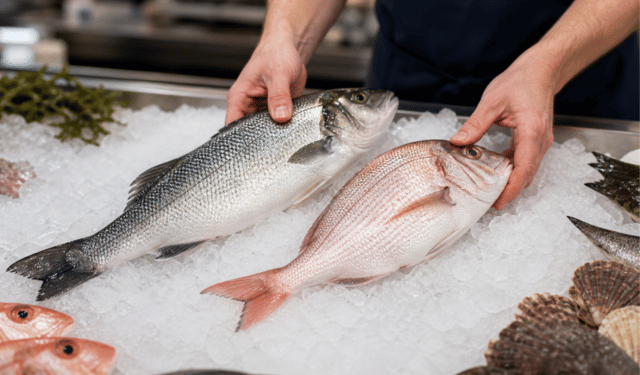
High-quality wild fish often has high and unstable prices. It depends on weather conditions, fishing days, fuel costs, stock availability, seasonality and demand. In some areas and for some species, fresh local catch is a valuable product, but it is not always accessible to all families.
Aquaculture also serves this function: it makes fish more available, more programmable and more stable in price. It does not replace fishing, but complements it. And in a country like Italy, this point matters greatly.
Italian consumption of seafood products remains high compared with the European average. The most recent estimates indicate apparent consumption in Italy of just over 30 kg per capita per year, compared with an EU average of less than 23 kg. This is an important gap, showing how central fish still is in Italian eating habits.
This is one of the most important facts to remember: Italy eats a lot of fish, but produces much less than it consumes. Dependence on foreign supply remains high and is often estimated at around 80–85% of national consumption, depending on the methodology and scope considered.
Talking about sustainable fishing and responsible aquaculture therefore also means talking about food security, production autonomy, European supply chains, controls and the ability to reduce dependence on products of distant or less transparent origin.
The market is also changing. In 2023, apparent consumption of fishery and aquaculture products in the European Union fell to its lowest level of the decade. In 2024, European household spending on seafood increased, but this rise was mainly linked to prices, not to growth in purchased volumes. In other words, many families are spending more but buying less fresh fish.
If fish becomes too expensive, it risks appearing less often in everyday diets. This is why aquaculture is not just an issue for industry operators. It concerns the concrete possibility of continuing to bring fish to the table in an accessible, controlled and sustainable way.
The label: the consumer’s first tool
Consumers cannot know every fish stock, every farming technique or every certification standard. But they can do one simple thing: read the label.
For fishery and aquaculture products sold to consumers, mandatory information in the European Union includes elements such as the commercial and scientific name, production method, catch area or country of farming. For wild-caught products, the category of fishing gear used must also be indicated; for farmed products, the country of production must be shown.
This is valuable information. It is not always read, and it is often perceived as technical detail. In reality, it is the basis of choice.
Knowing that a fish was farmed in Italy or in another European country is not the same as merely knowing that it is “farmed”. Knowing that a product was caught in a specific FAO area is not the same as reading a generic “caught at sea”. Knowing whether it was caught with trawls, hooks, pots or other systems helps consumers understand something more about the impact of fishing.
Of course, the label does not say everything. But it says much more than consumers often use.
For this reason, the first gesture of awareness is to stop choosing only on the basis of emotional words: wild, farmed, natural, fresh, local, premium. These words matter, but they must be verified. The label exists precisely for this purpose: to bring the choice back from assumptions to facts.
On this point, it will also be useful to link the internal article [Understanding Fish Labels], together with the species profiles dedicated to [Amberjack] and [Dentex], because every species has a different story and requires specific reading criteria.
So, is wild or farmed fish better?
The most honest answer is: it depends.
A wild fish from a well-managed fishery, with clear origin, healthy stocks and a transparent supply chain, is better than a farmed product with insufficient information.
A farmed fish from a controlled, certified and traceable supply chain is better than a wild product from overexploited stocks or from a poorly transparent commercial chain.
A product that tells you where it comes from, how it was produced and who controlled it is better than a product that simply relies on a reassuring word.
Wild and farmed are not opposing teams. They are two different ways of bringing fish to our tables. Both can have value. Both can have critical issues. Both require knowledge.
The conscious consumer is not the one who always chooses the same answer. It is the one who learns to ask better questions.
Where does this fish come from?
Is it wild or farmed?
In which area was it caught, or in which country was it farmed?
Is the species under pressure?
Are there reliable certifications?
Is the label clear?
Is the price consistent with what I am buying?
These are simple questions, but they change the way we buy.
Because the best choice does not come from prejudice. It comes from transparency.
The 5 most common consumer mistakes
Thinking that wild always means better.
Wild fish can be excellent, but it is not automatically sustainable, safe or superior. It depends on the species, fishing area, stock status and supply chain.
Considering farmed fish a second-class product.
Aquaculture is not all the same. Fish farmed in a controlled, European and certified supply chain can offer high levels of quality, traceability and safety.
Stopping at the name of the species.
Saying “seabream”, “seabass”, “salmon” or “tuna” is not enough. Origin, production method, fishing gear, country of farming and certifications must also be considered.
Ignoring the label.
The label is not bureaucracy: it is the main tool for understanding what you are buying. Reading it means choosing with greater freedom.
Looking for one answer that applies to all fish.
There is no universal rule. A small oily fish, a farmed seabass, an amberjack, a dentex, a tuna or a salmon all raise different questions. The choice must be made case by case.
Sources consulted
FAO, The State of World Fisheries and Aquaculture 2024, data on global production, aquaculture and fish stocks.
EUMOFA, The EU Fish Market 2025, data on EU apparent consumption, wild and farmed products, household spending and market dynamics.
WWF Italy, data on overexploitation of Mediterranean fish stocks and responsible consumption.
API / Confagricoltura, 2024 production data on Italian fish farming.
EFSA, updates and opinions on fish consumption, nutritional benefits and methylmercury.
European Commission, guide to the labelling of fishery and aquaculture products.
ASC, international standards for responsible aquaculture.