Overseas


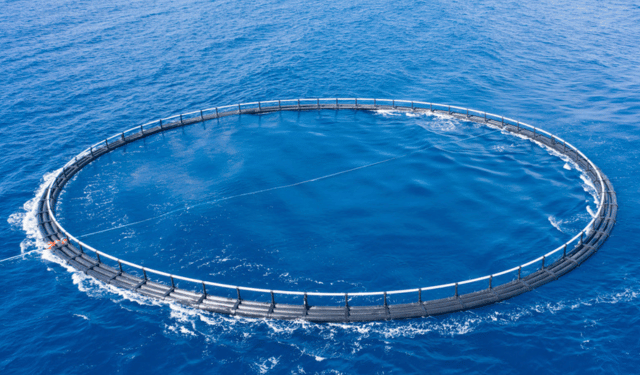
Since August 1st, the Gulf of Follonica (between Livorno and Grosseto, on Tuscany’s coast) hosts a fully operational real-time monitoring system for key water quality parameters and underwater current flows. Covering about 1,600 hectares of fish and shellfish farms, the Gulf is one of the most important aquaculture hubs in Italy.
Every day, between 1,530 and 2,040 data points are transmitted online, compared with the 5 or 6 typically gathered with traditional methods. The wireless sensor network was developed by Italian company WSense and adopted by ISPRA under the MER (Marine Ecosystem Restoration) plan of Italy’s PNRR.
A quantum leap for aquaculture and the environment
The ISPRA platform receives continuous real-time input from underwater wireless modems, sensors, repeaters and two surface buoys with WiFi communication units. Installed at depths ranging from 3–5 meters to 28 meters for current data, the system generates between 560,000 and 747,500 data points annually.
“This is a quantum leap that opens previously unthinkable scenarios,” said Chiara Petrioli, CEO of WSense. “It enables the application of big data and artificial intelligence to underwater monitoring, with tangible benefits for environmental protection.”
How the system works
The network includes nine sampling stations: eight equipped with multiparametric sensors for temperature, dissolved oxygen, turbidity and conductivity, and two with additional sensors for chlorophyll and bacterial activity (BOD) near mussel farms. A ninth station hosts a current meter, measuring flow intensity and direction across 14 depth levels. In total, each time unit produces readings across 64 points.
This high-resolution dataset allows ISPRA researchers to analyze seasonal, weather and operational variations, quickly detecting anomalies or disturbances. The application of big data and AI brings unprecedented depth to aquaculture monitoring.
What changes compared to the past
Until now, water quality monitoring was performed with periodic boat-based sampling, a few data points at a time, then analyzed in labs before being shared with researchers. Continuous real-time data simply did not exist.
In Follonica, achieving similar real-time results would have required kilometers of seabed cables, with prohibitive costs and environmental impact. Instead, ISPRA’s investment of around €500,000 delivers costs per data point below €1 per year, considering three years of operation.
The role of WSense
WSense, a spin-off of Sapienza University of Rome, designed and supplied the entire wireless underwater communication and data transmission system, along with the cloud-based platform that enables visualization, analysis and storage. An alert system automatically notifies operators when thresholds are exceeded, giving both regulators and aquaculture managers immediate insight.
With this deployment, ISPRA now stands at the global forefront of real-time aquaculture water quality monitoring. The Follonica project marks the largest use of WSense technology in the Mediterranean and the EU, with data also capable of being transmitted via satellite worldwide.
The Gulf of Follonica project demonstrates how technology, AI and aquaculture can converge for sustainable growth. By reducing monitoring costs and multiplying available data, ISPRA and WSense set a European benchmark for innovation in environmental management.
Stay updated