• HOME
  • CHI SIAMO
  • CONTATTI
  • PARTNER
  • PUBBLICITÀ
  • NEWSLETTER
  • ARCHIVIO
    • Bandi e Opportunità
    • Speciali
    • Rubriche
    • Nutrizione e salute
    • Interviste
    • Video
sabato 8 Agosto, 2026
Pesceinrete
  • Pesca
  • Nutrizione e salute
  • Acquacoltura
    • Acquaponica
    • Algocoltura
  • Approfondimenti
  • Tecnologia
  • Sostenibilità
  • Mercati
  • OverseasNew
Nessun Risultato
Vedi tutti i Risultati
Pesceinrete
  • Pesca
  • Nutrizione e salute
  • Acquacoltura
    • Acquaponica
    • Algocoltura
  • Approfondimenti
  • Tecnologia
  • Sostenibilità
  • Mercati
  • OverseasNew
Nessun Risultato
Vedi tutti i Risultati
Pesceinrete
Nessun Risultato
Vedi tutti i Risultati

Home Overseas

EU Fish Market 2025: Italy Resists Falling Consumption

The new EU Fish Market report shows rising prices, weak demand and a Europe reliant on imports—while Italy stands out with growing per capita consumption.

Davide Ciravolo by Davide Ciravolo
3 Dicembre 2025
in Overseas
EU Fish Market 2025 Italy Resists Falling Consumption

EU Fish Market 2025 Italy Resists Falling Consumption

The European Commission has released the 2025 edition of The EU Fish Market, a key report analysing production, consumption, trade and structural trends in the European seafood sector. The picture that emerges is that of a complex market, still affected by inflationary pressure and declining household consumption, but with one positive note: Italy stands out as one of the few EU countries showing even a slight increase in apparent per capita consumption.

High prices and declining fresh seafood consumption

In 2024, European household spending on fishery and aquaculture products reached €62.8 billion, up 4% from the previous year. This increase, however, does not reflect higher consumption but rather the effect of prices remaining at historically high levels. Between 2020 and 2024, retail fish prices rose by more than 25%.

Domestic consumption of fresh fish continues to fall, and in the largest consumer countries the decline exceeded 4% between 2023 and 2024. In this context, the Italian case is particularly significant: Italy is among the few countries showing a slight rise in apparent per capita consumption, bucking the trend seen across major European markets.

EU seafood trade: slight contraction but still historically high

In 2024, the total value of EU seafood trade fell by 1%, while volumes decreased by 0.5%. Despite this, the year ranks as the third best of the past decade in terms of total transaction value.

Intra-EU trade reached €31.7 billion, surpassing extra-EU imports for the second consecutive year. Imports from non-EU countries nonetheless remain the main source of supply, amounting to 5.9 million tonnes with a value of €29.9 billion.

Trade balance: improvement for Europe, worsening for Italy

The EU’s trade balance improved by 2% in 2024, supported by rising exports (+1%) and slightly decreasing imports (-1%). The trend, however, varies across Member States. Italy, France, Spain and the Netherlands recorded a worsening deficit, highlighting the strong import dependence typical of high-demand markets.

For Italy, this confirms the strategic need to strengthen domestic production, enhance the value of national catches and boost aquaculture as a key balancing factor.

EU apparent consumption hits decade low—but Italy grows

In 2023, apparent EU consumption fell to 22.89 kg per capita, the lowest level in ten years. The decline is mainly due to reduced imports and lower aquaculture output in certain countries. Against this backdrop, Italy represents an exception: +1% compared to 2022, signalling a stable market and solid underlying demand.

Key species: trends to monitor for the Italian industry

The 2025 edition of the report highlights important dynamics affecting species central to Italian consumption and processing.

Salmon. European imports rose by 5% in 2024. In early 2025, volumes continued to increase while prices declined—a trend favourable to both consumption and processing.

Shrimp. Accounting for 10% of total EU imports, the category continues to grow. Ecuador, Argentina and India further strengthened their positions. Italian demand remains strong in both foodservice and retail.

Cod. Northeast Arctic quotas faced substantial cuts (-20% in 2024 and -25% in 2025), driving prices sharply higher. This key species for the Italian market is directly affected by supply-side pressure.

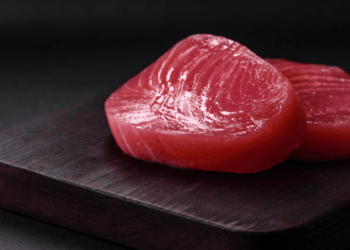
Tuna. The most consumed species in the EU. In 2024, imports rose by 18% in volume and 8% in value, with strong growth in prepared and processed products—especially relevant signals for Italy’s canning industry.

The EU Fish Market 2025 report portrays a Europe still grappling with high prices, uncertain consumption and heavy dependence on imports. Yet Italy emerges as one of the most resilient markets, supported by stable domestic demand and a stronger capacity to absorb supply than most major Member States.

For Italian seafood companies—from production and processing to distribution and foodservice—the report clearly points toward strategic priorities: diversifying supply sources, elevating product origin, strengthening aquaculture and closely monitoring species most exposed to international volatility.

For more insights on the future of Italian fisheries and the blue economy, follow ongoing coverage and analysis on Pesceinrete.

NEWSLETTER

Tags: Aquaculture Europecod quota cutsEU Fish Market 2025EU seafood tradeEuropean Commission reportsEuropean seafood consumptionfisheries statistics EuropeItalian fish consumptionItalian seafood industrysalmon imports Europeseafood market analysisseafood prices Europeseafood trends 2025shrimp market EUtuna market Europe
CondividiTweetCondividiPinInviaCondividiInvia
Articolo precedente

UE Fish Market 2025: l’Italia sorprende

Prossimo articolo

Scognamiglio: 11 dicembre sciopero bianco pescatori contro Ue

Davide Ciravolo

Davide Ciravolo

Autore Pesceinrete, retail ittico e mercati seafood Davide Ciravolo è autore Pesceinrete. Si occupa di mercati, distribuzione e scenari commerciali della filiera ittica, con particolare attenzione al rapporto tra prodotto, retail e consumi. La sua esperienza come ex buyer di Esselunga gli permette di osservare il settore seafood anche dal punto di vista della GDO e delle dinamiche di assortimento.

Articoli Correlati

School of tuna swimming in the open ocean, illustrating the ISSF 2026 assessment of global tuna stocks

Tuna: 16 of 23 stocks pass MSC Principle 1. Only nine have rules to act if they decline

by Candida Ciravolo
5 Agosto 2026

Sixteen of the 23 major tuna stocks assessed achieve a passing score under Principle 1 of the MSC Fisheries Standard....

Octopus illustrating Nueva Pescanova’s withdrawn aquaculture project in Las Palmas

Nueva Pescanova withdraws Las Palmas octopus farm project

by Luca Di Noto
31 Luglio 2026

Why did Nueva Pescanova withdraw its Las Palmas octopus farm project?Nueva Pescanova said the administrative process had introduced new regulatory...

European langoustine on ice for professional seafood buyers

OroMar: langoustine remains at the core, but buyers now expect more

by Luca Di Noto
30 Luglio 2026

Ordering langoustine is not simply a matter of negotiating the right price. Buyers must choose the grade, format, packaging, preservation...

Seafood dish in a restaurant kitchen illustrating Menu Engineering and contribution margin analysis

Menu Engineering: how to make a seafood menu more profitable

by Luca Di Noto
28 Luglio 2026

Menu Engineering is a restaurant management method that analyses each dish by comparing two factors: how often it is ordered...

Lascia un commento Annulla risposta

Il tuo indirizzo email non sarà pubblicato. I campi obbligatori sono contrassegnati *

Questo sito utilizza Akismet per ridurre lo spam. Scopri come vengono elaborati i dati derivati dai commenti.


Articoli più letti

  • 10 pesci costosi e prelibati
  • Le specie di sarago del Mediterraneo
  • Pesci con più e meno mercurio
  • Molva, una ricchezza del Mare del Nord
  • Molluschi bivalvi: descrizione e caratteristiche
  • Congelare il tonno in scatola
  • Gattuccio e palombo, gli squali buoni da mangiare
  • Triglia: caratteristiche e proprietà nutrizionali
  • Mangiare il tonno crudo: vantaggi e pericoli
  • Sgombro e lanzardo, pesce azzurro per il cuore
Pesceinrete

Pesceinrete è la testata giornalistica unica in Italia ad occuparsi di pesca commerciale ed acquacoltura. In quanto canale tematico e dai contenuti specializzati, si rivolge direttamente agli operatori della filiera con una comunicazione targettizzata che risponde alle esigenze del settore.

Segui le nostre pagine social

Stock images by Depositphotos

Newsletter

Categorie

  • News Ittico
  • Pesca
  • Acquacoltura
  • Associazioni di categoria
  • Sindacati
  • ONG
  • Tecnologia
  • Sostenibilità
  • Mercati
  • Eventi e Fiere
  • Overseas
  • Nutrizione e salute
  • Approfondimenti
  • Chi siamo
  • Policy editoriali
  • Partner
  • Contatti
  • Pubblicità
  • Newsletter
  • Mappa del sito

© 2026 INRETE S.R.L. P.Iva: 02557660814 - Pesceinrete - Il quotidiano del settore ittico | Credits

  • Home
  • Nutrizione e salute
  • Pesca
  • Acquacoltura
  • Approfondimenti
  • Tecnologia
  • Sostenibilità
  • Mercati
  • Overseas English NEW
  • Archivio
  • Chi siamo
  • Contatti
  • Partner
  • Pubblicità
  • Newsletter
Nessun Risultato
Vedi tutti i Risultati

© 2026 INRETE S.R.L. P.Iva: 02557660814 - Pesceinrete - Il quotidiano del settore ittico | Credits