Overseas


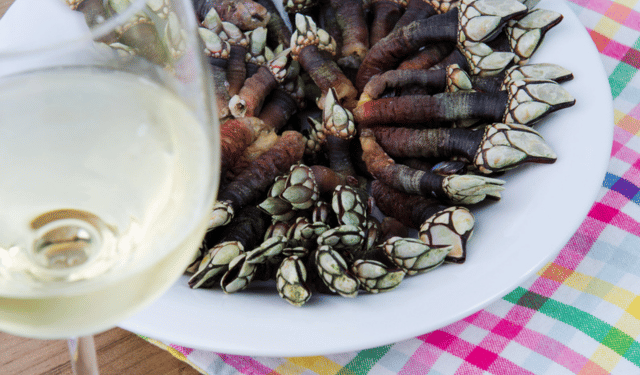
The Principality of Asturias has decided to move early. In view of the Christmas holidays, the regional Government, the Government Delegation and the Guardia Civil have agreed to significantly step up controls on the goose barnacle fishery along the coast. The goal is clear: to prevent the festive peak in demand from turning into overexploitation of a resource that is as highly prized as it is vulnerable.
The decision was taken at a meeting between the Director General of Marine Fisheries, Francisco González, the Head of Agriculture and Fisheries at the Government Delegation, Susana González, and representatives of the Nature Protection Service (Seprona) and the Maritime Guardia Civil. On the table was the need to coordinate all monitoring measures until the end of the season: from harvesting on the cliffs, to passage through the lonjas (wholesale markets), and transport by road, with joint checks on documentation, traceability and compliance of landed quantities with the licences issued.
The goose barnacle management plans in Asturias – under which 274 licences have been granted – began on 1 October and will run until 30 April 2026. They define fishing areas, set catch limits and structure the season with the aim of balancing profitability and protection of the natural bed. But for the Asturian authorities this is not enough: during closed periods in certain fishing zones and in the weeks immediately before Christmas, controls will be further intensified, because this is precisely when the risk of poaching and marketing of illegally sourced product increases.
From here, a broader reflection arises almost naturally, and it does not concern only the Cantabrian coast. Asturian goose barnacles are one of the gastronomic symbols of the Christmas period, exactly as clams and other shellfish are on Italian Christmas Eve menus. In just a few weeks, demand is concentrated on a very small number of species and the consumption curve spikes: the result is a strong leverage effect both on prices and on fishing effort. When the market is willing to pay more, the temptation to push beyond biological limits, or even outside the boundaries of the rules, becomes very real.
This is the heart of the issue: demand is not just background noise, but a real driver of pressure on stocks. When value and consumption are squeezed into a very short time window, every kilo that reaches the counter or the restaurant table weighs more, economically and biologically. In the case of Asturian goose barnacles, fragility is amplified by the conditions of harvesting – exposed cliffs, often rough seas, difficult access – and by the slow pace of natural replenishment. In the Italian context, the dynamics are similar for “recurrence species”: the anticipation of the traditional dish, last-minute purchases, and the identity role of certain preparations inevitably push the supply chain to concentrate effort.
The model chosen by Asturias is interesting precisely because it acknowledges this reality. Management plans alone are not enough if they are not accompanied by an enforcement framework capable of adapting to peaks in demand. Limited licences, clearly defined harvesting zones and catch limits are the first pillar; the second pillar is targeted surveillance, which is reinforced at times of maximum commercial value, when the window for poaching and shortcuts on traceability tends to widen.
Looking at what is happening on the Asturian cliffs ultimately means questioning our own markets as well. The dynamics that link demand, price and pressure on resources are the same that affect many emblematic holiday species in the Mediterranean. The difference does not lie in consumption habits – which are unlikely to change in the short term – but in the capacity of management systems to read these peaks in time and translate them into credible rules, controls and effective instruments. Only in this way can the allure of the “holiday dish” continue to coexist with the increasingly unavoidable need not to deplete the natural capital on which it depends.
Stay ahead of change in the blue economy. Subscribe to our newsletter and get insights on sustainability, innovation, and market trends shaping the seafood sector.