• CHI SIAMO
  • CONTATTI
  • PARTNER
  • PUBBLICITÀ
  • NEWSLETTER
  • ARCHIVIO
    • Bandi e Opportunità
    • Speciali
    • Rubriche
    • Nutrizione e salute
    • Interviste
    • Video
lunedì 20 Aprile, 2026
Pesceinrete
  • Home
  • News
  • Pesca
  • Acquacoltura
    • Acquaponica
    • Algocoltura
  • Protagonisti
    • Aziende
    • Istituzioni
      • Europee
      • Nazionali
      • Regionali
    • Associazioni di categoria
      • Associazione Mediterranea Acquacoltori
      • Legacoop Agroalimentare
      • Assoittica Italia
      • Federpesca
      • PescaAgri-CIA
      • Unci AgroAlimentare
    • Sindacati
      • UILA Pesca
    • ONG
    • Consorzi e Cooperative
      • CIRSPE
  • Tecnologia
  • Sostenibilità
  • Mercati
  • Eventi
  • OverseasNew
Nessun Risultato
Vedi tutti i Risultati
Pesceinrete
  • Home
  • News
  • Pesca
  • Acquacoltura
    • Acquaponica
    • Algocoltura
  • Protagonisti
    • Aziende
    • Istituzioni
      • Europee
      • Nazionali
      • Regionali
    • Associazioni di categoria
      • Associazione Mediterranea Acquacoltori
      • Legacoop Agroalimentare
      • Assoittica Italia
      • Federpesca
      • PescaAgri-CIA
      • Unci AgroAlimentare
    • Sindacati
      • UILA Pesca
    • ONG
    • Consorzi e Cooperative
      • CIRSPE
  • Tecnologia
  • Sostenibilità
  • Mercati
  • Eventi
  • OverseasNew
Nessun Risultato
Vedi tutti i Risultati
Pesceinrete
Nessun Risultato
Vedi tutti i Risultati

Home Overseas

Turning Fish Waste into Feed: The Cuban Aquaculture Revolution

This innovative circular economy model is now ready to be replicated across the island to meet protein needs and improve lipid intake—both essential for fish health and, consequently, for the Cuban population’s nutrition.

Redazione by Redazione
24 Ottobre 2025
in Overseas
Turning Fish Waste into Feed- The Cuban Aquaculture Revolution

Turning Fish Waste into Feed- The Cuban Aquaculture Revolution

Enhancing the value of fish processing waste by transforming it into valuable resources for feed production—thus improving the efficiency of the Cuban aquaculture chain—is the milestone achieved in the city of Sancti Spíritus by the Department of Agricultural, Food, Environmental and Forestry Sciences and Technologies (DAGRI) of the University of Florence. The project was developed in collaboration with Cuba’s Ministry of Food Industry (MINAL), the Grupo Empresarial de la Industria Agroalimentaria (GEIA), and the fishery company PESCASPIR. It marks the culmination of extensive research and field experimentation aimed at securing sustainable protein sources for animal nutrition in a context challenged by embargo restrictions and limited raw materials.

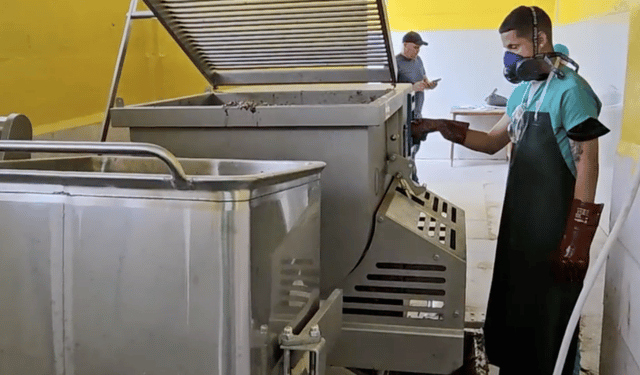
Funded by the Italian Cooperation (Ministry of Foreign Affairs and International Cooperation – MAECI, and the Italian Agency for Development Cooperation – AICS), the IPEPAC Project (Enhancement of Productivity and Efficiency of Agro-Industrial Processing in Cuba, also through Environmental Protection and Loss Reduction) led to the creation of a processing line capable of handling up to 10 tons of fish residues per day—heads, skins, bones, tails, and viscera. These materials are transformed into silage through an acidification process and blended with flours to produce animal feed, increasing yields sustainably and locally.

This innovative circular economy model is now ready to be replicated across the island to meet protein needs and improve lipid intake—both essential for fish health and, consequently, for the Cuban population’s nutrition.

To share the results of the project, launched in 2019 with GEIA, a public event will be held on October 28 at the Hotel Plaza in Sancti Spíritus, offering an opportunity to showcase this initiative as a pilot model for freshwater and marine fisheries, adaptable to other regions.

Armando Guerra Borrás, Cuban project director from GEIA, emphasized:

“The strength of the project lies in creating a local resource network that allows Cuban aquaculture to become self-sufficient. Transforming food industry by-products into feed reduces environmental impact and ensures independence from imported raw materials.”

Giuliana Parisi, DAGRI professor and project coordinator, added:

“Our goal was to increase fish availability in Cuba, a country with significant potential in this area. In the future, even saltwater aquaculture could expand. This project can be replicated in other regions to boost access to healthy and sustainable food. A special thanks to AICS, not only for financial support but for acting as a vital bridge with our Cuban partners.”

Researcher Francesco Garbati concluded:

“We’ve all learned something valuable from this project. We developed something original that can serve as a benchmark for similar initiatives worldwide, starting from Cuba itself. Despite technical and logistical challenges, Cuban engineers demonstrated outstanding skill and adaptability, mastering the techniques and technology we introduced.”

Stay updated with the most relevant news in the seafood industry—subscribe to our weekly newsletter.

NEWSLETTER

Tags: AICSBlue Economycircular economyCuban aquacultureenvironmental sustainabilityfish processing innovationfish waste recyclingGEIAIPEPAC projectItalian CooperationMINAL Cubasustainable aquaculturesustainable feed productionUniversity of Florence
CondividiTweetCondividiPinInviaCondividiInvia
Articolo precedente

IFFO Tokyo 2025: sostenibilità e realismo per gli ingredienti marini

Prossimo articolo

A Trapani due tavole rotonde su governance del mare e crisi della pesca

Redazione

Redazione

Articoli Correlati

EU maritime spatial planning and fisheries

EU maritime spatial planning and fisheries

by Alice Giacalone
17 Aprile 2026

Maritime spatial planning in the European Union is back at the center of the political agenda, with a message that...

Libya Fisheries Strategy: GFCM Visit Signals Blue Economy Shift

Libya fisheries strategy: GFCM visit signals Blue Economy shift

by Gaspare Bilardello
16 Aprile 2026

The Libya fisheries strategy GFCM visit marks a decisive step in the country’s transition toward a modern and sustainable blue...

Zwara Fishing Expo 2026: Libya’s Blue Economy Shift

Zwara Fishing Expo 2026: Libya’s Blue Economy Shift

by Gaspare Bilardello
14 Aprile 2026

In June 2026, the Zwara Fishing & Maritime Investment Expo marks a turning point in Libya’s fisheries sector, signaling a...

Trapline enters Italy’s swordfish fishery: why this trial matters

Trapline enters Italy’s swordfish fishery: why this trial matters

by Davide Ciravolo
13 Aprile 2026

There is one development that risks going largely unnoticed, yet it could carry real weight for the future of swordfish...

Prossimo articolo
XXXIV Rassegna del Mare

A Trapani due tavole rotonde su governance del mare e crisi della pesca

Lascia un commento Annulla risposta

Il tuo indirizzo email non sarà pubblicato. I campi obbligatori sono contrassegnati *

Questo sito utilizza Akismet per ridurre lo spam. Scopri come vengono elaborati i dati derivati dai commenti.

Categorie articoli


Newsletter

Pesceinrete

Pesceinrete è la testata giornalistica unica in Italia ad occuparsi di pesca commerciale ed acquacoltura.
In quanto canale tematico e dai contenuti specializzati, si rivolge direttamente agli operatori della filiera con una comunicazione targettizzata che risponde alle esigenze del settore.

Categorie

  • Pesca
  • Acquacoltura
  • Eventi e Fiere
  • Mercati
  • Sostenibilità
  • Tecnologia

Segui le nostre pagine social

Stock images by Depositphotos

  • Chi siamo
  • PARTNER
  • Contatti
  • Pubblicità
  • Newsletter

© 2023 INRETE S.R.L. P.Iva: 02557660814 - Pesceinrete- il quotidiano del settore ittico | Web design by Motion Head

  • Home
  • News
  • Pesca
  • Acquacoltura
  • Protagonisti
  • Tecnologia
  • Sostenibilità
  • Mercati
  • Eventi e Fiere
  • Overseas English NEW
  • Archivio
  • Chi siamo
  • Contatti
  • Partner
  • Pubblicità
  • Newsletter
Nessun Risultato
Vedi tutti i Risultati

© 2023 INRETE S.R.L. P.Iva: 02557660814 - Pesceinrete- il quotidiano del settore ittico | Web design by Motion Head