Overseas


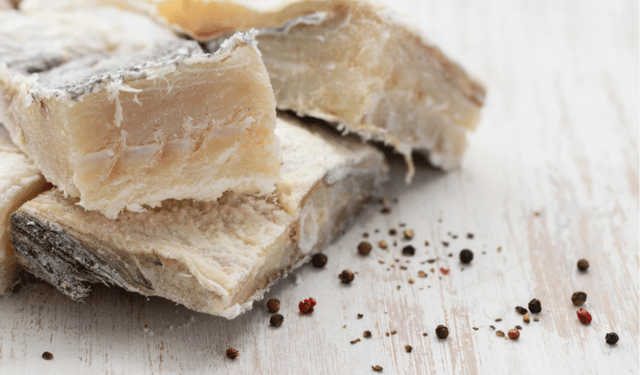
For years, the whitefish supply chain has lived suspended between two mirror-image realities: on one side, the consolidated and reassuring tradition of cod; on the other, the growing awareness that relying almost exclusively on a single species is a vulnerability for the market, for the stocks, and for the sector’s ability to guarantee continuity to European consumers.
Between these two poles lies a complex landscape, shaped by biological dynamics that do not always bend to industry needs and by fluctuations in availability that force the sector to rethink its foundations.
For a long time, cod embodied stability. Its commercial history is tied to solid supply chains, predictable volumes, and a constant presence in wholesale markets and on retail shelves. European consumer habits were shaped around its unmistakable profile: white flesh, delicate flavor, reliable yield.
But the market, as often happens, evolves faster than its certainties.
Over the past decade, the system has begun to show subtle but evident tensions. Fluctuating availability, rising international competition, and growing sensitivity toward sustainability have revealed just how fragile a model based on a single cornerstone species can be. Demand has not diminished; on the contrary, it has grown. And the entire supply chain has begun to question how to navigate a future where stability can no longer be taken for granted.
It is within this context that a seemingly simple yet deeply transformative element enters the scene: the Italian regulatory decision to officially extend the term “cod” to Molva molva and Brosme brosme.
A regulation that, in itself, does not rewrite the market overnight but changes the framework within which the market can move.
And at times, it is precisely the framework that determines the direction.

Molva and Brosme are neither emerging species nor new discoveries. They are well-known to industry professionals, who have always recognized their biological and gastronomic proximity to traditional cod. Their difference lies not in their nature but in their visibility: for decades they remained in the background, despite possessing all the qualities necessary to assume a more central role.
Their inclusion in the “cod” category restores their commercial dignity and gives the whitefish sector something far more valuable than a mere increase in supply: a concrete opportunity to redesign the concept of whitefish.
Diversifying does not mean breaking with tradition; it means reinforcing it.
Molva and Brosme offer white, compact flesh, clean flavor, and characteristics naturally suited to industrial processing and modern distribution. They guarantee excellent fillet yield, respond well to processing, and deliver consistently high quality.
In other words, they embody what the whitefish market has always demanded: reliability.
And yet, to emerge, they needed formal recognition. Regulation has finally provided it.
But the rule, as often happens, did not appear in a vacuum: it arrived after someone had already begun shaping the path.
In this case, that path leads directly to Unifrigo Gadus.
For years, the company has worked based on a simple yet counter-current conviction: the future of whitefish cannot remain imprisoned by inertia. The market needs credible alternatives, coherent with what the industry requires and aligned with what consumers recognize as quality.
For Unifrigo Gadus, Molva and Brosme have never been “secondary species” or fallback options. They have long been — and are now more than ever — a strategic element for protecting supply chain stability, reducing dependence on cyclical fluctuations, and building a more balanced relationship between demand and availability.
The fact that regulation recognizes them as cod merely formalizes an identity that was already evident: these are whitefish fully aligned with the gastronomic and industrial profile the market knows and values.
And this recognition offers an additional advantage: it allows operators to communicate more transparently, reducing ambiguity and helping consumers navigate choices with greater clarity.
Seen from a broader perspective, the impact of this regulation becomes even more significant.
It is not only about labeling; it is about giving the entire supply chain room to breathe.
About not being trapped in dependence on a single species.
About building a future in which stability is no longer a coincidence but the result of strategic choices.
The contribution of Unifrigo Gadus to this process does not lie in following a change — but in anticipating it. The company believed in whitefish diversification before it became a necessity, investing in products, communication, and supply chain culture at a time when the topic seemed secondary.
Today, that vision proves essential.
Molva and Brosme, now officially recognized as cod, represent a new chapter in the history of whitefish.
A chapter that does not erase tradition but expands it; does not break a cycle but opens a new one; does not replace a protagonist but adds two more, capable of bringing balance to a sector for which stability is vital.
The regulation has provided the vocabulary.
Now it is up to the market to use it to build a stronger future, and to companies like Unifrigo Gadus to continue turning that future into industrial reality.
For more insights on the future of Italian fisheries and the blue economy, follow ongoing coverage and analysis on Pesceinrete.