• CHI SIAMO
  • CONTATTI
  • PARTNER
  • PUBBLICITÀ
  • NEWSLETTER
  • ARCHIVIO
    • Bandi e Opportunità
    • Speciali
    • Rubriche
    • Nutrizione e salute
    • Interviste
    • Video
domenica 19 Aprile, 2026
Pesceinrete
  • Home
  • News
  • Pesca
  • Acquacoltura
    • Acquaponica
    • Algocoltura
  • Protagonisti
    • Aziende
    • Istituzioni
      • Europee
      • Nazionali
      • Regionali
    • Associazioni di categoria
      • Associazione Mediterranea Acquacoltori
      • Legacoop Agroalimentare
      • Assoittica Italia
      • Federpesca
      • PescaAgri-CIA
      • Unci AgroAlimentare
    • Sindacati
      • UILA Pesca
    • ONG
    • Consorzi e Cooperative
      • CIRSPE
  • Tecnologia
  • Sostenibilità
  • Mercati
  • Eventi
  • OverseasNew
Nessun Risultato
Vedi tutti i Risultati
Pesceinrete
  • Home
  • News
  • Pesca
  • Acquacoltura
    • Acquaponica
    • Algocoltura
  • Protagonisti
    • Aziende
    • Istituzioni
      • Europee
      • Nazionali
      • Regionali
    • Associazioni di categoria
      • Associazione Mediterranea Acquacoltori
      • Legacoop Agroalimentare
      • Assoittica Italia
      • Federpesca
      • PescaAgri-CIA
      • Unci AgroAlimentare
    • Sindacati
      • UILA Pesca
    • ONG
    • Consorzi e Cooperative
      • CIRSPE
  • Tecnologia
  • Sostenibilità
  • Mercati
  • Eventi
  • OverseasNew
Nessun Risultato
Vedi tutti i Risultati
Pesceinrete
Nessun Risultato
Vedi tutti i Risultati

Home Overseas

Italian seafood distribution chain of custody

The truth is that the chain of custody is no longer a technical detail buried at the end of the paperwork.

Davide Ciravolo by Davide Ciravolo
11 Dicembre 2025
in Overseas
Italian seafood distribution chain of custody

Italian seafood distribution chain of custody

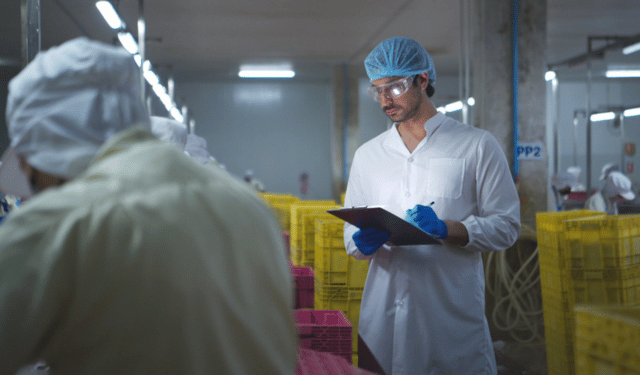
Anyone walking into a seafood distribution warehouse at dawn might think nothing has changed in twenty years: pallets crossing paths, labels fluttering, the shift supervisor’s voice cutting through the air like a call. And yet, if you look more closely, something really has changed. You can see it in the way operators check a batch, in the almost obsessive care with which they write down a code or measure a temperature. It’s as if the product today were asking for a different kind of attention. Deeper.

The truth is that the chain of custody is no longer a technical detail buried at the end of the paperwork. It has become a pillar of the market. Buyers want to see mapped-out paths, recorded handovers, consistent information. And not out of distrust, but because the demand for transparency has exploded: it comes from consumers, from retail banners, from the most attentive foodservice, and it has now reached all the way into the warehouses, where every gesture seems to weigh a little more than before.

Italian distribution has found itself at the centre of this transformation. Many companies, driven by export markets and in particular by the Northern European retail chains, have realised that it is no longer enough to “do things properly”: you have to be able to prove it. And so, without big announcements, they have moved towards international standards capable of giving shape and method to this new way of working. Among these, several operators have chosen the Aquaculture Stewardship Council (ASC) scheme, especially for the chain of custody component, which lays down clear rules on batch separation, documentation, audits and consistency of information along the product’s journey.

What’s interesting is that this change is not coming from the top, but from the bottom. From an operator who takes one minute longer to check a label, from a quality manager who rewrites a procedure because “this isn’t clear enough,” from an importer who decides to digitalise movements because the risk of confusion between batches is too high. These are small, everyday gestures, but over time they redefine an entire company culture.

Anyone who has already gone through a chain of custody audit knows this well. It’s not just about showing registers: you have to tell a story. Explain why that fish passed through that point, in that exact order, and not somewhere else. Prove that every piece of information, from the very first document to the printing of the final label, has followed a logic that is understandable and verifiable. And often, during these checks, blind spots emerge that nobody had ever noticed before. It is in those moments, a little tense and a little revealing, that you understand how traceability has become a skill, not just an obligation.

The benefits don’t come all at once, but they do come. Smoother audits. Fewer disputes. More stable business relationships, because showing coherence — real, documented coherence — builds a kind of trust that is hard to obtain in any other way. Some companies tell how the simple fact of being able to reconstruct a product’s movement in a few minutes has changed the way they are perceived by buyers. “Now we know we can ask you anything and you have the answer,” they have been told.

Of course, it’s not a path without obstacles. There are costs, and SMEs cannot always face them lightly. The procedures require discipline and, for many teams, completely new habits. But if there is one element shared by those who have decided to take this road, it is the awareness that the market will not go backwards. Rigorous chains of custody will no longer be a competitive advantage: they will become a standard.

In the end, working with traceability in this way means something simple but demanding: taking responsibility for the entire journey of the product, not just the part you physically handle. It means looking at a batch and knowing that it is not just a stock unit, but a fragment of a story that starts far away and has to arrive intact all the way to the shelf.

In a sector where trust has always carried enormous weight, the chain of custody has become the most solid — and perhaps also the most honest — way to build it. And Italian distribution, with all its complexities, is learning to tell this story with a level of precision that until recently nobody would have imagined necessary.

For more insights on the future of Italian fisheries and the blue economy, follow ongoing coverage and analysis on Pesceinrete.
NEWSLETTER

Tags: Aquaculture Stewardship CouncilASC certificationchain of custodyfood transparencyGDOItalian fish importersItalian seafood distributionNorth European retailquality assuranceretail seafood buyersseafood auditsseafood logisticsseafood supply chainseafood traceability
CondividiTweetCondividiPinInviaCondividiInvia
Articolo precedente

Pesca nel Mediterraneo, il settore all’attacco dell’Unione Europea

Prossimo articolo

Federpesca: “Il riconoscimento Unesco premia anche le nostre filiere ittiche”

Davide Ciravolo

Davide Ciravolo

Articoli Correlati

EU maritime spatial planning and fisheries

EU maritime spatial planning and fisheries

by Alice Giacalone
17 Aprile 2026

Maritime spatial planning in the European Union is back at the center of the political agenda, with a message that...

Libya Fisheries Strategy: GFCM Visit Signals Blue Economy Shift

Libya fisheries strategy: GFCM visit signals Blue Economy shift

by Gaspare Bilardello
16 Aprile 2026

The Libya fisheries strategy GFCM visit marks a decisive step in the country’s transition toward a modern and sustainable blue...

Zwara Fishing Expo 2026: Libya’s Blue Economy Shift

Zwara Fishing Expo 2026: Libya’s Blue Economy Shift

by Gaspare Bilardello
14 Aprile 2026

In June 2026, the Zwara Fishing & Maritime Investment Expo marks a turning point in Libya’s fisheries sector, signaling a...

Trapline enters Italy’s swordfish fishery: why this trial matters

Trapline enters Italy’s swordfish fishery: why this trial matters

by Davide Ciravolo
13 Aprile 2026

There is one development that risks going largely unnoticed, yet it could carry real weight for the future of swordfish...

Prossimo articolo
Federpesca

Federpesca: “Il riconoscimento Unesco premia anche le nostre filiere ittiche”

Lascia un commento Annulla risposta

Il tuo indirizzo email non sarà pubblicato. I campi obbligatori sono contrassegnati *

Questo sito utilizza Akismet per ridurre lo spam. Scopri come vengono elaborati i dati derivati dai commenti.

Categorie articoli


Newsletter

Pesceinrete

Pesceinrete è la testata giornalistica unica in Italia ad occuparsi di pesca commerciale ed acquacoltura.
In quanto canale tematico e dai contenuti specializzati, si rivolge direttamente agli operatori della filiera con una comunicazione targettizzata che risponde alle esigenze del settore.

Categorie

  • Pesca
  • Acquacoltura
  • Eventi e Fiere
  • Mercati
  • Sostenibilità
  • Tecnologia

Segui le nostre pagine social

Stock images by Depositphotos

  • Chi siamo
  • PARTNER
  • Contatti
  • Pubblicità
  • Newsletter

© 2023 INRETE S.R.L. P.Iva: 02557660814 - Pesceinrete- il quotidiano del settore ittico | Web design by Motion Head

  • Home
  • News
  • Pesca
  • Acquacoltura
  • Protagonisti
  • Tecnologia
  • Sostenibilità
  • Mercati
  • Eventi e Fiere
  • Overseas English NEW
  • Archivio
  • Chi siamo
  • Contatti
  • Partner
  • Pubblicità
  • Newsletter
Nessun Risultato
Vedi tutti i Risultati

© 2023 INRETE S.R.L. P.Iva: 02557660814 - Pesceinrete- il quotidiano del settore ittico | Web design by Motion Head