• HOME
  • CHI SIAMO
  • CONTATTI
  • PARTNER
  • PUBBLICITÀ
  • NEWSLETTER
  • ARCHIVIO
    • Bandi e Opportunità
    • Speciali
    • Rubriche
    • Nutrizione e salute
    • Interviste
    • Video
mercoledì 16 Settembre, 2026
Pesceinrete
  • Pesca
  • Nutrizione e salute
  • Acquacoltura
    • Acquaponica
    • Algocoltura
  • Approfondimenti
  • Tecnologia
  • Sostenibilità
  • Mercati
  • OverseasNew
Nessun Risultato
Vedi tutti i Risultati
Pesceinrete
  • Pesca
  • Nutrizione e salute
  • Acquacoltura
    • Acquaponica
    • Algocoltura
  • Approfondimenti
  • Tecnologia
  • Sostenibilità
  • Mercati
  • OverseasNew
Nessun Risultato
Vedi tutti i Risultati
Pesceinrete
Nessun Risultato
Vedi tutti i Risultati

Home Overseas

Artificial Intelligence and the Blue Economy in Iceland

For Italy’s seafood sector, the Icelandic model sends a clear signal.

Davide Ciravolo by Davide Ciravolo
6 Novembre 2025
in Overseas
Artificial Intelligence and the Blue Economy in Iceland

Artificial Intelligence and the Blue Economy in Iceland

Artificial Intelligence and the Blue Economy in Iceland

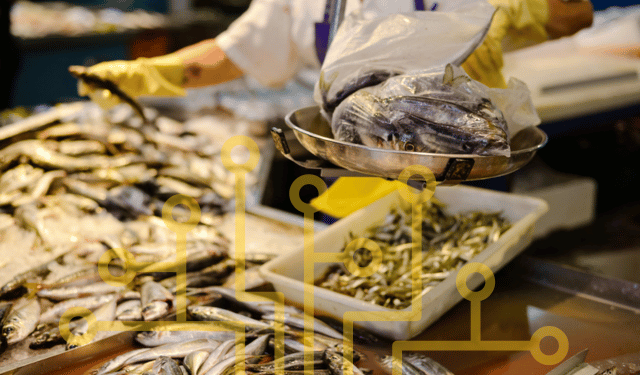
In the port of Reykjavík, the Iceland Ocean Cluster has turned a concept into reality: artificial intelligence applied to the blue economy can be the key to uniting sustainability, value, and technology.
For years, the cluster has brought together companies, researchers, and startups around a common goal — making the seafood supply chain more efficient and more respectful of marine resources.
The recent roundtable held in the Icelandic capital highlighted how digital innovation is becoming central to maritime economy strategies. Here, AI is not an experiment but an invisible infrastructure supporting every stage of production.

From Data to Value

In Iceland, technology is never an end in itself. Sensors and predictive models collect and interpret vast amounts of data, improving biomass management and optimizing fishing and processing operations.
The “100% Fish” philosophy, which aims to use every part of the fish, has found a powerful ally in artificial intelligence: algorithms capable of identifying alternative uses for waste and by-products, transforming them into collagen, fertilizers, supplements, and bioplastics.
The result is a fully functioning circular economy, where scientific research interacts with industry, and sustainability becomes a driver of competitiveness.

People Remain at the Center

The expansion of artificial intelligence within the blue economy is transforming the very nature of work in the maritime sector.
Automation reduces time but increases the need for digital skills. In Iceland, new professionals are being trained — technicians who can read ocean data, system analysts, and operators specializing in marine sensor maintenance.
Human capital remains the most valuable resource: without human knowledge, data are just numbers. This is the difference between an industry that merely modernizes and one that truly evolves.

A Message to the Mediterranean

For Italy’s seafood sector, the Icelandic model sends a clear signal.
Our often family-run fisheries could benefit greatly from digitalization: better catch planning, reduced fuel consumption, enhanced by-product valorization, and improved traceability.
But transformation requires a collaborative network between institutions, research, and businesses. Innovation does not emerge from a single project, but from a shared vision that connects the sea, the territory, and industry.

The Sea as an Intelligent Ecosystem

Looking to Iceland, a simple principle emerges: artificial intelligence applied to the blue economy is not a goal but a new language.
A language that translates the sea into data, connects people and processes, and enables more informed decision-making.
For nations that live by the sea, embracing this perspective means rethinking the entire production paradigm — moving from an extractive to a regenerative economy.
It is a cultural challenge before being a technological one. But those who face it with vision and courage, as Iceland is doing, will write the future of the ocean economy.

Get the latest trends in the blue economy — subscribe to our newsletter.
NEWSLETTER

Tags: 100% Fish IcelandAI marine innovationartificial intelligence blue economy IcelandIceland Ocean Cluster AIsustainable fisheries digital transformation
CondividiTweetCondividiPinInviaCondividiInvia
Articolo precedente

Nuove sfide per l’industria ittica europea

Prossimo articolo

Accordo tra IZSLT e API per un’acquacoltura più sicura e sostenibile

Davide Ciravolo

Davide Ciravolo

Autore Pesceinrete, retail ittico e mercati seafood Davide Ciravolo è autore Pesceinrete. Si occupa di mercati, distribuzione e scenari commerciali della filiera ittica, con particolare attenzione al rapporto tra prodotto, retail e consumi. La sua esperienza come ex buyer di Esselunga gli permette di osservare il settore seafood anche dal punto di vista della GDO e delle dinamiche di assortimento.

Articoli Correlati

Fishing vessel at sea as warmer ocean temperatures and El Niño shift fish distribution and fishing grounds

El Niño is set to become very strong. Warmer seas are redrawing the geography of fishing

by Luca Di Noto
15 Settembre 2026

What happens to fisheries when seas become warmer? Warmer seas do not simply mean fewer fish. They can change where...

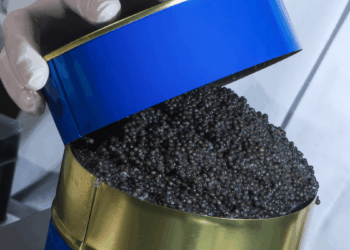
Imported caviar at the centre of the European debate on origin transparency

Imported caviar, European aquaculture calls for clearer origin information

by Mariella Ballatore
11 Settembre 2026

Imported caviar from non-EU countries has become a test case in European aquaculture’s call for greater origin transparency. FEAP warns...

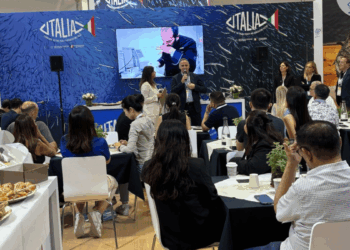
Italian seafood presented to buyers at Seafood Expo Asia in Singapore

From blue crab to red shrimp, buyers put Italy’s seafood supply chain to the test in Singapore

by Redazione
9 Settembre 2026

From blue crab seeking an industrial supply chain to traceable bivalve molluscs and red shrimp for fine dining, Italy is...

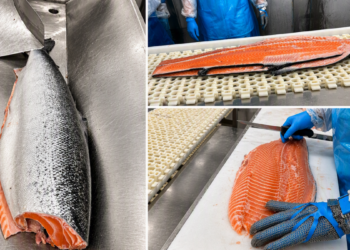
Salmon fillet on the processing line at Freezco Eesti in Tallinn

Freezco expands salmon processing for the italian market

by Davide Ciravolo
7 Settembre 2026

Freezco has expanded salmon processing for the Italian market through Freezco Eesti, a facility in Tallinn launched in May 2026....

Lascia un commento Annulla risposta

Il tuo indirizzo email non sarà pubblicato. I campi obbligatori sono contrassegnati *

Questo sito utilizza Akismet per ridurre lo spam. Scopri come vengono elaborati i dati derivati dai commenti.


Articoli più letti

  • 10 pesci costosi e prelibati
  • Le specie di sarago del Mediterraneo
  • Pesci con più e meno mercurio
  • Molva, una ricchezza del Mare del Nord
  • Molluschi bivalvi: descrizione e caratteristiche
  • Congelare il tonno in scatola
  • Gattuccio e palombo, gli squali buoni da mangiare
  • Triglia: caratteristiche e proprietà nutrizionali
  • Mangiare il tonno crudo: vantaggi e pericoli
  • Sgombro e lanzardo, pesce azzurro per il cuore
Pesceinrete

Pesceinrete è la testata giornalistica unica in Italia ad occuparsi di pesca commerciale ed acquacoltura. In quanto canale tematico e dai contenuti specializzati, si rivolge direttamente agli operatori della filiera con una comunicazione targettizzata che risponde alle esigenze del settore.

Segui le nostre pagine social

Stock images by Depositphotos

Newsletter

Categorie

  • News Ittico
  • Pesca
  • Acquacoltura
  • Associazioni di categoria
  • Sindacati
  • ONG
  • Tecnologia
  • Sostenibilità
  • Mercati
  • Eventi e Fiere
  • Overseas
  • Nutrizione e salute
  • Approfondimenti
  • Chi siamo
  • Policy editoriali
  • Partner
  • Contatti
  • Pubblicità
  • Newsletter
  • Mappa del sito

© 2026 INRETE S.R.L. P.Iva: 02557660814 - Pesceinrete - Il quotidiano del settore ittico | Credits

Pesceinrete
Gestisci Consenso

Usiamo cookie tecnici per far funzionare il sito, e cookie statistici (anche di terze parti) per capire come viene usato e migliorarlo. Puoi accettare tutto, rifiutare tutto o scegliere quali attivare — restando comunque libero di navigare senza restrizioni.

Funzionale Sempre attivo
L'archiviazione tecnica o l'accesso sono strettamente necessari al fine legittimo di consentire l'uso di un servizio specifico esplicitamente richiesto dall'abbonato o dall'utente, o al solo scopo di effettuare la trasmissione di una comunicazione su una rete di comunicazione elettronica.
Preferenze
L'archiviazione tecnica o l'accesso sono necessari per lo scopo legittimo di memorizzare le preferenze che non sono richieste dall'abbonato o dall'utente.
Statistiche
L'archiviazione tecnica o l'accesso che viene utilizzato esclusivamente per scopi statistici. L'archiviazione tecnica o l'accesso che viene utilizzato esclusivamente per scopi statistici anonimi. Senza un mandato di comparizione, una conformità volontaria da parte del vostro Fornitore di Servizi Internet, o ulteriori registrazioni da parte di terzi, le informazioni memorizzate o recuperate per questo scopo da sole non possono di solito essere utilizzate per l'identificazione.
Marketing
L'archiviazione tecnica o l'accesso sono necessari per creare profili di utenti per inviare pubblicità, o per tracciare l'utente su un sito web o su diversi siti web per scopi di marketing simili.
  • Gestisci opzioni
  • Gestisci servizi
  • Gestisci {vendor_count} fornitori
  • Per saperne di più su questi scopi
Personalizza
  • {title}
  • {title}
  • {title}
  • Home
  • Nutrizione e salute
  • Pesca
  • Acquacoltura
  • Approfondimenti
  • Tecnologia
  • Sostenibilità
  • Mercati
  • Overseas English NEW
  • Archivio
  • Chi siamo
  • Contatti
  • Partner
  • Pubblicità
  • Newsletter
Nessun Risultato
Vedi tutti i Risultati

© 2026 INRETE S.R.L. P.Iva: 02557660814 - Pesceinrete - Il quotidiano del settore ittico | Credits