• HOME
  • CHI SIAMO
  • CONTATTI
  • PARTNER
  • PUBBLICITÀ
  • NEWSLETTER
  • ARCHIVIO
    • Bandi e Opportunità
    • Speciali
    • Rubriche
    • Nutrizione e salute
    • Interviste
    • Video
mercoledì 16 Settembre, 2026
Pesceinrete
  • Pesca
  • Nutrizione e salute
  • Acquacoltura
    • Acquaponica
    • Algocoltura
  • Approfondimenti
  • Tecnologia
  • Sostenibilità
  • Mercati
  • OverseasNew
Nessun Risultato
Vedi tutti i Risultati
Pesceinrete
  • Pesca
  • Nutrizione e salute
  • Acquacoltura
    • Acquaponica
    • Algocoltura
  • Approfondimenti
  • Tecnologia
  • Sostenibilità
  • Mercati
  • OverseasNew
Nessun Risultato
Vedi tutti i Risultati
Pesceinrete
Nessun Risultato
Vedi tutti i Risultati

Home Overseas

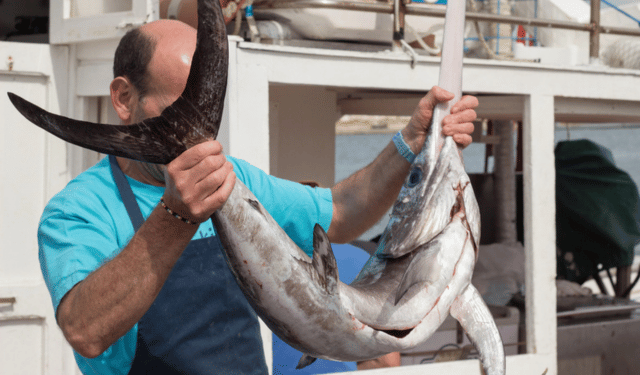
Trapline enters Italy’s swordfish fishery: why this trial matters

Italy has launched a national trial on trapline use in Mediterranean swordfish fishing, opening a closely monitored phase that could influence future management choices through 2028.

Davide Ciravolo by Davide Ciravolo
13 Aprile 2026
in Overseas
Trapline enters Italy’s swordfish fishery: why this trial matters

Trapline enters Italy’s swordfish fishery: why this trial matters

There is one development that risks going largely unnoticed, yet it could carry real weight for the future of swordfish fishing in the Mediterranean. Italy’s Ministry of Agriculture has launched a national trial on the use of trapline, a fishing gear that is still not widely used but is already drawing increasing attention from the international scientific community.

This is not just another regulatory update. It marks the official entry in Italy of a fishing system that will be observed, measured and tested through 2028, with a clear objective: to understand whether it can become a credible alternative, or at least a complementary tool, to the gears currently in use.

In its most common configuration, trapline consists of a structure made up of concentric rings fitted with hooks, bait and, in some cases, light devices. It does not replace longline gear, but works alongside it, coming into play at the most delicate stage of the activity: the moment when the actual catch is determined.

That is where the most interesting challenge begins.

For years, the sector has been dealing with a difficult balance: preserving the profitability of fishing businesses without increasing pressure on stocks, while at the same time reducing bycatch. Trapline is being studied precisely in this context. Its value does not lie in increasing volumes, but in improving catch quality by allowing better species selection and, above all, better size selectivity.

The ministerial decree does not open the door to unrestricted use of this gear. On the contrary, it establishes a strict pathway. Only a limited number of authorised vessels will be allowed to take part in the trial, and they will operate within a highly controlled framework, with precise obligations for data collection and continuous monitoring.

Every trip at sea will effectively become part of a research activity. Position, depth, gear configuration, number of hooks and catch composition will all have to be recorded. More than that, interactions with protected species will also be monitored, an issue that is becoming increasingly central in both European and international fisheries policies.

Supporting this framework will be a technical-scientific committee tasked with analysing the data and comparing the results with those obtained through traditional longline fishing. This is not a bureaucratic detail, but the core of the entire process. The real assessment of trapline effectiveness will depend on what emerges from this comparison.

For fishing operators, this is not a neutral development.

Those who join the trial will have to accept strict constraints, but they will also take on a direct role in a process that could shape future decisions. If the data show higher selectivity and lower bycatch, trapline could move beyond the experimental phase and become part of the management strategies for Mediterranean swordfish fishing.

If that happens, the balance of the sector could change.

It is still too early to draw conclusions, but one point is already clear: this is not just a technical test. It reflects the way Mediterranean fisheries are trying to respond to the environmental, scientific and regulatory pressures that have intensified in recent years.

As always, the real difference will be made by the data, and by how well the sector is able to interpret them.

Trapline is currently being tested in Italy as an experimental gear for swordfish fishing through 2028, with the aim of assessing its selectivity and environmental impact.

The trapline trial is part of wider internationally coordinated efforts to improve Mediterranean swordfish fishery management, with particular attention to reducing bycatch and strengthening the sustainability of fishing activities.
Tags: Bycatch Reductionfishing innovationItaly fishing trialMediterranean fisheriesMediterranean swordfish fishingselective fishing gearsustainable fishingswordfish fisheryswordfish managementtrapline
CondividiTweetCondividiPinInviaCondividiInvia
Articolo precedente

Blu Ocean: valore industriale e visione nel seafood trasformato

Prossimo articolo

Verso l’Economia Blu: la Libia scommette sul futuro e chiama l’Italia a un nuovo patto del Mediterraneo

Davide Ciravolo

Davide Ciravolo

Autore Pesceinrete, retail ittico e mercati seafood Davide Ciravolo è autore Pesceinrete. Si occupa di mercati, distribuzione e scenari commerciali della filiera ittica, con particolare attenzione al rapporto tra prodotto, retail e consumi. La sua esperienza come ex buyer di Esselunga gli permette di osservare il settore seafood anche dal punto di vista della GDO e delle dinamiche di assortimento.

Articoli Correlati

Fishing vessel at sea as warmer ocean temperatures and El Niño shift fish distribution and fishing grounds

El Niño is set to become very strong. Warmer seas are redrawing the geography of fishing

by Luca Di Noto
15 Settembre 2026

What happens to fisheries when seas become warmer? Warmer seas do not simply mean fewer fish. They can change where...

Imported caviar at the centre of the European debate on origin transparency

Imported caviar, European aquaculture calls for clearer origin information

by Mariella Ballatore
11 Settembre 2026

Imported caviar from non-EU countries has become a test case in European aquaculture’s call for greater origin transparency. FEAP warns...

Italian seafood presented to buyers at Seafood Expo Asia in Singapore

From blue crab to red shrimp, buyers put Italy’s seafood supply chain to the test in Singapore

by Redazione
9 Settembre 2026

From blue crab seeking an industrial supply chain to traceable bivalve molluscs and red shrimp for fine dining, Italy is...

Salmon fillet on the processing line at Freezco Eesti in Tallinn

Freezco expands salmon processing for the italian market

by Davide Ciravolo
7 Settembre 2026

Freezco has expanded salmon processing for the Italian market through Freezco Eesti, a facility in Tallinn launched in May 2026....

Lascia un commento Annulla risposta

Il tuo indirizzo email non sarà pubblicato. I campi obbligatori sono contrassegnati *

Questo sito utilizza Akismet per ridurre lo spam. Scopri come vengono elaborati i dati derivati dai commenti.


Articoli più letti

  • 10 pesci costosi e prelibati
  • Le specie di sarago del Mediterraneo
  • Pesci con più e meno mercurio
  • Molva, una ricchezza del Mare del Nord
  • Molluschi bivalvi: descrizione e caratteristiche
  • Congelare il tonno in scatola
  • Gattuccio e palombo, gli squali buoni da mangiare
  • Triglia: caratteristiche e proprietà nutrizionali
  • Mangiare il tonno crudo: vantaggi e pericoli
  • Sgombro e lanzardo, pesce azzurro per il cuore
Pesceinrete

Pesceinrete è la testata giornalistica unica in Italia ad occuparsi di pesca commerciale ed acquacoltura. In quanto canale tematico e dai contenuti specializzati, si rivolge direttamente agli operatori della filiera con una comunicazione targettizzata che risponde alle esigenze del settore.

Segui le nostre pagine social

Stock images by Depositphotos

Newsletter

Categorie

  • News Ittico
  • Pesca
  • Acquacoltura
  • Associazioni di categoria
  • Sindacati
  • ONG
  • Tecnologia
  • Sostenibilità
  • Mercati
  • Eventi e Fiere
  • Overseas
  • Nutrizione e salute
  • Approfondimenti
  • Chi siamo
  • Policy editoriali
  • Partner
  • Contatti
  • Pubblicità
  • Newsletter
  • Mappa del sito

© 2026 INRETE S.R.L. P.Iva: 02557660814 - Pesceinrete - Il quotidiano del settore ittico | Credits

Pesceinrete
Gestisci Consenso

Usiamo cookie tecnici per far funzionare il sito, e cookie statistici (anche di terze parti) per capire come viene usato e migliorarlo. Puoi accettare tutto, rifiutare tutto o scegliere quali attivare — restando comunque libero di navigare senza restrizioni.

Funzionale Sempre attivo
L'archiviazione tecnica o l'accesso sono strettamente necessari al fine legittimo di consentire l'uso di un servizio specifico esplicitamente richiesto dall'abbonato o dall'utente, o al solo scopo di effettuare la trasmissione di una comunicazione su una rete di comunicazione elettronica.
Preferenze
L'archiviazione tecnica o l'accesso sono necessari per lo scopo legittimo di memorizzare le preferenze che non sono richieste dall'abbonato o dall'utente.
Statistiche
L'archiviazione tecnica o l'accesso che viene utilizzato esclusivamente per scopi statistici. L'archiviazione tecnica o l'accesso che viene utilizzato esclusivamente per scopi statistici anonimi. Senza un mandato di comparizione, una conformità volontaria da parte del vostro Fornitore di Servizi Internet, o ulteriori registrazioni da parte di terzi, le informazioni memorizzate o recuperate per questo scopo da sole non possono di solito essere utilizzate per l'identificazione.
Marketing
L'archiviazione tecnica o l'accesso sono necessari per creare profili di utenti per inviare pubblicità, o per tracciare l'utente su un sito web o su diversi siti web per scopi di marketing simili.
  • Gestisci opzioni
  • Gestisci servizi
  • Gestisci {vendor_count} fornitori
  • Per saperne di più su questi scopi
Personalizza
  • {title}
  • {title}
  • {title}
  • Home
  • Nutrizione e salute
  • Pesca
  • Acquacoltura
  • Approfondimenti
  • Tecnologia
  • Sostenibilità
  • Mercati
  • Overseas English NEW
  • Archivio
  • Chi siamo
  • Contatti
  • Partner
  • Pubblicità
  • Newsletter
Nessun Risultato
Vedi tutti i Risultati

© 2026 INRETE S.R.L. P.Iva: 02557660814 - Pesceinrete - Il quotidiano del settore ittico | Credits