Overseas


Italy’s sea economy is growing, gaining speed and strengthening its weight within the national system. Yet while the figures continue to point in a positive direction, a far more concrete and, in some ways, more urgent signal is coming from the heart of the industry itself: the sector may soon run short of people.
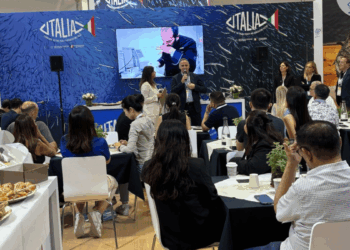
This is not a theoretical concern. The issue was clearly raised during the conference Genova and Liguria capitals of the sea economy 2026, promoted by Confindustria, where businesses, institutions and sector representatives discussed the strategic role of the blue economy. On that occasion, based on a report developed together with Boston Consulting Group, one figure emerged that cannot be ignored: around 175,000 workers will be needed over the next five years.
Taken on its own, that number might appear encouraging. In reality, it tells a very different story. Only part of that demand is linked to the sector’s growth; the largest share will be needed simply to replace those leaving the labour market. That is where the real problem begins.
For those working in the seafood sector, this is nothing new. It is a dynamic that is already visible. In fishing communities, generational turnover is becoming increasingly fragile. In aquaculture, demand is rising for technical profiles that are difficult to find. In processing, companies often struggle to recruit staff with the right skills. And across the entire supply chain, from production to marketing, clear signs of strain are emerging.
The issue, however, is not only quantitative. It is qualitative as well.
In recent years, the sector has changed profoundly in structure. Seafood is no longer just primary production. It now means certified quality, sustainability, product innovation and evolving consumer habits. The growing weight of processed products, ready-to-eat lines and higher value-added seafood has inevitably raised the level of expertise required.
Today, experience alone is no longer enough. Up-to-date technical knowledge is needed, along with management capabilities, familiarity with increasingly strict regulations and the ability to operate within ever more complex markets. Companies need professionals capable of moving across the entire supply chain, interpreting change and adapting quickly.
And this is precisely where the system shows its limits.
The world of education and training is struggling to keep pace. Pathways linked to the sea remain limited and are often not particularly attractive. The most in-demand skills are not being produced in sufficient numbers and, even when they are, they are not always immediately usable within companies. The result is a clear mismatch: businesses are looking for profiles they cannot find, while part of the workforce remains on the margins because it is not adequately prepared.
Making the picture even more complex is a structural factor that goes beyond the sector itself: demographics. In the coming years, the working-age population is set to shrink, further narrowing the pool from which companies can recruit. In a sector like seafood, which already faces challenges in terms of attractiveness, this factor carries even greater weight.
And it is precisely attractiveness that represents a crucial turning point. In many cases, work linked to the sea is still perceived as physically demanding, undervalued or residual. That perception no longer reflects the reality of a sector that is now technological, dynamic and increasingly integrated with the logic of industry and distribution.
At this point, the risk is clear: growth is there, demand is there too, but without people and without the right competences, the system may not be able to support it.
The indications emerging from the discussion between businesses and institutions all point in the same direction. A structural response is needed. Training must be redesigned around the real needs of supply chains, creating pathways that are closer to companies and better able to transfer practical skills. Innovation must be accompanied by more efficient organisational models capable of making work more attractive as well. Simplification remains a necessary step to free up resources and make the system more competitive.
For the seafood industry, this is not a conference topic. It is an everyday issue.
Those working in the industry know it well: opportunities do exist, the market is evolving, but the ability to seize those opportunities depends more and more on people. On their preparation, on their ability to adapt, and on the possibility of building new professional profiles in a context that is changing rapidly.
The sea economy can continue to grow. But it will not do so on its own. It needs skills, it needs vision, and it needs people. And the time to build them is not tomorrow. It is already now.