Overseas


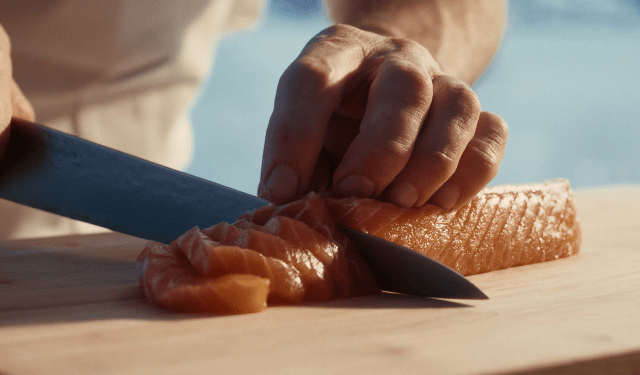
The Italian seafood sector is going through a phase of profound transformation. Sustainability has now become a key criterion in purchasing choices and a determining factor for the competitiveness of products in both the national and European markets. At the same time, consumption habits are diversifying, and the international scenario is redefining trade flows and sourcing strategies. In this context, Norway confirms itself as a strategic partner for Italy, thanks to products such as salmon, stockfish, and Arctic cod, appreciated for their quality, reliability, and capacity for innovation.
We explored these issues with Tom-Jørgen Gangsø, Italy Director of the Norwegian Seafood Council (NSC), the official body that promotes the value and knowledge of Norwegian seafood products worldwide.

In recent months, Norwegian seafood exports to Italy have grown significantly. What factors are driving this trend, and which species are the most dynamic?
The Italian market is showing a steadily increasing demand for Norwegian seafood products, supported by structural factors such as perceived quality, supply consistency, and the strong reputation of the country of origin. In the first half of 2025, exports reached a record 38,234 tonnes, the highest value ever recorded for this period.
Growth has been driven primarily by Norwegian salmon, which increased both compared to 2024 and the previous record in 2022, thanks to improved aquaculture performance. Today, about 90% of the salmon consumed in Italy comes from Norway. It is also the most requested species in the restaurant industry, thanks in part to the popularity of formats such as sushi and poké.
In total, Norwegian salmon accounts for 226 million portions consumed every year. A different trend applies to stockfish, whose exports have been affected by reduced fishing quotas – a measure adopted to ensure the sustainability of stocks – and rising prices. Nevertheless, Norway remains the only exporting country to Italy, where stockfish continues to strengthen its presence in both the Horeca and retail channels, also thanks to new convenience formats.
Italian consumption has traditionally focused on fresh fish, but smoked, frozen, and ready-to-eat products are growing. What opportunities do these trends offer for Norwegian seafood?
The evolution of Italian consumer preferences represents a key opportunity for Norwegian seafood. Alongside fresh fish, which remains a benchmark, the smoked, frozen, and ready-to-eat segments are growing strongly, expanding purchase occasions and making Norwegian salmon increasingly present in daily life.
Modern retail, which recorded a +7.7% increase in value (YTD April 2025) for variable-weight categories, confirms itself as the main driver of this trend, while online purchases are also increasing: today, 10% of Italians regularly buy Norwegian salmon through e-commerce or dedicated apps.
Packaged fresh salmon has shown exceptional performance (+26.1% in 2024), confirming the strength of practical, portioned formats. For stockfish and cod, ready-to-eat and ready-to-cook options offer the opportunity to reinterpret traditional dishes, making them accessible to younger consumers or those with limited time, in a meeting between innovation and culinary roots.

Like many others, the seafood sector is increasingly involved in the challenges of marine ecosystem sustainability and animal welfare. What are the most relevant practices adopted in this area, and how are they communicated to Italian consumers?
The Norwegian seafood sector is undergoing a significant evolution, driven by technological innovation and a sustainability-oriented approach. It operates as an integrated ecosystem where universities, research centers, start-ups, companies, and institutions collaborate to develop cutting-edge solutions.
Examples include next-generation feed, based on deforestation-free certified soy and alternative raw materials, which have already helped reduce the carbon footprint. On the technological front, camera and laser systems can neutralize sea lice without compromising fish welfare, while farming models are diversifying: alongside traditional cages, there are closed and semi-closed systems, offshore structures, land-based facilities, and submersible cages capable of protecting fish from extreme weather and parasites.
At the same time, there is growing commitment to the circular economy, with over 90% of by-products reused, cages recycled, and residues converted into biogas and fertilizers. Logistics are also evolving, with a gradual shift from air to sea and land transport and the testing of hydrogen-powered vessels.
All this is communicated through the Seafood from Norway label, a visible and immediate guarantee of origin and quality for Italian consumers.
Norwegian salmon faces growing international competition: what is its current positioning in terms of volumes, value, and distribution channels?
Despite increasing competition, Norwegian salmon maintains a leadership position, thanks to a combination of quality, origin, and trust that make it the preferred choice of Italians: around 73% of consumers identify Norway as their preferred source, compared to a global average of 61%.
In terms of distribution, the product is well established across all major channels:
-
In large-scale distribution, with positive performance and growth in packaged formats;
-
In the Horeca sector, where Norwegian salmon has become an integral part of culinary offerings, adding value to both traditional and innovative dishes;
-
And in e-commerce, which continues to gain ground through increasingly agile and personalized purchasing experiences.
In 2025, Norwegian salmon once again confirms itself as not only one of the main seafood products imported into Italy but also a staple of Italian eating habits.

How are large-scale distribution, Horeca, and e-commerce evolving for Norwegian seafood, and which perspectives are the most promising?
Italy is now one of the most relevant markets for Norwegian seafood, and consumption continues to grow, especially out-of-home, where in 2024 over 1.093 billion portions were served, driven particularly by salmon (+6.2%) and processed cod products. Quick Service Restaurants played a decisive role in this trend.
Alongside the Horeca channel, which remains central for high-value products, large-scale distribution confirms itself as the main engine of growth: here, beyond fresh fish, ready meals and more practical formats such as poké and ready-to-cook are gaining popularity among younger and urban consumers.
To support these trends, under the Seafood from Norway brand, collaborations have been launched with innovative Italian brands such as Capatoast, Pescaria, Bar Atlantic – Esselunga, Iper – La Grande i, and Investfood, companies capable of reinterpreting Norwegian salmon in a modern way.
The goal is to offer Italian consumers an experience that combines tradition, innovation, and sustainability, closely following the evolution of tastes and lifestyles.

Looking at the medium term, what are the strategic priorities of the Norwegian Seafood Council for Italy, with attention to younger generations and the demand for ready-to-eat products?
Looking to the future, the Norwegian Seafood Council’s priority in Italy is to strengthen consumer trust and consolidate the historic bond that unites the two countries. Among younger consumers, the goal is to promote Norwegian salmon as a healthy, sustainable, and versatile product, perfectly in line with a dynamic yet quality-conscious lifestyle.
Sustainability and traceability remain fundamental values, which will continue to be communicated to encourage more conscious choices. This commitment will enhance the offer across distribution channels – from traditional products to ready-to-eat solutions – and strengthen direct, engaging dialogue through digital channels, educational initiatives, and partnerships with local brands.

A solid partnership projected into the future
Norway thus continues to represent for Italy a benchmark for quality, innovation, and sustainability in the seafood sector. The data confirm a mature yet evolving market, where transparency and trust remain the main drivers. The Norwegian Seafood Council looks ahead with a strategy focused on younger generations and product innovation, confirming that collaboration between Italy and Norway can continue to grow under the banner of a responsible, modern, and competitive seafood industry.
Receive the most important seafood news every week.