In Japanese cuisine, akami, chutoro and otoro distinguish lean, moderately fatty and heavily marbled tuna flesh. Italian tradition identifies filetto, ventresca, tarantello, codella and buzzonaglia. Anatomy, species, processing and yield determine the characteristics of each cut and help shape its market value.

In Edo-period Japan, fatty tuna was considered less desirable than lean meat. It was difficult to preserve and was used mainly in cooked dishes. Today, those same portions are among the most sought-after cuts in high-end sushi restaurants.
Japan’s Ministry of Agriculture, Forestry and Fisheries recounts this history through negima-nabe, a traditional dish in which fatty tuna was cooked with Japanese leeks and soy sauce. The dish also provided a way to use cuts that were relatively inexpensive at the time, but whose value has changed considerably as preservation techniques and eating habits have evolved.
It is an example of how a cut’s commercial appeal also depends on the ability to process and preserve it, and to meet market demand.
A single tuna contains meat with different fat levels, textures and characteristics. The back provides predominantly lean portions; the belly contains the fattier cuts, while the head, collar and tail region have distinctive qualities of their own.
A study published in Food Chemistry in 2007 examined the lipid composition of different muscle regions in Pacific bluefin tuna (Thunnus orientalis), finding significant differences between dorsal and ventral portions and between the farmed and wild specimens examined.
Fat distribution also varies with the species, size and biological condition of the fish.
For anyone buying or processing tuna, knowing where a cut comes from is the first step towards understanding its culinary and commercial potential.
From back to belly, the Japanese classification
In the Japanese tradition of cutting large tuna, the body is divided along two axes: from back to belly, and from head to tail.
The dorsal area comprises three main sections.
Sekami is the front section, closest to the head. Senaka occupies the middle of the back and is particularly valued for the uniformity of its lean meat. Seshimo, towards the tail, generally has less fat and a different muscle structure.
The belly is also divided into three sections.
Harakami, near the head, yields some of the most heavily marbled portions. Haranaka, in the middle, offers meat with varying fat levels. Harashimo, towards the tail, tends to be leaner.
This classification helps specialists identify the expected characteristics of each portion, while recognising that fat distribution can vary even within the same cut.
Anatomical knowledge also extends to parts less familiar to the general public.
Noten comes from the top of the head, while hoho-niku is the cheek, a cut with a distinctive texture that also lends itself to grilling.
Kama refers to the collar, near the gills. Particularly fatty portions of this area are marketed as kama-toro.
There is also tenpa, known as tenmi, a lean portion located deeper in the fish, close to the backbone, and distinct from noten.
These differences broaden the culinary possibilities and create opportunities for cuts that attract less demand than the usual portions for sushi and sashimi.
Akami, chutoro and otoro, the key differences
Alongside the anatomical divisions, Japanese cuisine uses three terms that primarily describe the distribution of fat in the flesh.
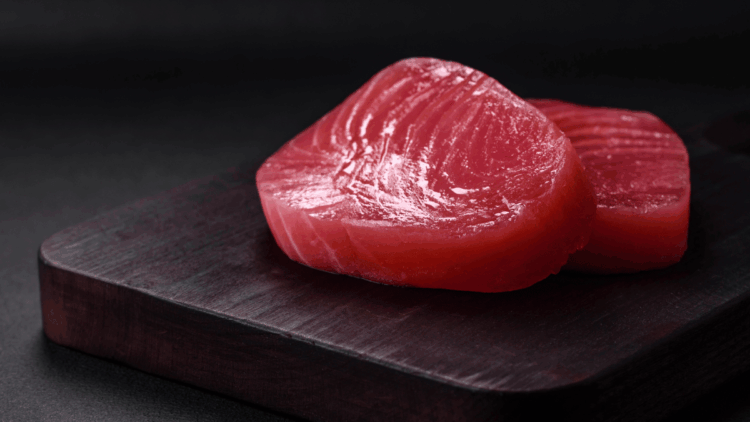
Akami is lean, red meat, taken mainly from the dorsal and inner portions. It has a firm texture, a deep colour and a flavour that brings out tuna’s characteristic taste. It is used for nigiri, sashimi and marinated preparations such as zuke.
Chutoro refers to moderately fatty meat, in which marbling helps soften the texture. It can come from the belly and certain dorsal portions, offering a balance between muscle structure and fat.
Otoro is the term reserved for the fattiest portions, concentrated mainly in the front of the belly and certain areas of the collar. Pronounced marbling gives the meat a pinkish appearance and a particularly melting texture.
The three categories offer different culinary experiences, but do not represent a universal quality ranking.
A well-selected piece of akami may be preferable to a fattier portion for a particular dish or an individual diner’s taste.
The boundaries between these categories also matter. There is no universally recognised fat-content threshold separating chutoro from otoro: classification also depends on the judgement of specialist processors and chefs.
In its more precise Japanese culinary usage, otoro is associated primarily with bluefin tuna, including southern bluefin tuna (Thunnus maccoyii). The term cannot automatically be applied to every species sold as tuna.
Yellowfin tuna (Thunnus albacares), for example, may have fattier belly portions, but their characteristics are not identical to those of otoro from a large bluefin.
Species identification therefore comes before cut selection: it is essential to assessing the product correctly.
The Italian tradition of ventresca, tarantello and buzzonaglia
Mediterranean tonnare, the traditional tuna-trap fisheries and their associated processing operations, also developed a cutting culture based on a detailed understanding of the fish’s anatomy.
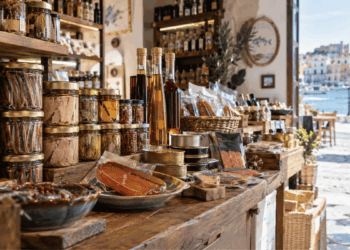
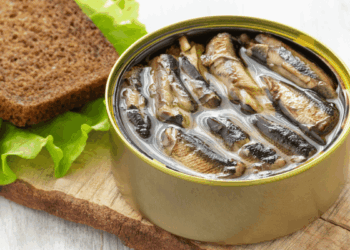
In Sicily and Sardinia, the cutting of bluefin tuna gave rise to a variety of fresh, salted, dried and oil-preserved products.
A particularly telling example comes from the Tre Fontane tuna fishery in Campobello di Mazara, Sicily. Historical records preserved in the Italian Ministry of Culture’s catalogue describe ronchiatura, the operation in which workers divided tuna into ventresca, tarantello, bodano and other portions.
Cooking times and the characteristics of the brine used in processing varied according to the cut.
This organisation shows how anatomical distinctions were already an integral part of production.
Ventresca, taken from the belly, has a higher concentration of fat between the muscle bundles. Its soft texture makes it popular both in fresh preparations and in preserved products, where it retains its distinctive structure.
Filetto, or stallo in some traditional terminology, comprises predominantly lean, evenly structured loin portions suitable for steaks and canning.
Tarantello is an intermediate cut between the dorsal portions and the ventresca. It generally has a softer texture than lean loin, with less fat than the richest belly portions.
The name also has a particular historical meaning. The Italian encyclopaedia Treccani records tarantello, or tarantiello, as a preparation made from tuna belly. The Campania Region also lists tarantiello among its traditional products, made by salting belly portions and preserving them in brine.
The same word can therefore refer to a commercial cut or, depending on the regional and production context, a specific preserved product.
Buzzonaglia consists predominantly of dark muscle meat, particularly that found along the backbone. Its deep colour and pronounced flavour have made it a valued ingredient in traditional tuna preserves.
Unlike ventresca and filetto, buzzonaglia primarily identifies a type of muscle tissue selected during processing, rather than a single, clearly defined anatomical section.
Codella comprises the rear part of the tuna. Traditional Sardinian processing distinguishes between codella bianca, in the ventral region, and codella nera, in the dorsal region.
These terms also appear in a 2019 study published in the Italian Journal of Food Safety, concerning the sampling of bluefin tuna caught in traditional traps off south-western Sardinia.
The research, which focused on representative sampling for mercury determination, highlights another relevant point: the anatomical location of the sampled tissue can influence the analytical result.
Knowledge of tuna cuts therefore also matters in technical procedures and controls.
The comparison with Japan reveals two traditions shaped by different culinary and production objectives.
Italian ventresca and Japanese toro share a focus on belly fat, but the terms are not directly interchangeable. Otoro identifies a particularly marbled selection, whereas ventresca encompasses portions with a range of characteristics.
Similarly, tarantello and chutoro may share similarities in texture and fat content without necessarily corresponding anatomically.
In both traditions, value comes from recognising the characteristics of the raw material and choosing the most appropriate way to process it.
How the cut affects commercial value
For buyers, processors and restaurateurs, distinguishing between tuna cuts is also an economic consideration.
The purchase price is only one component of the actual cost.
A heavily marbled portion such as otoro meets specific demand in Japanese restaurants and is available in limited quantities compared with the lean meat from the same fish. These factors contribute to its premium market positioning.
For a processing business, the assessment also includes processing yield, portion consistency and the characteristics of the finished product.
FAO’s technical documentation on canning tuna in brine provides a quantitative reference.
In one industrial plant model described by the organisation, the indicative overall yield is approximately 50–55% of the initial whole-fish weight. The figure refers to that specific production process and is not a standard yield applicable to every species, cut or facility.
It nevertheless illustrates the importance of distinguishing the weight purchased from the quantity that can actually be marketed in the finished product.
In foodservice, a lower-priced steak may require more trimming or be less suitable for the intended portion size. A more expensive cut may provide specific characteristics and a better yield for a particular preparation.
A proper assessment of a supply therefore needs to consider species, cut type, actual yield, flesh characteristics and intended use together.
This approach also creates opportunities for less familiar portions.
Cheek, collar and certain parts of the head can be used in specific dishes, while buzzonaglia and other tissues selected during processing help diversify the range of preserved tuna products.
Accurate information is also part of building value.
In the seafood market, apparently similar names may refer to different species. The distinction between little tunny and bluefin tuna shows why biological identification should come before assigning particular commercial characteristics to a product.
Food safety is another essential requirement. Maintaining the cold chain is crucial to preventing histamine formation in tuna. Once formed, histamine is not eliminated by cooking or freezing.
Products intended for raw consumption must also comply with hygiene requirements and the parasite-control measures laid down in European legislation, including any applicable exemptions.
Knowing the cut helps buyers select raw material suited to the dish, understand its value and manage its use correctly.
For distributors, this means building more targeted assortments. For processors, it means differentiating product lines. For restaurateurs, it allows different portions to be matched to the desired culinary result.
Consumers can also better understand what they are buying and why two products from the same fish can have different characteristics and prices.
The history of Japanese toro, which went from a little-valued cut to a sought-after speciality, shows how commercial value can change over time.
Anatomy determines the characteristics of the flesh. Product knowledge, processing and market choices turn those characteristics into value.