• HOME
  • CHI SIAMO
  • CONTATTI
  • PARTNER
  • PUBBLICITÀ
  • NEWSLETTER
  • ARCHIVIO
    • Bandi e Opportunità
    • Speciali
    • Rubriche
    • Nutrizione e salute
    • Interviste
    • Video
mercoledì 16 Settembre, 2026
Pesceinrete
  • Pesca
  • Nutrizione e salute
  • Acquacoltura
    • Acquaponica
    • Algocoltura
  • Approfondimenti
  • Tecnologia
  • Sostenibilità
  • Mercati
  • OverseasNew
Nessun Risultato
Vedi tutti i Risultati
Pesceinrete
  • Pesca
  • Nutrizione e salute
  • Acquacoltura
    • Acquaponica
    • Algocoltura
  • Approfondimenti
  • Tecnologia
  • Sostenibilità
  • Mercati
  • OverseasNew
Nessun Risultato
Vedi tutti i Risultati
Pesceinrete
Nessun Risultato
Vedi tutti i Risultati

Home In evidenza

🇦🇫 Climate action is gaining momentum. What can be done through the aquaculture sector?

In recent months, we have witnessed stunning progress on climate action and terrifying signs of the dangers we’ve unleashed.

Redazione by Redazione
19 Ottobre 2022
in In evidenza

Climate action is gaining momentum. What can be done through the aquaculture sector? – In recent months, we have witnessed stunning progress on climate action—and terrifying signs of the dangers we’ve unleashed.
The US finally stepped up as a leader in climate action, enforcing a trio of major laws that could add up to the largest federal investment ever into climate and clean-energy technologies. The nation will leverage hundreds of billions of dollars in federal grants, loans, procurements, and tax credits to turbocharge wind and solar development, electric-vehicles sales, battery manufacturing, and emerging means of capturing, sucking up, and storing away carbon dioxide.
Meanwhile, renewables, electric vehicles, and meat alternatives are now competitive mainstream options that are seizing market share. The cost of building large solar farms plummeted more than 80% in the last decade.
If we assume every country follows through on its latest commitments under the Paris climate deal, the world will be on track for about 2.4 ˚C of warming over the levels of the late 1800s.
That’s too much, but few scientists are still warning that we’re barreling toward a 4 ˚C or hotter planet this century – it’s mean disaster.
The world’s accelerating progress on climate change proves we can do more. The growing dangers show we must.
Some could be done through sustainable aquaculture, here are some examples:

Boosts aquaculture production
For this reason, let all of us think big, big like the 71% of our planet’s surface: we must think smart and seize all the opportunities that our ocean provides for the future generations and all of us.
A reimagining of how and where we grow our food can make all the difference for our environment and for our coastal communities including the future also of fishing.
Right now, it has been proven that growing the majority of our food through agriculture requires land and a huge amount of water in order to produce at its best, but as we all may already know, almost all of the world’s fertile land is already in use and water is nowadays a precious resource.
Food production is responsible for one-quarter of the world’s greenhouse gas emissions.
One-quarter of the world’s greenhouse gas emissions results from food and agriculture.
For all the reasons mentioned above, aquaculture is a good alternative for food production and to reduce the environmental impact.
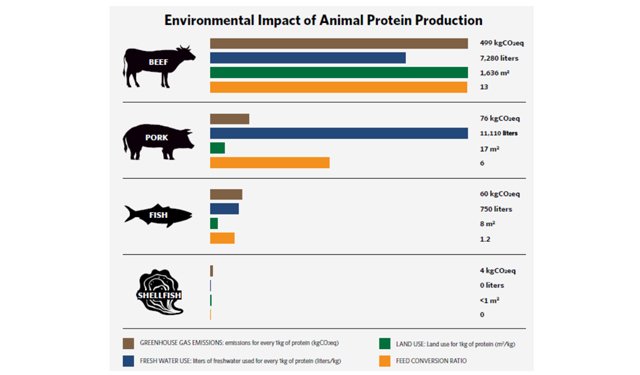
Source: GHG, FW use, and LU data: Ritchie 2020; FW use for marine fish data: Pahlow et al. 2015; GHG for bivalves: MacLeod et al. 2020. FCR data: Sharpless and Evans 2013; Note: FW use data for marine fish was taken from Pahlow et al. 2015 as underlying data in Ritchie 2020 and was inclusive of freshwater aquaculture ponds. Freshwater usage varies by species and feed; Japanese Amberjack was used here.


Upscale seaweed production and carbon sequestration
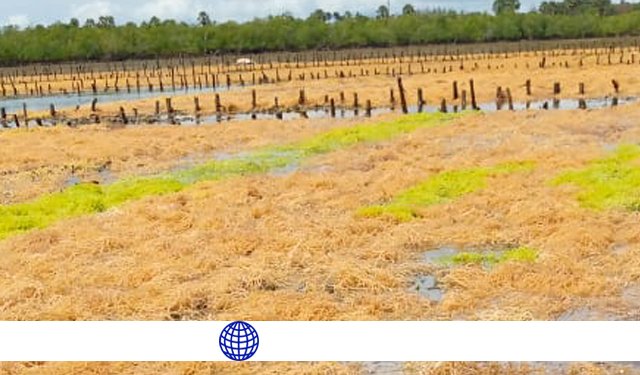
Seaweed cultivation will make a significant contribution to the climate because it is an efficient method for capturing carbon and has great upscaling potential.
Seaweed aquaculture, the fastest-growing component of global aquaculture production, offers a slate of opportunities to mitigate, and adapt to climate change. Seaweed farms attracts and converts carbon through photosynthesis; release carbon that maybe buried in sediments, therefore acting as a CO2 sink.
The crop can also be used, in total or in part, for biofuel production, with a potential CO2 mitigation capacity, in terms of avoided emissions from fossil fuels, of about 1,500 tons CO2 km−2 year−1.
Seaweed aquaculture can also help reduce the emissions from agriculture, by improving soil quality substituting synthetic fertilizer and when included in cattle fed, lowering methane emissions from cattle.
Seaweed aquaculture contributes to climate change adaptation by damping wave energy and protecting shorelines, elevating pH and supplying oxygen to the waters, thereby locally reducing the effects of ocean acidification and de-oxygenation.

Support aquaculture through green energy
The rapid growth of aquaculture production has required a huge power demand, which is estimated to be about 40% of the total energy cost.
The use of renewable energy in aquaculture reduces the production costs and increases the sustainability.
Solar energy is one of the cleanest energy sources and is touted as a potential renewable energy source for the world with benefits such as reducing CO2 emissions, reversing global warming by being eco-friendly, and bringing innovation to sustainable aquaculture and potential cost-efficiency for manufacturing.
Aquaculture systems need pumps and aerator to oxygenate, to pump and purify or filter the water. Solar generated electric power is known as photovoltaic.
Solar panels are installed above the pond or the cage, generating the electricity and store in the batteries. Afterwards, this clean energy is used for water exchange, aeration, lighting, automatic feeding, etc..

Advantages:
• It is renewable and free;
• It is 100% eco – friendly;
• Availability of energy in remote areas not served by the electricity grid;
• More energy at cheaper cost.

Disadvantages:
• Need high initial investment;
• Need periodical maintenance and replacement for the bacteries;
• No production of solar energy during the night.

Climate action is gaining momentum. What can be done through the aquaculture sector?
Tags: aquaculture sectorClimate
CondividiTweetCondividiPinInviaCondividiInvia
Articolo precedente

Organic seaweed liquid fertilizer from Kenya

Prossimo articolo

FDL 2022. Il futuro della pesca è nei progetti di filiera

Redazione

Redazione

Articoli Correlati

quote di pesca UE-Mauritania

Accordo UE-Mauritania: quote sottoutilizzate, ma la flotta dei crostacei ha poche alternative

by Mariella Ballatore
16 Settembre 2026

L’accordo di pesca tra Unione europea e Mauritania risulta sovradimensionato nel suo volume complessivo, ma non per tutte le attività....

Filetti di salmone norvegese fresco

Salmone norvegese: l’innovativo modello che conquista il mercato

by Redazione
16 Settembre 2026

Dal sushi alla cucina di casa, il salmone norvegese è entrato stabilmente nelle abitudini alimentari di milioni di persone. La...

marcatori genetici per le vongole

Vongole, un nuovo strumento genetico per selezione e tutela

by Tiziana Indorato
16 Settembre 2026

Un gruppo internazionale di ricerca ha sviluppato il primo pannello genomico a media densità destinato contemporaneamente alla vongola verace filippina...

pianificazione dello spazio marittimo

Pianificazione dello spazio marittimo, l’UE prepara una gara da 3,6 milioni

by Candida Ciravolo
15 Settembre 2026

La Commissione europea prepara una gara da 3,6 milioni di euro per il nuovo ciclo del meccanismo di assistenza alla...

Lascia un commento Annulla risposta

Il tuo indirizzo email non sarà pubblicato. I campi obbligatori sono contrassegnati *

Questo sito utilizza Akismet per ridurre lo spam. Scopri come vengono elaborati i dati derivati dai commenti.


Articoli più letti

  • 10 pesci costosi e prelibati
  • Le specie di sarago del Mediterraneo
  • Pesci con più e meno mercurio
  • Molva, una ricchezza del Mare del Nord
  • Molluschi bivalvi: descrizione e caratteristiche
  • Congelare il tonno in scatola
  • Gattuccio e palombo, gli squali buoni da mangiare
  • Triglia: caratteristiche e proprietà nutrizionali
  • Mangiare il tonno crudo: vantaggi e pericoli
  • Sgombro e lanzardo, pesce azzurro per il cuore
Pesceinrete

Pesceinrete è la testata giornalistica unica in Italia ad occuparsi di pesca commerciale ed acquacoltura. In quanto canale tematico e dai contenuti specializzati, si rivolge direttamente agli operatori della filiera con una comunicazione targettizzata che risponde alle esigenze del settore.

Segui le nostre pagine social

Stock images by Depositphotos

Newsletter

Categorie

  • News Ittico
  • Pesca
  • Acquacoltura
  • Associazioni di categoria
  • Sindacati
  • ONG
  • Tecnologia
  • Sostenibilità
  • Mercati
  • Eventi e Fiere
  • Overseas
  • Nutrizione e salute
  • Approfondimenti
  • Chi siamo
  • Policy editoriali
  • Partner
  • Contatti
  • Pubblicità
  • Newsletter
  • Mappa del sito

© 2026 INRETE S.R.L. P.Iva: 02557660814 - Pesceinrete - Il quotidiano del settore ittico | Credits

Pesceinrete
Gestisci Consenso

Usiamo cookie tecnici per far funzionare il sito, e cookie statistici (anche di terze parti) per capire come viene usato e migliorarlo. Puoi accettare tutto, rifiutare tutto o scegliere quali attivare — restando comunque libero di navigare senza restrizioni.

Funzionale Sempre attivo
L'archiviazione tecnica o l'accesso sono strettamente necessari al fine legittimo di consentire l'uso di un servizio specifico esplicitamente richiesto dall'abbonato o dall'utente, o al solo scopo di effettuare la trasmissione di una comunicazione su una rete di comunicazione elettronica.
Preferenze
L'archiviazione tecnica o l'accesso sono necessari per lo scopo legittimo di memorizzare le preferenze che non sono richieste dall'abbonato o dall'utente.
Statistiche
L'archiviazione tecnica o l'accesso che viene utilizzato esclusivamente per scopi statistici. L'archiviazione tecnica o l'accesso che viene utilizzato esclusivamente per scopi statistici anonimi. Senza un mandato di comparizione, una conformità volontaria da parte del vostro Fornitore di Servizi Internet, o ulteriori registrazioni da parte di terzi, le informazioni memorizzate o recuperate per questo scopo da sole non possono di solito essere utilizzate per l'identificazione.
Marketing
L'archiviazione tecnica o l'accesso sono necessari per creare profili di utenti per inviare pubblicità, o per tracciare l'utente su un sito web o su diversi siti web per scopi di marketing simili.
  • Gestisci opzioni
  • Gestisci servizi
  • Gestisci {vendor_count} fornitori
  • Per saperne di più su questi scopi
Personalizza
  • {title}
  • {title}
  • {title}
  • Home
  • Nutrizione e salute
  • Pesca
  • Acquacoltura
  • Approfondimenti
  • Tecnologia
  • Sostenibilità
  • Mercati
  • Overseas English NEW
  • Archivio
  • Chi siamo
  • Contatti
  • Partner
  • Pubblicità
  • Newsletter
Nessun Risultato
Vedi tutti i Risultati

© 2026 INRETE S.R.L. P.Iva: 02557660814 - Pesceinrete - Il quotidiano del settore ittico | Credits