• HOME
  • CHI SIAMO
  • CONTATTI
  • PARTNER
  • PUBBLICITÀ
  • NEWSLETTER
  • ARCHIVIO
    • Bandi e Opportunità
    • Speciali
    • Rubriche
    • Nutrizione e salute
    • Interviste
    • Video
giovedì 10 Settembre, 2026
Pesceinrete
  • Pesca
  • Nutrizione e salute
  • Acquacoltura
    • Acquaponica
    • Algocoltura
  • Approfondimenti
  • Tecnologia
  • Sostenibilità
  • Mercati
  • OverseasNew
Nessun Risultato
Vedi tutti i Risultati
Pesceinrete
  • Pesca
  • Nutrizione e salute
  • Acquacoltura
    • Acquaponica
    • Algocoltura
  • Approfondimenti
  • Tecnologia
  • Sostenibilità
  • Mercati
  • OverseasNew
Nessun Risultato
Vedi tutti i Risultati
Pesceinrete
Nessun Risultato
Vedi tutti i Risultati

Home Overseas

How “Blue Taxation” Could Transform Italy’s Blue Economy

Using fiscal policy as a strategic lever for sustainability: the Italian oyster case shows how taxation can drive innovation, ecosystems and coastal development.

Redazione by Redazione
2 Dicembre 2025
in Overseas
How “Blue Taxation” Could Transform Italy’s Blue Economy

How “Blue Taxation” Could Transform Italy’s Blue Economy

In the debate on ecological transition, public attention often gravitates toward technologies and investments. Far less frequently do we look at fiscal policy as a tool for sustainability. Yet, according to a study by Benedetta Coluccia and Pasquale Sasso for the Agrifood Tech & Innovation Observatory of Pegaso Digital University, part of the green shift could begin precisely there: in the rules that govern taxation.

The idea is as simple as it is disruptive.

What if taxes were not merely a mechanism to finance public spending, but a means to influence economic and social choices? This is the logic behind mission-oriented taxation, inspired by the theories of economist Mariana Mazzucato, who argues that states can use fiscal tools to pursue collective goals. Coluccia and Sasso bring this perspective into the field of the Blue Economy, showing that fiscal leverage can stimulate innovation and sustainable practices when framed as a development strategy rather than a budget constraint.

A revealing example: the hidden potential of oysters

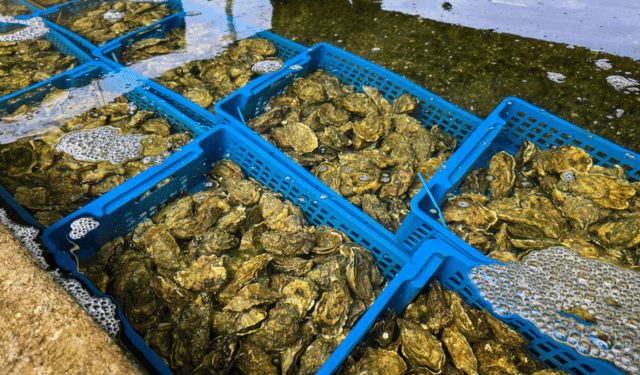
To illustrate their vision, the researchers use an unexpected case: Italian oyster farming. A small sector in terms of volume, yet rich in meaning. Oysters are not just a premium food. Each specimen filters several liters of water per hour, cleans seabeds, reduces pollution and promotes marine biodiversity. Every oyster farm functions as a small, living ecological infrastructure.

Yet the Italian tax system does not recognize this value. Oysters are taxed with a 22% VAT rate—the same applied to luxury goods. In France, Portugal or the Netherlands, the rate varies between 6% and 10%. The gap matters: Italy produces around 300 tons per year, compared to over 90,000 in France. A potentially strategic supply chain for both the environment and coastal economies is left on the margins.

Although still limited in overall production, Italian oyster farming represents a niche excellence of Made in Italy. Production stands out for quality, traceability and gastronomic value, with one of the highest unit values globally, calculated by comparing average market price and output volume. This reflects the strong qualitative positioning of Italian oysters, raised in pristine waters with sustainable methods.

Despite this, the fiscal system acknowledges neither their environmental impact nor their economic and cultural value. According to the study, lowering VAT—already permitted by EU Directive 2022/542 for goods with environmental value—would not be a concession but an act of coherence. It would mean recognizing oysters’ contribution to water quality and ecosystem health, and turning taxation into a true industrial policy tool capable of rewarding those who generate public value.

Toward a “blue fiscal strategy”

The proposal by Coluccia and Sasso goes far beyond oysters. It outlines a new way of imagining taxation: a system that integrates economy and environment, rewarding virtuous behaviors and discouraging harmful ones. A blue fiscal policy capable of supporting ecological transition without shifting the burden onto citizens or the most vulnerable businesses.

Their work also calls for the creation of a National Observatory on Taxation and the Blue Economy to collect data, evaluate policy impacts and guide government decisions. Alongside this, they propose establishing the OysterTech – Blue Resilience Lab, an innovation hub dedicated to sustainable aquaculture technologies. Together, these tools could help Italy overcome fragmented environmental policies and build a more coherent governance model for sustainability.

Underlying the proposal is a clear belief: taxation can be a driver of competitiveness, not just a corrective mechanism. A tax system aligned with environmental goals can generate public value, stimulate research and investment, create skilled jobs and attract talent. In this sense, taxation becomes part of the nation’s industrial strategy.

From the sea, a model for sustainable growth

The case of oysters is not an isolated episode, but a symbol of a possible paradigm shift. With 8,000 km of coastline, some of Europe’s richest marine ecosystems and a strong tradition of high-quality production, Italy is well positioned to lead the continent’s blue transition. What is needed is a vision connecting taxation, innovation and territorial development.

In the post–Green Deal era, sustainability is no longer a cost item—it is an economic choice. Blue taxation is one of the keys to turning this idea into practice. Recognizing the fiscal value of ecosystem services means transforming sustainability into a competitive advantage rather than a burden.

As Coluccia and Sasso write, “taxation is not a constraint, but a lever for change.”
A lever capable of moving the country toward a smarter, fairer and more forward-looking growth model. Perhaps the future of Italy’s Blue Economy begins right here—with an oyster that stops being a luxury and becomes a symbol of regeneration.

For more insights on the future of Italian fisheries and the blue economy, follow ongoing coverage and analysis on Pesceinrete.

NEWSLETTER

Tags: aquaculture innovationBlue Economyecological transitionecosystem servicesenvironmental fiscal policyItalian seafood sectormission-oriented policyoyster farmingsustainability governancesustainable taxation
CondividiTweetCondividiPinInviaCondividiInvia
Articolo precedente

Blue2B: un nuovo spazio di promozione e incontri per le imprese ittiche siciliane

Prossimo articolo

AIC Pesca plaude all’elezione di Saber Alazabi alla CGPM

Redazione

Redazione

Articoli Correlati

Italian seafood presented to buyers at Seafood Expo Asia in Singapore

From blue crab to red shrimp, buyers put Italy’s seafood supply chain to the test in Singapore

by Redazione
9 Settembre 2026

From blue crab seeking an industrial supply chain to traceable bivalve molluscs and red shrimp for fine dining, Italy is...

Salmon fillet on the processing line at Freezco Eesti in Tallinn

Freezco expands salmon processing for the italian market

by Davide Ciravolo
7 Settembre 2026

Freezco has expanded salmon processing for the Italian market through Freezco Eesti, a facility in Tallinn launched in May 2026....

High-value Italian seafood product showcasing processing and presentation

China’s seafood market gives greater weight to quality and traceability: an opening for Italy

by Davide Ciravolo
4 Settembre 2026

China imported around 2.31 million tonnes of seafood worth $10.1 billion in the first half of 2026. Competition remains intense,...

Consumer checking environmental claims on generic seafood packaging in an Italian supermarket

Seafood greenwashing: new Italian rules for environmental claims from 27 September

by Tiziana Indorato
3 Settembre 2026

From 27 September 2026, Italy will apply the new anti-greenwashing provisions introduced by Legislative Decree 20 February 2026, No. 30,...

Lascia un commento Annulla risposta

Il tuo indirizzo email non sarà pubblicato. I campi obbligatori sono contrassegnati *

Questo sito utilizza Akismet per ridurre lo spam. Scopri come vengono elaborati i dati derivati dai commenti.


Articoli più letti

  • 10 pesci costosi e prelibati
  • Le specie di sarago del Mediterraneo
  • Pesci con più e meno mercurio
  • Molva, una ricchezza del Mare del Nord
  • Molluschi bivalvi: descrizione e caratteristiche
  • Congelare il tonno in scatola
  • Gattuccio e palombo, gli squali buoni da mangiare
  • Triglia: caratteristiche e proprietà nutrizionali
  • Mangiare il tonno crudo: vantaggi e pericoli
  • Sgombro e lanzardo, pesce azzurro per il cuore
Pesceinrete

Pesceinrete è la testata giornalistica unica in Italia ad occuparsi di pesca commerciale ed acquacoltura. In quanto canale tematico e dai contenuti specializzati, si rivolge direttamente agli operatori della filiera con una comunicazione targettizzata che risponde alle esigenze del settore.

Segui le nostre pagine social

Stock images by Depositphotos

Newsletter

Categorie

  • News Ittico
  • Pesca
  • Acquacoltura
  • Associazioni di categoria
  • Sindacati
  • ONG
  • Tecnologia
  • Sostenibilità
  • Mercati
  • Eventi e Fiere
  • Overseas
  • Nutrizione e salute
  • Approfondimenti
  • Chi siamo
  • Policy editoriali
  • Partner
  • Contatti
  • Pubblicità
  • Newsletter
  • Mappa del sito

© 2026 INRETE S.R.L. P.Iva: 02557660814 - Pesceinrete - Il quotidiano del settore ittico | Credits

Pesceinrete
Gestisci Consenso

Usiamo cookie tecnici per far funzionare il sito, e cookie statistici (anche di terze parti) per capire come viene usato e migliorarlo. Puoi accettare tutto, rifiutare tutto o scegliere quali attivare — restando comunque libero di navigare senza restrizioni.

Funzionale Sempre attivo
L'archiviazione tecnica o l'accesso sono strettamente necessari al fine legittimo di consentire l'uso di un servizio specifico esplicitamente richiesto dall'abbonato o dall'utente, o al solo scopo di effettuare la trasmissione di una comunicazione su una rete di comunicazione elettronica.
Preferenze
L'archiviazione tecnica o l'accesso sono necessari per lo scopo legittimo di memorizzare le preferenze che non sono richieste dall'abbonato o dall'utente.
Statistiche
L'archiviazione tecnica o l'accesso che viene utilizzato esclusivamente per scopi statistici. L'archiviazione tecnica o l'accesso che viene utilizzato esclusivamente per scopi statistici anonimi. Senza un mandato di comparizione, una conformità volontaria da parte del vostro Fornitore di Servizi Internet, o ulteriori registrazioni da parte di terzi, le informazioni memorizzate o recuperate per questo scopo da sole non possono di solito essere utilizzate per l'identificazione.
Marketing
L'archiviazione tecnica o l'accesso sono necessari per creare profili di utenti per inviare pubblicità, o per tracciare l'utente su un sito web o su diversi siti web per scopi di marketing simili.
  • Gestisci opzioni
  • Gestisci servizi
  • Gestisci {vendor_count} fornitori
  • Per saperne di più su questi scopi
Personalizza
  • {title}
  • {title}
  • {title}
  • Home
  • Nutrizione e salute
  • Pesca
  • Acquacoltura
  • Approfondimenti
  • Tecnologia
  • Sostenibilità
  • Mercati
  • Overseas English NEW
  • Archivio
  • Chi siamo
  • Contatti
  • Partner
  • Pubblicità
  • Newsletter
Nessun Risultato
Vedi tutti i Risultati

© 2026 INRETE S.R.L. P.Iva: 02557660814 - Pesceinrete - Il quotidiano del settore ittico | Credits