• HOME
  • CHI SIAMO
  • CONTATTI
  • PARTNER
  • PUBBLICITÀ
  • NEWSLETTER
  • ARCHIVIO
    • Bandi e Opportunità
    • Speciali
    • Rubriche
    • Nutrizione e salute
    • Interviste
    • Video
mercoledì 16 Settembre, 2026
Pesceinrete
  • Pesca
  • Nutrizione e salute
  • Acquacoltura
    • Acquaponica
    • Algocoltura
  • Approfondimenti
  • Tecnologia
  • Sostenibilità
  • Mercati
  • OverseasNew
Nessun Risultato
Vedi tutti i Risultati
Pesceinrete
  • Pesca
  • Nutrizione e salute
  • Acquacoltura
    • Acquaponica
    • Algocoltura
  • Approfondimenti
  • Tecnologia
  • Sostenibilità
  • Mercati
  • OverseasNew
Nessun Risultato
Vedi tutti i Risultati
Pesceinrete
Nessun Risultato
Vedi tutti i Risultati

Home Overseas

EEICAT and invasive species impacts on aquatic ecosystems

A new international framework broadens the assessment of biological invasions by looking beyond direct damage to native species and focusing on how invasive organisms reshape habitats, water quality and ecosystem functioning.

Davide Ciravolo by Davide Ciravolo
25 Marzo 2026
in Overseas
EEICAT and invasive species impacts on aquatic ecosystems

EEICAT and invasive species impacts on aquatic ecosystems

Invasive species do not enter an environment merely to occupy a niche or compete with native organisms. The most dangerous ones do much more than that: they change the rules of the system. They alter habitat structure, modify water quality, shift the balance among living communities and, over time, can transform the very functioning of an ecosystem. That is the most compelling point of a new international study behind the creation of EEICAT, an assessment framework designed to understand the impacts of biological invasions in a broader, more realistic and, above all, more useful way for those who must deal with these problems in practical terms.

For years, the assessment of invasive species has focused mainly on their direct effects on native species, such as population decline, regression and, in some cases, local extinction. It is an important approach, but also an incomplete one. In the meantime, many alien species continue to cause damage that does not immediately appear in the statistics of a single population, yet gradually weakens the entire environment. This is where EEICAT marks a real shift. The new tool expands the system that has been most widely used so far and attempts to measure what often remains outside traditional assessments: changes in the behaviour and health of organisms, the reorganisation of biological communities, the disruption of ecosystem processes and even abiotic components such as water quality and other environmental factors that shape life in aquatic systems.

The strength of this approach lies precisely in the fact that it does not stop at asking whether an invasive species is harming another species. It asks something more uncomfortable and more profound: what is changing in the ecosystem after its arrival? This is a substantial difference, because it forces attention away from immediate damage and toward structural damage. And structural damage, in many cases, is what weighs most heavily in the medium term.

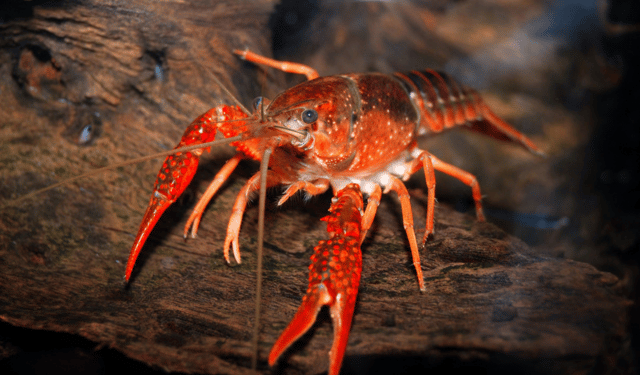
One of the clearest examples is the red swamp crayfish from Louisiana. It does not simply feed on local fauna. It also consumes aquatic vegetation, reduces habitat complexity and, in doing so, removes shelter for fish and invertebrates while also contributing to changes in water quality. In cases like this, the problem is not merely extra pressure on some native species. The real problem is that the very structure of the environment begins to disappear. And when a habitat loses structure, it also loses stability, its ability to host biodiversity and its capacity to support aquatic life in a balanced way.

This is precisely why the new approach is also highly relevant to the seafood sector. Seas, lagoons, estuaries, coastal wetlands and transitional environments do not become impoverished only when a commercially important species declines. They may weaken much earlier, when seabeds change, when submerged vegetation decreases, when water conditions deteriorate, when nursery areas become less hospitable or when the entire ecological network loses complexity. At that stage, the economic damage is not always visible yet, but the process that will generate it is already underway.

EEICAT aims to bring order to exactly this complexity. The new framework can classify up to nineteen different types of impact, and it does so not in the abstract but in relation to the specific invasion event. This is another decisive step forward. It means that the same species is no longer treated as if it carried the same risk profile everywhere. An alien species may be far more harmful in one ecological context and much less so in another. Evaluating the specific case, rather than assigning a global label, makes the analysis more precise and management decisions more sensible.

This point deserves attention because public debate on invasive species too often swings between two equally unproductive extremes. On one side there is indiscriminate alarmism, which puts everything on the same level. On the other there is the temptation to reduce the issue to a simple market opportunity, as if commercialising an alien species were enough in itself to restore ecological balance. Reality, as always, is less comfortable. There are cases in which commercial valorisation can become a useful tool within a containment strategy. But there are also situations in which the ecological damage runs much deeper and continues to act even after the phenomenon has already been turned into a headline, an emergency or even a product.

The greatest merit of this study is therefore also cultural. It reminds us that biological invasions should not be read only as a war among species, with easily recognisable winners and losers. They must be understood as processes capable of rewriting an environment. And when an environment changes, the conditions for fishing, shellfish farming, lagoon management, conservation and overall biological productivity change with it.

In many cases, the most serious damage does not coincide with the arrival of the invasive species itself, but with what that arrival sets in motion. Water with less vegetation, a less complex habitat, a more fragile food web, an environment that becomes less predictable both for the people who work there and for the species that reproduce there. It is a silent transformation, and precisely for that reason a dangerous one. By the time it becomes fully visible, it has often already been advancing for quite some time.

This is the real novelty of EEICAT: it tries to measure not only what an invasive species takes away, but what it dismantles. For those who deal every day with aquatic ecosystems, this is far from a theoretical distinction. It means recognising that the health of an environment is not determined only by the presence or absence of a species, but by the resilience of the relationships that hold together water, habitats, organisms and ecological functions.

For this reason, the new framework is not relevant only to the scientific community. It can also become a useful key for those who have to manage, monitor and make decisions. Because it helps them identify earlier, and more clearly, the weak signals that often anticipate more serious problems. Today, under the growing pressure of biological invasions, understanding in time what is changing in ecosystems is not a theoretical exercise. It is a necessity.

The study was published in PLOS Biology on March 10, 2026.
Tags: aquatic ecosystemsbiodiversitybiological invasionsEEICATestuariesfisherieshabitat degradationinvasive specieslagoonsPLOS Biologywater quality
CondividiTweetCondividiPinInviaCondividiInvia
Articolo precedente

La Giornata del Mare porta nelle Egadi il ministro Musumeci

Prossimo articolo

Pidocchi del salmone, la vera partita si gioca nello stadio larvale

Davide Ciravolo

Davide Ciravolo

Autore Pesceinrete, retail ittico e mercati seafood Davide Ciravolo è autore Pesceinrete. Si occupa di mercati, distribuzione e scenari commerciali della filiera ittica, con particolare attenzione al rapporto tra prodotto, retail e consumi. La sua esperienza come ex buyer di Esselunga gli permette di osservare il settore seafood anche dal punto di vista della GDO e delle dinamiche di assortimento.

Articoli Correlati

Fishing vessel at sea as warmer ocean temperatures and El Niño shift fish distribution and fishing grounds

El Niño is set to become very strong. Warmer seas are redrawing the geography of fishing

by Luca Di Noto
15 Settembre 2026

What happens to fisheries when seas become warmer? Warmer seas do not simply mean fewer fish. They can change where...

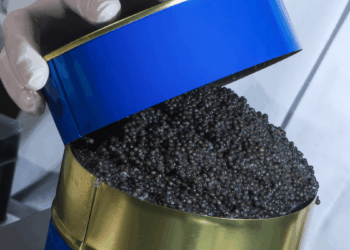
Imported caviar at the centre of the European debate on origin transparency

Imported caviar, European aquaculture calls for clearer origin information

by Mariella Ballatore
11 Settembre 2026

Imported caviar from non-EU countries has become a test case in European aquaculture’s call for greater origin transparency. FEAP warns...

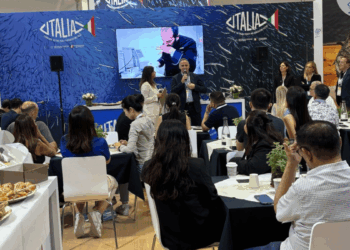
Italian seafood presented to buyers at Seafood Expo Asia in Singapore

From blue crab to red shrimp, buyers put Italy’s seafood supply chain to the test in Singapore

by Redazione
9 Settembre 2026

From blue crab seeking an industrial supply chain to traceable bivalve molluscs and red shrimp for fine dining, Italy is...

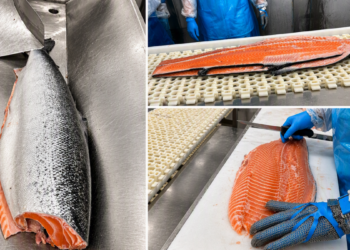
Salmon fillet on the processing line at Freezco Eesti in Tallinn

Freezco expands salmon processing for the italian market

by Davide Ciravolo
7 Settembre 2026

Freezco has expanded salmon processing for the Italian market through Freezco Eesti, a facility in Tallinn launched in May 2026....

Lascia un commento Annulla risposta

Il tuo indirizzo email non sarà pubblicato. I campi obbligatori sono contrassegnati *

Questo sito utilizza Akismet per ridurre lo spam. Scopri come vengono elaborati i dati derivati dai commenti.


Articoli più letti

  • 10 pesci costosi e prelibati
  • Le specie di sarago del Mediterraneo
  • Pesci con più e meno mercurio
  • Molva, una ricchezza del Mare del Nord
  • Molluschi bivalvi: descrizione e caratteristiche
  • Congelare il tonno in scatola
  • Gattuccio e palombo, gli squali buoni da mangiare
  • Triglia: caratteristiche e proprietà nutrizionali
  • Mangiare il tonno crudo: vantaggi e pericoli
  • Sgombro e lanzardo, pesce azzurro per il cuore
Pesceinrete

Pesceinrete è la testata giornalistica unica in Italia ad occuparsi di pesca commerciale ed acquacoltura. In quanto canale tematico e dai contenuti specializzati, si rivolge direttamente agli operatori della filiera con una comunicazione targettizzata che risponde alle esigenze del settore.

Segui le nostre pagine social

Stock images by Depositphotos

Newsletter

Categorie

  • News Ittico
  • Pesca
  • Acquacoltura
  • Associazioni di categoria
  • Sindacati
  • ONG
  • Tecnologia
  • Sostenibilità
  • Mercati
  • Eventi e Fiere
  • Overseas
  • Nutrizione e salute
  • Approfondimenti
  • Chi siamo
  • Policy editoriali
  • Partner
  • Contatti
  • Pubblicità
  • Newsletter
  • Mappa del sito

© 2026 INRETE S.R.L. P.Iva: 02557660814 - Pesceinrete - Il quotidiano del settore ittico | Credits

Pesceinrete
Gestisci Consenso

Usiamo cookie tecnici per far funzionare il sito, e cookie statistici (anche di terze parti) per capire come viene usato e migliorarlo. Puoi accettare tutto, rifiutare tutto o scegliere quali attivare — restando comunque libero di navigare senza restrizioni.

Funzionale Sempre attivo
L'archiviazione tecnica o l'accesso sono strettamente necessari al fine legittimo di consentire l'uso di un servizio specifico esplicitamente richiesto dall'abbonato o dall'utente, o al solo scopo di effettuare la trasmissione di una comunicazione su una rete di comunicazione elettronica.
Preferenze
L'archiviazione tecnica o l'accesso sono necessari per lo scopo legittimo di memorizzare le preferenze che non sono richieste dall'abbonato o dall'utente.
Statistiche
L'archiviazione tecnica o l'accesso che viene utilizzato esclusivamente per scopi statistici. L'archiviazione tecnica o l'accesso che viene utilizzato esclusivamente per scopi statistici anonimi. Senza un mandato di comparizione, una conformità volontaria da parte del vostro Fornitore di Servizi Internet, o ulteriori registrazioni da parte di terzi, le informazioni memorizzate o recuperate per questo scopo da sole non possono di solito essere utilizzate per l'identificazione.
Marketing
L'archiviazione tecnica o l'accesso sono necessari per creare profili di utenti per inviare pubblicità, o per tracciare l'utente su un sito web o su diversi siti web per scopi di marketing simili.
  • Gestisci opzioni
  • Gestisci servizi
  • Gestisci {vendor_count} fornitori
  • Per saperne di più su questi scopi
Personalizza
  • {title}
  • {title}
  • {title}
  • Home
  • Nutrizione e salute
  • Pesca
  • Acquacoltura
  • Approfondimenti
  • Tecnologia
  • Sostenibilità
  • Mercati
  • Overseas English NEW
  • Archivio
  • Chi siamo
  • Contatti
  • Partner
  • Pubblicità
  • Newsletter
Nessun Risultato
Vedi tutti i Risultati

© 2026 INRETE S.R.L. P.Iva: 02557660814 - Pesceinrete - Il quotidiano del settore ittico | Credits