• HOME
  • CHI SIAMO
  • CONTATTI
  • PARTNER
  • PUBBLICITÀ
  • NEWSLETTER
  • ARCHIVIO
    • Bandi e Opportunità
    • Speciali
    • Rubriche
    • Nutrizione e salute
    • Interviste
    • Video
mercoledì 16 Settembre, 2026
Pesceinrete
  • Pesca
  • Nutrizione e salute
  • Acquacoltura
    • Acquaponica
    • Algocoltura
  • Approfondimenti
  • Tecnologia
  • Sostenibilità
  • Mercati
  • OverseasNew
Nessun Risultato
Vedi tutti i Risultati
Pesceinrete
  • Pesca
  • Nutrizione e salute
  • Acquacoltura
    • Acquaponica
    • Algocoltura
  • Approfondimenti
  • Tecnologia
  • Sostenibilità
  • Mercati
  • OverseasNew
Nessun Risultato
Vedi tutti i Risultati
Pesceinrete
Nessun Risultato
Vedi tutti i Risultati

Home Overseas

Italy’s Fisheries Face a Deepening Generational Crisis

AIC Pesca warns that outdated rules, bureaucratic delays and unstable employment conditions are preventing young people from entering Italy’s fishing workforce, threatening the sector’s long-term stability.

Redazione by Redazione
18 Novembre 2025
in Overseas
Young fishermen training in Italy’s fisheries sector

Young fishermen training in Italy’s fisheries sector

The generational crisis in Italian fisheries is emerging as one of the most critical vulnerabilities affecting the country’s maritime economy. This is the warning launched by Natale Amoroso, President of AIC Pesca, during the XXXIV Rassegna del Mare in Trapani, where he stressed the structural obstacles that continue to prevent young people from entering the sector.

Amoroso described a system in which the pathway to becoming a professional seafarer has become excessively long, rigid and discouraging. Today, between navigation requirements, administrative constraints and procedural delays, a young candidate acquires full qualification only around the age of twenty-five. “The law has not changed, but habits have,” he recalled. “Vessels now go into winter lay-up more frequently than in the past, reducing the opportunities for young fishermen to accumulate the navigation days needed to advance in rank.”
The consequence is a bottleneck that pushes many away from a profession that instead demands practice, continuity and timeliness.

The President of AIC Pesca also highlighted how the current qualification system and manning tables still reflect organisational models of the past. According to Amoroso, the absence of coordination between the ministries of education, labour and fisheries prevents the creation of a coherent pathway capable of supporting true generational renewal. At the same time, the employment discontinuity typical of the sector makes it difficult for young workers to complete the required navigation periods.

This issue, however, goes far beyond youth employment alone. A slowdown in generational turnover threatens the entire fishing supply chain, with possible reductions in productive capacity, impacts on quota management and heightened safety risks on board. A shrinking workforce in the coming years could increasingly weaken Italy’s competitiveness in the European fisheries landscape.

For Amoroso, a decisive institutional response is now essential. Administrative simplification, more agile training pathways and targeted incentives aimed at stabilising youth employment are among the key measures needed to revitalise the sector. The future of Italy’s blue economy, ha sottolineato, depends on the country’s ability to make the fishing profession attractive, sustainable and aligned with the expectations of new generations.

Italy’s fishing sector is facing a severe generational decline

As highlighted by AIC Pesca, outdated regulations, bureaucratic constraints and employment discontinuity have made the professional pathway too long and unattractive for young people. Without effective reforms, the entire fishing supply chain risks losing essential skills and productive capacity, weakening its competitiveness and long-term sustainability.

For more insights on the future of Italian fisheries and the blue economy, follow ongoing coverage and analysis on Pesceinrete.

NEWSLETTER

Tags: AIC Pescablue economy Italyfishing labour marketfishing sector policy Italygenerational turnoverItalian fishing workforceItaly fisheriesmaritime labour challengesprofessional seafarer trainingyouth employment in fisheries
CondividiTweetCondividiPinInviaCondividiInvia
Articolo precedente

Sovracapacità nel Mediterraneo: Oceana incalza Francia, Italia e Spagna

Prossimo articolo

Acidificazione dell’oceano nel Golfo di Biscaglia: due decenni di dati confermano un trend in crescita

Redazione

Redazione

Articoli Correlati

Fishing vessel at sea as warmer ocean temperatures and El Niño shift fish distribution and fishing grounds

El Niño is set to become very strong. Warmer seas are redrawing the geography of fishing

by Luca Di Noto
15 Settembre 2026

What happens to fisheries when seas become warmer? Warmer seas do not simply mean fewer fish. They can change where...

Imported caviar at the centre of the European debate on origin transparency

Imported caviar, European aquaculture calls for clearer origin information

by Mariella Ballatore
11 Settembre 2026

Imported caviar from non-EU countries has become a test case in European aquaculture’s call for greater origin transparency. FEAP warns...

Italian seafood presented to buyers at Seafood Expo Asia in Singapore

From blue crab to red shrimp, buyers put Italy’s seafood supply chain to the test in Singapore

by Redazione
9 Settembre 2026

From blue crab seeking an industrial supply chain to traceable bivalve molluscs and red shrimp for fine dining, Italy is...

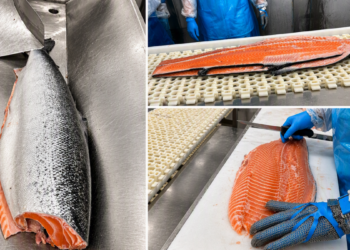
Salmon fillet on the processing line at Freezco Eesti in Tallinn

Freezco expands salmon processing for the italian market

by Davide Ciravolo
7 Settembre 2026

Freezco has expanded salmon processing for the Italian market through Freezco Eesti, a facility in Tallinn launched in May 2026....

Lascia un commento Annulla risposta

Il tuo indirizzo email non sarà pubblicato. I campi obbligatori sono contrassegnati *

Questo sito utilizza Akismet per ridurre lo spam. Scopri come vengono elaborati i dati derivati dai commenti.


Articoli più letti

  • 10 pesci costosi e prelibati
  • Le specie di sarago del Mediterraneo
  • Pesci con più e meno mercurio
  • Molva, una ricchezza del Mare del Nord
  • Molluschi bivalvi: descrizione e caratteristiche
  • Congelare il tonno in scatola
  • Gattuccio e palombo, gli squali buoni da mangiare
  • Triglia: caratteristiche e proprietà nutrizionali
  • Mangiare il tonno crudo: vantaggi e pericoli
  • Sgombro e lanzardo, pesce azzurro per il cuore
Pesceinrete

Pesceinrete è la testata giornalistica unica in Italia ad occuparsi di pesca commerciale ed acquacoltura. In quanto canale tematico e dai contenuti specializzati, si rivolge direttamente agli operatori della filiera con una comunicazione targettizzata che risponde alle esigenze del settore.

Segui le nostre pagine social

Stock images by Depositphotos

Newsletter

Categorie

  • News Ittico
  • Pesca
  • Acquacoltura
  • Associazioni di categoria
  • Sindacati
  • ONG
  • Tecnologia
  • Sostenibilità
  • Mercati
  • Eventi e Fiere
  • Overseas
  • Nutrizione e salute
  • Approfondimenti
  • Chi siamo
  • Policy editoriali
  • Partner
  • Contatti
  • Pubblicità
  • Newsletter
  • Mappa del sito

© 2026 INRETE S.R.L. P.Iva: 02557660814 - Pesceinrete - Il quotidiano del settore ittico | Credits

Pesceinrete
Gestisci Consenso

Usiamo cookie tecnici per far funzionare il sito, e cookie statistici (anche di terze parti) per capire come viene usato e migliorarlo. Puoi accettare tutto, rifiutare tutto o scegliere quali attivare — restando comunque libero di navigare senza restrizioni.

Funzionale Sempre attivo
L'archiviazione tecnica o l'accesso sono strettamente necessari al fine legittimo di consentire l'uso di un servizio specifico esplicitamente richiesto dall'abbonato o dall'utente, o al solo scopo di effettuare la trasmissione di una comunicazione su una rete di comunicazione elettronica.
Preferenze
L'archiviazione tecnica o l'accesso sono necessari per lo scopo legittimo di memorizzare le preferenze che non sono richieste dall'abbonato o dall'utente.
Statistiche
L'archiviazione tecnica o l'accesso che viene utilizzato esclusivamente per scopi statistici. L'archiviazione tecnica o l'accesso che viene utilizzato esclusivamente per scopi statistici anonimi. Senza un mandato di comparizione, una conformità volontaria da parte del vostro Fornitore di Servizi Internet, o ulteriori registrazioni da parte di terzi, le informazioni memorizzate o recuperate per questo scopo da sole non possono di solito essere utilizzate per l'identificazione.
Marketing
L'archiviazione tecnica o l'accesso sono necessari per creare profili di utenti per inviare pubblicità, o per tracciare l'utente su un sito web o su diversi siti web per scopi di marketing simili.
  • Gestisci opzioni
  • Gestisci servizi
  • Gestisci {vendor_count} fornitori
  • Per saperne di più su questi scopi
Personalizza
  • {title}
  • {title}
  • {title}
  • Home
  • Nutrizione e salute
  • Pesca
  • Acquacoltura
  • Approfondimenti
  • Tecnologia
  • Sostenibilità
  • Mercati
  • Overseas English NEW
  • Archivio
  • Chi siamo
  • Contatti
  • Partner
  • Pubblicità
  • Newsletter
Nessun Risultato
Vedi tutti i Risultati

© 2026 INRETE S.R.L. P.Iva: 02557660814 - Pesceinrete - Il quotidiano del settore ittico | Credits