• HOME
  • CHI SIAMO
  • CONTATTI
  • PARTNER
  • PUBBLICITÀ
  • NEWSLETTER
  • ARCHIVIO
    • Bandi e Opportunità
    • Speciali
    • Rubriche
    • Nutrizione e salute
    • Interviste
    • Video
mercoledì 16 Settembre, 2026
Pesceinrete
  • Pesca
  • Nutrizione e salute
  • Acquacoltura
    • Acquaponica
    • Algocoltura
  • Approfondimenti
  • Tecnologia
  • Sostenibilità
  • Mercati
  • OverseasNew
Nessun Risultato
Vedi tutti i Risultati
Pesceinrete
  • Pesca
  • Nutrizione e salute
  • Acquacoltura
    • Acquaponica
    • Algocoltura
  • Approfondimenti
  • Tecnologia
  • Sostenibilità
  • Mercati
  • OverseasNew
Nessun Risultato
Vedi tutti i Risultati
Pesceinrete
Nessun Risultato
Vedi tutti i Risultati

Home Overseas

SeaWatch: when fishing vessels become mobile sentinels of the sea

Environmental DNA, satellites and artificial intelligence can support a new model of fisheries monitoring, turning fishing fleets into active players in marine knowledge without replacing scientific research.

Davide Ciravolo by Davide Ciravolo
7 Luglio 2026
in Overseas
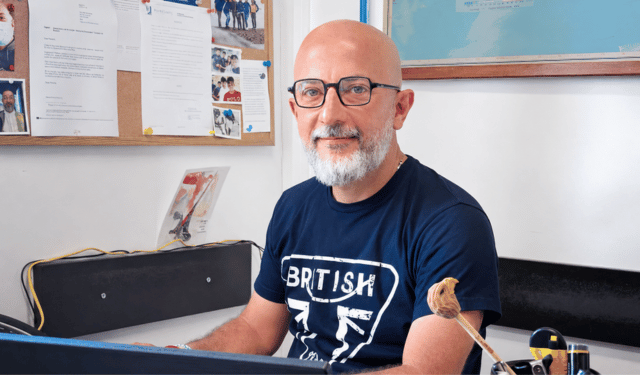
Tommaso Russo presenting SeaWatch and environmental DNA monitoring for fisheries

Professor Tommaso Russo presented SeaWatch as a tool to integrate fisheries, scientific research and marine biodiversity monitoring.

SeaWatch is an international project led by the University of Rome Tor Vergata that explores how fishing vessels can contribute to the monitoring of marine biodiversity. Through a small device called a metaprobe, placed inside fishing gear, vessels can collect environmental DNA during ordinary fishing operations. Combined with satellite data and artificial intelligence, these samples can help researchers, institutions and operators better understand marine ecosystems, sensitive areas and the pressures affecting Mediterranean fisheries.

A fishing vessel can also become a scientific tool. Not instead of research vessels, not outside official protocols, and not as a technological shortcut. But as part of a wider network, able to collect data on the sea while the sea is being experienced, crossed and worked every day.

This was one of the most interesting perspectives to emerge on 19 June at CNR–IRBIM in Mazara del Vallo, during the SEA4FUTURE stakeholder meeting, dedicated to the resilience of marine ecosystems through innovative technologies and an ecosystem-based approach to fisheries, with particular attention to the case of red shrimp.

Within the session focused on technological innovation and sustainability in bottom trawling, Professor Tommaso Russo, from the University of Rome Tor Vergata, offered a concrete reflection on the digital monitoring of fisheries. The issue is not only the availability of new tools, but the way in which these tools can change the quality of information available to researchers, public decision-makers and operators.

Fisheries management needs better knowledge of the sea

In the Mediterranean, fisheries management operates within a delicate balance. On one side there are the economic needs of companies and fishing communities; on the other, the protection of stocks, habitats and the most vulnerable areas. Between these two dimensions lies a decisive question: the ability to know, with sufficient precision, what is happening at sea, where pressures are concentrated, how ecosystems are evolving and which signals deserve attention.

Illegal fishing, non-compliant activities, pressure on stocks and the management of sensitive areas remain complex problems. They require controls, rules, public responsibility and cooperation with operators. Technology alone cannot solve them. It can, however, reduce grey areas, make phenomena more readable and strengthen the ability to take decisions based on more solid data.

It is within this framework that SeaWatch takes shape. The international project, led by the University of Rome Tor Vergata, aims to turn fishing vessels into mobile sentinels of marine biodiversity, able to support research units in collecting information on ecosystems.

Fishing vessels do not replace research: they expand observation

This point is essential. SeaWatch does not propose replacing traditional scientific research, which remains fundamental for dedicated campaigns, protocol validation and data interpretation. Rather, it proposes expanding the sea’s observation capacity by bringing monitoring into the ordinary activity of fishing fleets.

Fishing vessels cross large portions of the sea every day, with a spatial and temporal continuity that scientific campaigns alone cannot guarantee with the same frequency. When included in a rigorous system, they can help collect valuable data, increasing monitoring coverage and strengthening the link between research and the productive sector.

This is the sense in which the reference, made during the presentation, to a democratic tool can be understood. Not as a generic formula, but as the democratisation of data collection. Knowledge of the sea does not remain limited to a few sampling moments or a few specialised platforms. It can also be fed by those who work at sea every day, within a controlled and shared scientific framework.
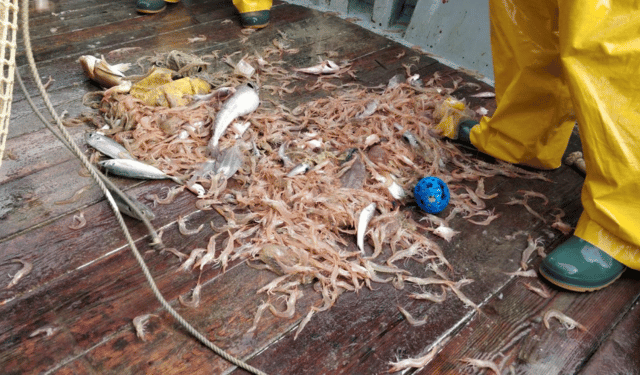
SeaWatch metaprobe used to collect environmental DNA in fishing gear
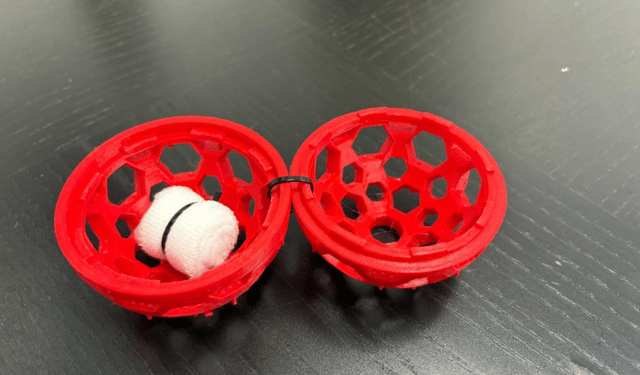
The SeaWatch metaprobe collects traces of environmental DNA during ordinary fishing operations.

Environmental DNA changes the quality of monitoring

The technological core of the project is the metaprobe, a small device placed inside fishing gear during normal operations. While the net is working, the metaprobe passively collects traces of environmental DNA: the genetic material that marine organisms release into the water and surrounding environment.

This is where eDNA changes the quality of monitoring. Through metabarcoding, a sample can provide information on the presence of many species at the same time, even without catching them and without observing them directly. This makes it possible to broaden knowledge of marine biodiversity, identify areas of particular ecological interest, follow the evolution of ecosystems and detect signals linked to the presence of vulnerable, protected or alien species.

From biological samples to useful indicators

SeaWatch is not limited to collecting biological samples. The value of the project lies in the integration of information. Environmental DNA, satellite data and artificial intelligence models can be combined to build maps and indicators useful for marine management, from marine spatial planning to the assessment of protected areas and zones subject to fishing restrictions.

For the seafood supply chain, this shift in perspective is relevant. Fishers are not seen only as subjects to be controlled, but as active participants in a knowledge system. This does not reduce the need to combat irregular activities, but it enhances the role of fleets that operate correctly and can contribute to transparency, ecosystem protection and resource management.

Making pressures on the sea more visible also means making the work of those who respect the rules more recognisable. From this perspective, monitoring is not only control. It is shared responsibility, the ability to document, and the construction of trust between science, institutions and operators.
Environmental DNA monitoring for marine biodiversity through SeaWatch
Environmental DNA can help detect the presence of marine species without direct capture or visual observation.

A new alliance between science, fisheries and institutions

The meeting in Mazara del Vallo had the merit of bringing this issue into a concrete scientific and institutional discussion. eDNA, satellites and artificial intelligence do not replace governance, but they can provide it with more effective tools. They do not erase the complexity of fisheries, but they help read it with greater precision.

The direction indicated by SeaWatch is clear: using the daily presence of fleets at sea to produce knowledge that is useful for conservation and management. A fishing fleet can also become a network of environmental sensors. Not to turn fishers into researchers, but to build a stronger alliance between research, fisheries and institutions.

An important part of the Mediterranean’s future depends on this alliance. Protecting the sea does not mean distancing fisheries from research, but bringing them closer within a model that is more transparent, more measurable and more responsible.
Tags: artificial intelligencebottom trawlingdigital fisherieseDNAenvironmental DNAfisheries monitoringfishing vesselsmarine biodiversitymarine conservationmarine ecosystemsMediterranean fisheriesred shrimpsatellite dataSeaWatch
CondividiTweetCondividiPinInviaCondividiInvia
Articolo precedente

I pesci di fiume più pregiati al mondo

Prossimo articolo

Contare i pesci in tempo reale può cambiare il lavoro in allevamento

Davide Ciravolo

Davide Ciravolo

Autore Pesceinrete, retail ittico e mercati seafood Davide Ciravolo è autore Pesceinrete. Si occupa di mercati, distribuzione e scenari commerciali della filiera ittica, con particolare attenzione al rapporto tra prodotto, retail e consumi. La sua esperienza come ex buyer di Esselunga gli permette di osservare il settore seafood anche dal punto di vista della GDO e delle dinamiche di assortimento.

Articoli Correlati

Fishing vessel at sea as warmer ocean temperatures and El Niño shift fish distribution and fishing grounds

El Niño is set to become very strong. Warmer seas are redrawing the geography of fishing

by Luca Di Noto
15 Settembre 2026

What happens to fisheries when seas become warmer? Warmer seas do not simply mean fewer fish. They can change where...

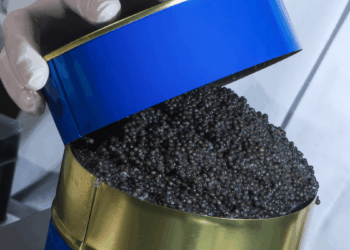
Imported caviar at the centre of the European debate on origin transparency

Imported caviar, European aquaculture calls for clearer origin information

by Mariella Ballatore
11 Settembre 2026

Imported caviar from non-EU countries has become a test case in European aquaculture’s call for greater origin transparency. FEAP warns...

Italian seafood presented to buyers at Seafood Expo Asia in Singapore

From blue crab to red shrimp, buyers put Italy’s seafood supply chain to the test in Singapore

by Redazione
9 Settembre 2026

From blue crab seeking an industrial supply chain to traceable bivalve molluscs and red shrimp for fine dining, Italy is...

Salmon fillet on the processing line at Freezco Eesti in Tallinn

Freezco expands salmon processing for the italian market

by Davide Ciravolo
7 Settembre 2026

Freezco has expanded salmon processing for the Italian market through Freezco Eesti, a facility in Tallinn launched in May 2026....

Lascia un commento Annulla risposta

Il tuo indirizzo email non sarà pubblicato. I campi obbligatori sono contrassegnati *

Questo sito utilizza Akismet per ridurre lo spam. Scopri come vengono elaborati i dati derivati dai commenti.


Articoli più letti

  • 10 pesci costosi e prelibati
  • Le specie di sarago del Mediterraneo
  • Pesci con più e meno mercurio
  • Molva, una ricchezza del Mare del Nord
  • Molluschi bivalvi: descrizione e caratteristiche
  • Congelare il tonno in scatola
  • Gattuccio e palombo, gli squali buoni da mangiare
  • Triglia: caratteristiche e proprietà nutrizionali
  • Mangiare il tonno crudo: vantaggi e pericoli
  • Sgombro e lanzardo, pesce azzurro per il cuore
Pesceinrete

Pesceinrete è la testata giornalistica unica in Italia ad occuparsi di pesca commerciale ed acquacoltura. In quanto canale tematico e dai contenuti specializzati, si rivolge direttamente agli operatori della filiera con una comunicazione targettizzata che risponde alle esigenze del settore.

Segui le nostre pagine social

Stock images by Depositphotos

Newsletter

Categorie

  • News Ittico
  • Pesca
  • Acquacoltura
  • Associazioni di categoria
  • Sindacati
  • ONG
  • Tecnologia
  • Sostenibilità
  • Mercati
  • Eventi e Fiere
  • Overseas
  • Nutrizione e salute
  • Approfondimenti
  • Chi siamo
  • Policy editoriali
  • Partner
  • Contatti
  • Pubblicità
  • Newsletter
  • Mappa del sito

© 2026 INRETE S.R.L. P.Iva: 02557660814 - Pesceinrete - Il quotidiano del settore ittico | Credits

Pesceinrete
Gestisci Consenso

Usiamo cookie tecnici per far funzionare il sito, e cookie statistici (anche di terze parti) per capire come viene usato e migliorarlo. Puoi accettare tutto, rifiutare tutto o scegliere quali attivare — restando comunque libero di navigare senza restrizioni.

Funzionale Sempre attivo
L'archiviazione tecnica o l'accesso sono strettamente necessari al fine legittimo di consentire l'uso di un servizio specifico esplicitamente richiesto dall'abbonato o dall'utente, o al solo scopo di effettuare la trasmissione di una comunicazione su una rete di comunicazione elettronica.
Preferenze
L'archiviazione tecnica o l'accesso sono necessari per lo scopo legittimo di memorizzare le preferenze che non sono richieste dall'abbonato o dall'utente.
Statistiche
L'archiviazione tecnica o l'accesso che viene utilizzato esclusivamente per scopi statistici. L'archiviazione tecnica o l'accesso che viene utilizzato esclusivamente per scopi statistici anonimi. Senza un mandato di comparizione, una conformità volontaria da parte del vostro Fornitore di Servizi Internet, o ulteriori registrazioni da parte di terzi, le informazioni memorizzate o recuperate per questo scopo da sole non possono di solito essere utilizzate per l'identificazione.
Marketing
L'archiviazione tecnica o l'accesso sono necessari per creare profili di utenti per inviare pubblicità, o per tracciare l'utente su un sito web o su diversi siti web per scopi di marketing simili.
  • Gestisci opzioni
  • Gestisci servizi
  • Gestisci {vendor_count} fornitori
  • Per saperne di più su questi scopi
Personalizza
  • {title}
  • {title}
  • {title}
  • Home
  • Nutrizione e salute
  • Pesca
  • Acquacoltura
  • Approfondimenti
  • Tecnologia
  • Sostenibilità
  • Mercati
  • Overseas English NEW
  • Archivio
  • Chi siamo
  • Contatti
  • Partner
  • Pubblicità
  • Newsletter
Nessun Risultato
Vedi tutti i Risultati

© 2026 INRETE S.R.L. P.Iva: 02557660814 - Pesceinrete - Il quotidiano del settore ittico | Credits