• HOME
  • CHI SIAMO
  • CONTATTI
  • PARTNER
  • PUBBLICITÀ
  • NEWSLETTER
  • ARCHIVIO
    • Bandi e Opportunità
    • Speciali
    • Rubriche
    • Nutrizione e salute
    • Interviste
    • Video
giovedì 15 Ottobre, 2026
Pesceinrete
  • Pesca
  • Nutrizione e salute
  • Acquacoltura
    • Acquaponica
    • Algocoltura
  • Tecnologia
  • Sostenibilità
  • Mercati
  • Overseas
  • Guida BuyerNew
Nessun Risultato
Vedi tutti i Risultati
Pesceinrete
  • Pesca
  • Nutrizione e salute
  • Acquacoltura
    • Acquaponica
    • Algocoltura
  • Tecnologia
  • Sostenibilità
  • Mercati
  • Overseas
  • Guida BuyerNew
Nessun Risultato
Vedi tutti i Risultati
Pesceinrete
Nessun Risultato
Vedi tutti i Risultati

Home Overseas

Seaweed, Italy’s supply chain still needs to be built

From the Adriatic to Liguria, projects launched in 2026 are bringing seaweed cultivation, shellfish farming and new industrial applications closer together. The challenge is to turn trials into production that can consistently meet market needs.

Davide Ciravolo by Davide Ciravolo
7 Ottobre 2026
in Overseas
Seaweed cultivation and the development of Italy’s aquaculture supply chain

In 2026, several Italian projects are incorporating seaweed into integrated aquaculture systems and exploring ways to create industrial value from the resulting biomass. The next decisive step is to connect biomass producers, technology developers, processors and potential users.

Ittico Guida Buyer

Seaweed is becoming an increasingly tangible part of Italian aquaculture. The key question now is what supply chain can develop around its production, and which businesses and organisations can connect cultivation, processing and the market.

In September, at Emilia-Romagna’s fisheries and aquaculture forum, marine algae utilisation and the development of algae farming were identified as new opportunities for the sector. A few days earlier, results had been presented from BIOBASED, an Italy–Croatia project focused on integrating seaweed cultivation with mussels and oysters and creating value from the resulting biomass.

These developments should be considered together. The economic potential of seaweed depends on connecting cultivated species, biomass characteristics, production technologies, processing and industrial demand. This will determine whether seaweed can become a new business activity for parts of Italy’s aquaculture sector.

From trials to production

One of the most practical approaches involves aquaculture facilities already operating along the coast.

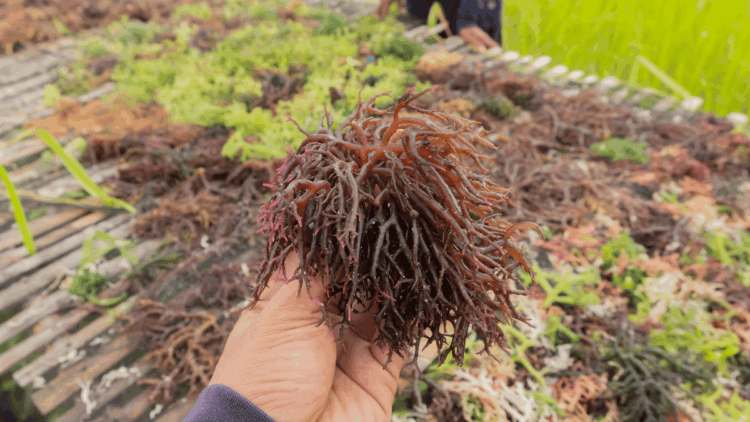
In Comacchio, the University of Ferrara’s BLUE-FARM project is testing an integrated multitrophic aquaculture system at three sites, where bivalve shellfish and native seaweed are farmed together. The seaweed is selected and propagated in university laboratories, while fishers and cooperatives participate directly in managing and monitoring the facilities.

The approach is particularly interesting from a production perspective: seaweed cultivation can be assessed as an addition to infrastructure, marine space and expertise already available in shellfish farming, potentially introducing another crop within the same marine area.

The Adriatic builds on existing resources

BIOBASED follows a similar approach. Coordinated by the University of Foggia and developed with partners including CNR-IRBIM and the Mediterranean Aquaculture Association, the project tested seaweed production through integrated multitrophic aquaculture systems and pathways for processing the biomass into higher-value products.

The relationship between production and commercial opportunities was already part of the discussion at AquaFarm 2026, when BIOBASED brought together researchers, businesses and industry professionals at the A.M.A. exhibition area to explore potential seaweed applications.

The results presented on 15 September added another element: cultivated seaweed can be used to develop pigments, biostimulants, fibres and biopolymers, through biorefinery processes designed to increase the value of the biomass produced.

Liguria is moving in the same direction. On 24 September, the University of Genoa presented RegenERA, a spin-off established to develop regenerative aquaculture models based on cultivating Mediterranean seaweed in IMTA systems, with the aim of supplying local, traceable biomass for the bioeconomy.

Individually, these projects differ. Together, however, they point towards a shared direction: integrating seaweed into existing marine activities and identifying which products can secure a stable market.

Value depends on connecting with the market

Cultivation is only one stage in the chain.

A report published on 24 July 2026 by the European Blue Economy Observatory on the potential use of seaweed in the food industry sets out the information businesses need: reliable raw material characteristics, functional performance, safety, regulatory compliance and the ability to incorporate the ingredient into scalable production.

This applies beyond food. Industrial users need to know what biomass they will receive, with which characteristics, in what quantities and with what consistency of supply.

From biomass to products, consistency matters

Analyses developed in 2026 under EU4Algae also identify the ability to scale up and achieve more consistent production as essential steps in developing European seaweed aquaculture.

Across Europe, the sector is still taking shape. The CINEA study supporting a sustainable EU algae industry, updated in May 2026, links its growth to the coordinated development of investment, regulation and industrial capacity.

This is where the Italian outlook becomes particularly interesting.

Shellfish farming can provide facilities, marine space and expertise. Research can select species and develop production protocols. Technology companies can make cultivation, harvesting and monitoring more efficient. Further along the chain, food, feed, agriculture, cosmetics, biotechnology and materials businesses can turn biomass into products with very different characteristics and values.

The supply chain starts to take shape when these stakeholders begin working on the same question: which seaweed should be produced, with what characteristics, in what quantities and for which market?

For an aquaculture business, this question comes before choosing a production system. For processors, it means defining raw material standards. For technology developers, it means designing systems that can ensure quality and consistency. For industrial users, it means identifying reliable suppliers and economically viable applications.

Italy’s projects in 2026 show that these stakeholders are beginning to connect. The next phase will be decisive: identifying which trials can become ongoing production and which applications can make that production economically viable.

This is the stage that will define roles and opportunities across Italy’s future seaweed supply chain. For producers, processors, technology developers and users of algal biomass, success will depend on establishing a practical connection from the outset between what the sea can produce and what the market is willing to buy.

I Venerdì di Pesceinrete - newsletter

Tags: Algae farmingAquaculturebioeconomyIMTAseaweed
CondividiTweetCondividiPinInviaCondividiInvia
Articolo precedente

Conxemar 2026, Vigo al centro del business ittico

Prossimo articolo

Blue News Italia tra liquidità, tracciabilità e mercati

Davide Ciravolo

Davide Ciravolo

Autore Pesceinrete, retail ittico e mercati seafood Davide Ciravolo è autore Pesceinrete. Si occupa di mercati, distribuzione e scenari commerciali della filiera ittica, con particolare attenzione al rapporto tra prodotto, retail e consumi. La sua esperienza come ex buyer di Esselunga gli permette di osservare il settore seafood anche dal punto di vista della GDO e delle dinamiche di assortimento.

Articoli Correlati

Tuna cuts

How tuna cuts differ in flavour and market value

by Davide Ciravolo
15 Ottobre 2026

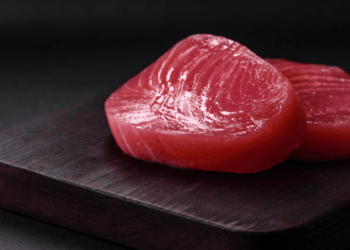
From akami to ventresca, a guide to tuna cuts, their culinary uses, processing yield and commercial value across the seafood...

EU packaging rules and EPR simplification for seafood SMEs

EU packaging rules could ease EPR obligations for SMEs

by Alice Giacalone
13 Ottobre 2026

The European Parliament’s Environment Committee backs a temporary suspension of the EPR authorised-representative requirement. What the proposal could mean for...

Italian seafood specialities linked to coastal food tourism

Tourism offers opportunities for Italian seafood specialities

by Candida Ciravolo
12 Ottobre 2026

Among Italian shopping tourists surveyed, 73% always or almost always buy food and non-alcoholic drinks. For seafood producers, local identity,...

Pesci economici da scegliere al banco

7 affordable fish worth choosing at the seafood counter

by Candida Ciravolo
11 Ottobre 2026

Mackerel, sardines, anchovies, horse mackerel, grey mullet, bogue and blue whiting can all offer good value. What matters is the...

Lascia un commento Annulla risposta

Il tuo indirizzo email non sarà pubblicato. I campi obbligatori sono contrassegnati *

Questo sito utilizza Akismet per ridurre lo spam. Scopri come vengono elaborati i dati derivati dai commenti.


Articoli più letti

  • 10 pesci costosi e prelibati
  • Le specie di sarago del Mediterraneo
  • Pesci con più e meno mercurio
  • Molva, una ricchezza del Mare del Nord
  • Molluschi bivalvi: descrizione e caratteristiche
  • Congelare il tonno in scatola
  • Gattuccio e palombo, gli squali buoni da mangiare
  • Triglia: caratteristiche e proprietà nutrizionali
  • Mangiare il tonno crudo: vantaggi e pericoli
  • Sgombro e lanzardo, pesce azzurro per il cuore
Pesceinrete

Pesceinrete è la testata giornalistica unica in Italia ad occuparsi di pesca commerciale ed acquacoltura. In quanto canale tematico e dai contenuti specializzati, si rivolge direttamente agli operatori della filiera con una comunicazione targettizzata che risponde alle esigenze del settore.

Segui le nostre pagine social

Stock images by Depositphotos

Newsletter

Categorie

  • News Ittico
  • Pesca
  • Acquacoltura
  • Associazioni di categoria
  • Sindacati
  • ONG
  • Tecnologia
  • Sostenibilità
  • Mercati
  • Eventi e Fiere
  • Overseas
  • Nutrizione e salute
  • Approfondimenti
  • Chi siamo
  • Policy editoriali
  • Partner
  • Contatti
  • Pubblicità
  • Newsletter
  • Mappa del sito

© 2026 INRETE S.R.L. P.Iva: 02557660814 - Pesceinrete - Il quotidiano del settore ittico | Credits

Pesceinrete
Gestisci Consenso

Usiamo cookie tecnici per far funzionare il sito, e cookie statistici (anche di terze parti) per capire come viene usato e migliorarlo. Puoi accettare tutto, rifiutare tutto o scegliere quali attivare — restando comunque libero di navigare senza restrizioni.

Funzionale Sempre attivo
L'archiviazione tecnica o l'accesso sono strettamente necessari al fine legittimo di consentire l'uso di un servizio specifico esplicitamente richiesto dall'abbonato o dall'utente, o al solo scopo di effettuare la trasmissione di una comunicazione su una rete di comunicazione elettronica.
Preferenze
L'archiviazione tecnica o l'accesso sono necessari per lo scopo legittimo di memorizzare le preferenze che non sono richieste dall'abbonato o dall'utente.
Statistiche
L'archiviazione tecnica o l'accesso che viene utilizzato esclusivamente per scopi statistici. L'archiviazione tecnica o l'accesso che viene utilizzato esclusivamente per scopi statistici anonimi. Senza un mandato di comparizione, una conformità volontaria da parte del vostro Fornitore di Servizi Internet, o ulteriori registrazioni da parte di terzi, le informazioni memorizzate o recuperate per questo scopo da sole non possono di solito essere utilizzate per l'identificazione.
Marketing
L'archiviazione tecnica o l'accesso sono necessari per creare profili di utenti per inviare pubblicità, o per tracciare l'utente su un sito web o su diversi siti web per scopi di marketing simili.
  • Gestisci opzioni
  • Gestisci servizi
  • Gestisci {vendor_count} fornitori
  • Per saperne di più su questi scopi
Personalizza
  • {title}
  • {title}
  • {title}
  • Home
  • Nutrizione e salute
  • Pesca
  • Acquacoltura
  • Approfondimenti
  • Tecnologia
  • Sostenibilità
  • Mercati
  • Guida Buyer NEW
  • Overseas English
  • Archivio
  • Chi siamo
  • Contatti
  • Partner
  • Pubblicità
  • Newsletter
Nessun Risultato
Vedi tutti i Risultati

© 2026 INRETE S.R.L. P.Iva: 02557660814 - Pesceinrete - Il quotidiano del settore ittico | Credits