• HOME
  • CHI SIAMO
  • CONTATTI
  • PARTNER
  • PUBBLICITÀ
  • NEWSLETTER
  • ARCHIVIO
    • Bandi e Opportunità
    • Speciali
    • Rubriche
    • Nutrizione e salute
    • Interviste
    • Video
mercoledì 16 Settembre, 2026
Pesceinrete
  • Pesca
  • Nutrizione e salute
  • Acquacoltura
    • Acquaponica
    • Algocoltura
  • Approfondimenti
  • Tecnologia
  • Sostenibilità
  • Mercati
  • OverseasNew
Nessun Risultato
Vedi tutti i Risultati
Pesceinrete
  • Pesca
  • Nutrizione e salute
  • Acquacoltura
    • Acquaponica
    • Algocoltura
  • Approfondimenti
  • Tecnologia
  • Sostenibilità
  • Mercati
  • OverseasNew
Nessun Risultato
Vedi tutti i Risultati
Pesceinrete
Nessun Risultato
Vedi tutti i Risultati

Home Overseas

The Rise of Food Delivery: How Seafood Is Redefining Italy’s New Eating Ritual

The latest Just Eat Observatory, conducted with Toluna on a representative sample of 1,000 Italians, outlines a clear picture: ordering at home is no longer a matter of convenience—it’s an act of identity.

Alice Giacalone by Alice Giacalone
21 Novembre 2025
in Overseas
The Rise of Food Delivery- How Seafood Is Redefining Italy’s New Eating Ritual

The Rise of Food Delivery- How Seafood Is Redefining Italy’s New Eating Ritual

A phone on the table, an easy conversation bouncing between different cravings, the menu scrolling on the screen and that almost solemn moment when someone clicks “order”. Food delivery is no longer a last-minute solution nor a fallback for those who come home late. With an average of 1.5 orders per week, delivery has entered Italian life as a new daily ritual—something as natural as going out for dinner or inviting friends over. And within this new ritual, seafood—especially in its contemporary formats—has found a privileged space.

Delivery as a mirror of everyday life

The latest Just Eat Observatory, conducted with Toluna on a representative sample of 1,000 Italians, outlines a clear picture: ordering at home is no longer a matter of convenience—it’s an act of identity.
Some choose a poke bowl to feel light and aligned with personal wellbeing. Some pick sushi as a symbol of openness to the world. Others, with full honesty, simply choose what makes them feel good.

Delivery becomes a lens that magnifies emotions, social dynamics, family interactions and small personal pleasures.

A striking 92% of orders happen in company: couples, families, groups of friends. For Gen Z, it’s almost a collective ritual—often with different restaurants in a single order to satisfy everyone. Gen X, on the other hand, tends to remain loyal to their favourite spots. In all cases, delivery has become a way of carving out time: shared when possible, solitary when needed.

Inside the decision: taste, mood, and aesthetics

Taste remains the dominant driver—but not the only one.
Cravings, plate aesthetics and even mood shape the final choice. A rapidly growing phenomenon is the search for a complete sensory experience, involving sight, touch and—above all—sound.

The ASMR (Autonomous Sensory Meridian Response) trend has exploded in recent years. Italians show increasing interest in the sounds of food, capable of triggering an almost physical pleasure:
the snap of tempura, the crunch of a fish taco, the clean slice of a perfectly sharpened sashimi knife, or the soft rustle of rice pressed by a chef’s hands.

This is far from a niche trend. Today, nearly 20% of Italians pay attention to textures, and over 20% are influenced by the visual and acoustic aesthetics of a dish. Seafood—between crunchy crustaceans, light fried bites and delicate tartare—is naturally suited to this new way of experiencing food.

Pragmatic factors also count: delivery speed, fees and price. While Gen X is still comfortable calling to order, Millennials and Gen Z consider apps the only acceptable channel.

The seafood wave: sushi, poke and new habits

If one segment has thrived thanks to delivery, it’s seafood.
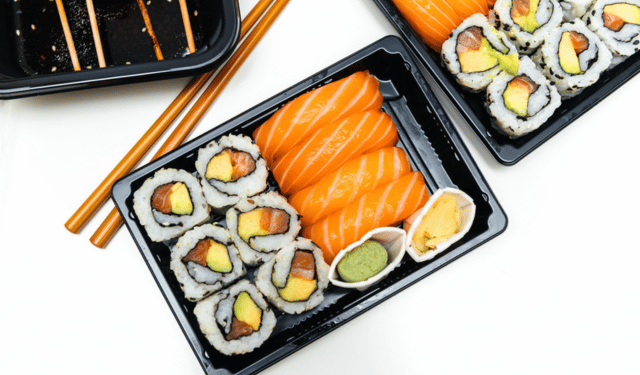
Sushi is now a stable presence among Italy’s most ordered cuisines—not a passing trend, but a consumption style that has reshaped the country’s urban food culture. Add to this the rise of poke bowls, ready-to-eat chilled seafood dishes, tartare, low-temperature cooked fillets and premium smoked fish.

Seafood has become a symbol of eating habits perceived as healthy, modern and sustainable. Delivery has played a decisive role in making these dishes accessible, even to those who, just a few years ago, would have considered ordering marinated salmon or perfectly crafted nigiri at home unthinkable.

At the same time, cloud kitchens have enabled restaurateurs and seafood entrepreneurs to test new concepts with minimal risk—dedicated delivery kitchens designed to ensure fish dishes arrive in perfect condition.

When delivery becomes a performance

Not everyone plays delivery openly.
Nearly four out of ten Italians admit to passing off a delivery dish as their own home creation at least once. Lasagna and baked pasta are the most frequent disguises—credible but laborious dishes. If someone asks for the recipe, a diversion strategy begins: a smile, a dramatic pause, a quick change of subject. The aroma filling the kitchen does the rest.

Seafood enters this territory too, especially in “wow-effect” plates: a flawless tartare, a silky salmon cream, a beautifully balanced tuna taco. Dishes requiring technique—ideal for gastronomic camouflage.

A fully mature ecosystem

The research confirms a trend that mirrors the broader seafood universe: delivery is no longer a service—it is a cultural, emotional and economic ecosystem, where:

  • advanced technology and logistics

  • new forms of consumption and social interaction

  • increasingly conscious food choices

  • and a constantly growing market

all converge.

According to Grand View Research, the global delivery market is expected to grow from $1.3 billion in 2024 to $1.8 billion in 2030. Seafood travels perfectly within this transformation. It conveys a lifestyle, supports experimentation, aligns with sustainability and is now part of a weekly ritual millions of Italians live without any sense of exceptionality.

Today, delivery is exactly this: a simple, ordinary—and profoundly human—way to put on the table what represents us, even when we are not the ones cooking it.

Stay ahead of change in the blue economy. Subscribe to our newsletter and get insights on sustainability, innovation, and market trends shaping the seafood sector.

NEWSLETTER

Tags: asmr food trenddigital food culturefood delivery habitsfood delivery italyfood innovationitalian consumers 2025poke bowl italyseafood deliveryseafood marketsushi trends italy
CondividiTweetCondividiPinInviaCondividiInvia
Articolo precedente

Il rito del delivery e il ruolo crescente del pesce nelle abitudini degli italiani

Prossimo articolo

Mediterraneo in evoluzione: il tonno cambia le sue prede

Alice Giacalone

Alice Giacalone

Autrice Pesceinrete Alice Giacalone scrive per Pesceinrete occupandosi di attualità, imprese, mercati e scenari della filiera ittica. Nei suoi contributi segue l’evoluzione del settore seafood con attenzione ai temi che incidono sul lavoro degli operatori, dalla pesca all’acquacoltura, dalla sostenibilità alle dinamiche commerciali.

Articoli Correlati

Fishing vessel at sea as warmer ocean temperatures and El Niño shift fish distribution and fishing grounds

El Niño is set to become very strong. Warmer seas are redrawing the geography of fishing

by Luca Di Noto
15 Settembre 2026

What happens to fisheries when seas become warmer? Warmer seas do not simply mean fewer fish. They can change where...

Imported caviar at the centre of the European debate on origin transparency

Imported caviar, European aquaculture calls for clearer origin information

by Mariella Ballatore
11 Settembre 2026

Imported caviar from non-EU countries has become a test case in European aquaculture’s call for greater origin transparency. FEAP warns...

Italian seafood presented to buyers at Seafood Expo Asia in Singapore

From blue crab to red shrimp, buyers put Italy’s seafood supply chain to the test in Singapore

by Redazione
9 Settembre 2026

From blue crab seeking an industrial supply chain to traceable bivalve molluscs and red shrimp for fine dining, Italy is...

Salmon fillet on the processing line at Freezco Eesti in Tallinn

Freezco expands salmon processing for the italian market

by Davide Ciravolo
7 Settembre 2026

Freezco has expanded salmon processing for the Italian market through Freezco Eesti, a facility in Tallinn launched in May 2026....

Lascia un commento Annulla risposta

Il tuo indirizzo email non sarà pubblicato. I campi obbligatori sono contrassegnati *

Questo sito utilizza Akismet per ridurre lo spam. Scopri come vengono elaborati i dati derivati dai commenti.


Articoli più letti

  • 10 pesci costosi e prelibati
  • Le specie di sarago del Mediterraneo
  • Pesci con più e meno mercurio
  • Molva, una ricchezza del Mare del Nord
  • Molluschi bivalvi: descrizione e caratteristiche
  • Congelare il tonno in scatola
  • Gattuccio e palombo, gli squali buoni da mangiare
  • Triglia: caratteristiche e proprietà nutrizionali
  • Mangiare il tonno crudo: vantaggi e pericoli
  • Sgombro e lanzardo, pesce azzurro per il cuore
Pesceinrete

Pesceinrete è la testata giornalistica unica in Italia ad occuparsi di pesca commerciale ed acquacoltura. In quanto canale tematico e dai contenuti specializzati, si rivolge direttamente agli operatori della filiera con una comunicazione targettizzata che risponde alle esigenze del settore.

Segui le nostre pagine social

Stock images by Depositphotos

Newsletter

Categorie

  • News Ittico
  • Pesca
  • Acquacoltura
  • Associazioni di categoria
  • Sindacati
  • ONG
  • Tecnologia
  • Sostenibilità
  • Mercati
  • Eventi e Fiere
  • Overseas
  • Nutrizione e salute
  • Approfondimenti
  • Chi siamo
  • Policy editoriali
  • Partner
  • Contatti
  • Pubblicità
  • Newsletter
  • Mappa del sito

© 2026 INRETE S.R.L. P.Iva: 02557660814 - Pesceinrete - Il quotidiano del settore ittico | Credits

Pesceinrete
Gestisci Consenso

Usiamo cookie tecnici per far funzionare il sito, e cookie statistici (anche di terze parti) per capire come viene usato e migliorarlo. Puoi accettare tutto, rifiutare tutto o scegliere quali attivare — restando comunque libero di navigare senza restrizioni.

Funzionale Sempre attivo
L'archiviazione tecnica o l'accesso sono strettamente necessari al fine legittimo di consentire l'uso di un servizio specifico esplicitamente richiesto dall'abbonato o dall'utente, o al solo scopo di effettuare la trasmissione di una comunicazione su una rete di comunicazione elettronica.
Preferenze
L'archiviazione tecnica o l'accesso sono necessari per lo scopo legittimo di memorizzare le preferenze che non sono richieste dall'abbonato o dall'utente.
Statistiche
L'archiviazione tecnica o l'accesso che viene utilizzato esclusivamente per scopi statistici. L'archiviazione tecnica o l'accesso che viene utilizzato esclusivamente per scopi statistici anonimi. Senza un mandato di comparizione, una conformità volontaria da parte del vostro Fornitore di Servizi Internet, o ulteriori registrazioni da parte di terzi, le informazioni memorizzate o recuperate per questo scopo da sole non possono di solito essere utilizzate per l'identificazione.
Marketing
L'archiviazione tecnica o l'accesso sono necessari per creare profili di utenti per inviare pubblicità, o per tracciare l'utente su un sito web o su diversi siti web per scopi di marketing simili.
  • Gestisci opzioni
  • Gestisci servizi
  • Gestisci {vendor_count} fornitori
  • Per saperne di più su questi scopi
Personalizza
  • {title}
  • {title}
  • {title}
  • Home
  • Nutrizione e salute
  • Pesca
  • Acquacoltura
  • Approfondimenti
  • Tecnologia
  • Sostenibilità
  • Mercati
  • Overseas English NEW
  • Archivio
  • Chi siamo
  • Contatti
  • Partner
  • Pubblicità
  • Newsletter
Nessun Risultato
Vedi tutti i Risultati

© 2026 INRETE S.R.L. P.Iva: 02557660814 - Pesceinrete - Il quotidiano del settore ittico | Credits