Overseas


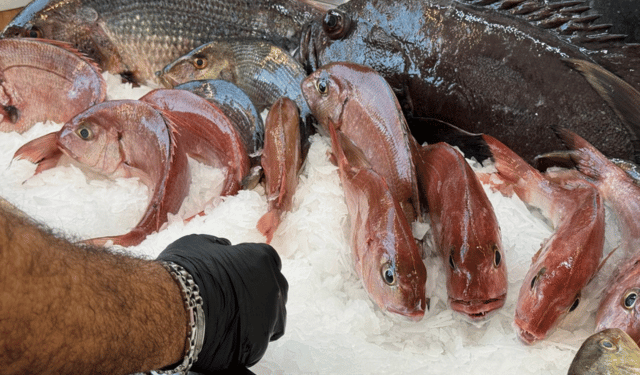
Local seafood products continue to hold clear appeal in the purchasing choices of Italian consumers. Yet for the seafood sector, the real issue is no longer determining whether this interest exists. It already does. The question is rather different: whether the industry is truly capable of transforming that interest into perceived value, informed purchasing decisions and real growth for the segment.
Data from the Shopping Observatory by DoveConviene, based on a sample of 2,554 people interviewed in January 2026, provide a picture worth examining closely. More than 82% of Italians consider it important to buy food of local origin, meaning products coming from their region or from within the country. The search for local products is driven primarily by supermarkets, indicated by 82% of respondents as their main purchasing channel, far ahead of neighborhood markets, direct purchases from producers and small local shops.
When viewed through the lens of the seafood sector, this figure carries considerable weight. If consumers increasingly value origin, proximity and territorial identity, local fish should theoretically start with a clear advantage. Few food segments are as naturally connected to freshness, territorial identity, relationships with producing communities and perceived authenticity as seafood. Yet this intrinsic value is not enough on its own to guarantee strong growth.
The problem is that local seafood products often fail to communicate their value clearly and immediately. Their origin is not always easy to understand, the work behind them is not always properly explained, and territorial identity is not always translated into a clear selling argument. Consumers say they want local products, but when the moment of purchase arrives they often face an offer that does not make the differences between products sufficiently visible.
The survey also helps explain why local products retain such strong appeal. 61% of respondents choose them for quality and freshness, while 52% associate them with supporting the local economy. Another 27% cite trust and supply chain transparency as key motivations, and 26% believe local products are more sustainable thanks to shorter transport distances and lower emissions. In short, consumers are not simply looking for geographic proximity. They are seeking guarantees, recognizability, coherence and meaning.
This is precisely where the seafood sector should focus its attention. Almost all the values identified by respondents correspond to characteristics that local seafood already possesses. Perceived freshness, connection with the territory, shorter supply chains, support for coastal economies, the identity of fishing communities and local food culture: the heritage is already there. What is often missing is the ability to make this value simple, visible and immediately understandable at the point of sale.
In this context, communication is not a secondary detail but a true market lever. Local seafood does not grow simply because consumers express favorable attitudes toward it. It grows when it becomes easy to interpret. It grows when consumers can immediately understand where the product comes from, why it has value, what makes it different and why they should choose it. Without this step, local seafood risks remaining a theoretical preference, declared in surveys but weaker in front of the shelf or fish counter.
The barriers highlighted by the Observatory confirm this fragility. Price is the main obstacle, cited by 52% of respondents. Limited availability and product variety follow at 26%, while 15% report difficulty recognizing local products on store shelves. These figures are strikingly familiar when applied to seafood.
Price remains the most critical issue. Fish is often evaluated quickly by consumers, especially when they lack the information needed to understand the value difference between products. If origin remains silent, if the supply chain is not explained, if the connection with the territory is not made concrete, price inevitably becomes the only evaluation criterion. In this situation, local seafood risks appearing simply more expensive rather than more authentic, fresher or more trustworthy.
Limited availability is also a real factor. Unlike many other food sectors, local seafood faces structural variability shaped by seasonality, weather conditions, uneven catches and inconsistent assortments. Yet this should not be viewed solely as a limitation. It should become part of the narrative. If properly explained, this variability can transform from a commercial weakness into a marker of authenticity. Consumers need to understand that not everything local can be available at all times in the same way, and that this variability is part of the product’s value.
Perhaps the most interesting figure concerns recognizability. If a significant share of consumers struggles to identify local products on store shelves, the problem is not only related to production or distribution. It is primarily an issue of presentation, language and clarity. In seafood, the challenge becomes even more evident because purchase decisions are often made within seconds and require immediate messages. Origin must be visible. Territory must emerge clearly. The supply chain must be perceived as reassuring rather than technical.
The fact that supermarkets are the preferred channel for purchasing local products also raises an important point. If large-scale retail is where consumers expect to find local food, then local seafood must learn to occupy that space more effectively. It is not enough to be present in assortments. It needs to be highlighted as a segment, positioned as a distinctive choice and supported by communication capable of translating consumer expectations into a few clear messages: freshness, proximity, trust and transparency.
This does not mean ignoring the importance of traditional channels. On the contrary, regional differences highlighted by the Observatory show that in some areas the relationship with local products remains strongly tied to proximity and direct interaction. In Sicily, for example, street markets account for 30% of preferences in purchasing local products. For seafood, this is particularly relevant. In regions where fish remains part of everyday life, the value of local products is still built largely on personal trust, habit and direct knowledge of both seller and product.
Yet this dynamic also reveals an important lesson. In traditional contexts, local products often sell themselves thanks to personal relationships. In more structured retail environments, that same trust must be built through different tools. A more modern, organized and accessible narrative is required—one capable of transferring to supermarket shelves what traditional markets still convey through voice, experience and familiarity.
For this reason, the issue goes beyond marketing. It concerns the seafood supply chain’s ability to recognize its own commercial value. Local seafood is not merely a category to defend in the name of tradition. It is a segment that can grow if it is presented more effectively—if it is recognized for what it truly represents and if it speaks coherently to the values that increasingly shape food purchasing decisions.
Of course, these data must always be interpreted alongside differences in supply, because the choice of local products depends not only on cultural orientation but also on what consumers actually find available in different territories and distribution channels. Yet this caution reinforces the central point. Demand already exists. The potential for perceived value exists as well. What the seafood sector still needs to consolidate is the decisive step between potential and conversion.
In other words, local products do not need to be invented. They need to be explained better.
For seafood today, this could represent one of the most concrete opportunities for growth.
For more insights on the future of Italian and European fisheries and the blue economy, follow ongoing coverage and analysis on Pesceinrete.