• HOME
  • CHI SIAMO
  • CONTATTI
  • PARTNER
  • PUBBLICITÀ
  • NEWSLETTER
  • ARCHIVIO
    • Bandi e Opportunità
    • Speciali
    • Rubriche
    • Nutrizione e salute
    • Interviste
    • Video
martedì 15 Settembre, 2026
Pesceinrete
  • Pesca
  • Nutrizione e salute
  • Acquacoltura
    • Acquaponica
    • Algocoltura
  • Approfondimenti
  • Tecnologia
  • Sostenibilità
  • Mercati
  • OverseasNew
Nessun Risultato
Vedi tutti i Risultati
Pesceinrete
  • Pesca
  • Nutrizione e salute
  • Acquacoltura
    • Acquaponica
    • Algocoltura
  • Approfondimenti
  • Tecnologia
  • Sostenibilità
  • Mercati
  • OverseasNew
Nessun Risultato
Vedi tutti i Risultati
Pesceinrete
Nessun Risultato
Vedi tutti i Risultati

Home Overseas

China’s seafood market gives greater weight to quality and traceability: an opening for Italy

Imports were worth $10.1 billion in the first half of 2026. Italy's strongest opportunity lies not in volume, but in products that turn quality, processing and identity into recognisable value.

Davide Ciravolo by Davide Ciravolo
4 Settembre 2026
in Overseas
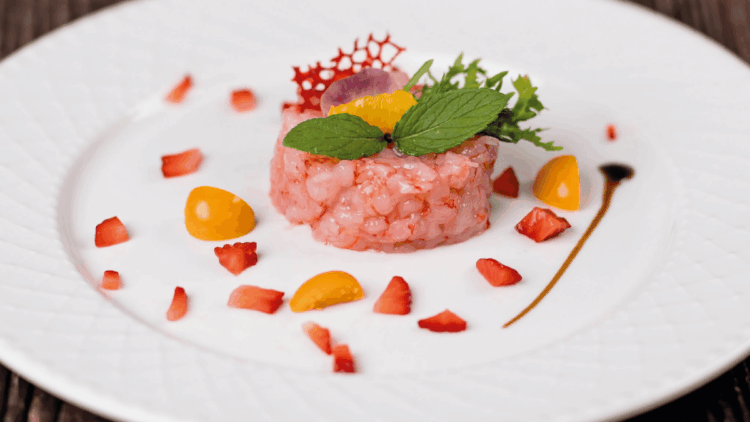
High-value Italian seafood product showcasing processing and presentation

A high-value Italian seafood product. Photo credit: Ittica Sud.

China imported around 2.31 million tonnes of seafood worth $10.1 billion in the first half of 2026. Competition remains intense, but some demand segments are placing greater emphasis on consistent quality, origin, traceability, convenience and a recognisable product identity. These higher-value segments offer the most credible opening for the Italian seafood industry.

China remains, first and foremost, a production powerhouse. In 2025, it produced 76.57 million tonnes of aquatic products, up 4.1% year on year, including 63.24 million tonnes from aquaculture.

Its imports should therefore not be interpreted simply as a response to insufficient domestic supply. They also complement the market with different species, origins, formats and service levels for increasingly segmented consumers and sales channels.

It is precisely this segmentation, rather than import volumes alone, that makes China increasingly relevant to Italian companies.

China’s seafood market is becoming more selective

A VASEP analysis of the Chinese seafood market points to growing attention to freshness, provenance, traceability, consistent quality, sustainability and certification, particularly in the mid-to-premium segments.

Consumption formats are changing as well. Live and fresh seafood remains important, especially in southern China, but frozen, semi-processed, cleaned and portioned products, marinated formats and ready-to-eat offerings are gaining ground.

Convenience matters particularly to younger consumers. At the same time, e-commerce, digital platforms and new distribution models are changing how seafood is presented, explained and purchased.

This evolution is already visible in salmon, where e-commerce and modern distribution are reshaping consumption in China. In the first half of 2026, China became the second-largest destination for Norwegian seafood exports, behind Poland and ahead of the United States.

Price remains decisive in mass-market categories

Growth in higher-value segments does not mean that the Chinese market has become any less price-sensitive.

Shrimp, pangasius and many other commodity categories continue to move through high-volume international trade, where production costs, scale, logistics and continuity of supply remain decisive. In these categories, countries such as Ecuador, India and Vietnam operate production systems that Italian suppliers would struggle to match.

The overall figures for the first half of 2026 also require caution. Import volumes increased by 6%, while value rose by just 0.3%. This difference does not automatically indicate a price trend, because the product mix also changes, but it confirms the intensity of competitive pressure.

VASEP also points to thinner margins, stronger competition and continued caution in consumer spending.

Italy’s commercial opportunity therefore does not come from trying to compete in every segment. It comes from selecting those in which price is not the only purchasing criterion.

Where the Italian seafood industry can compete

This is where the word “excellence” must be used with precision.

Italian origin alone does not automatically create a competitive advantage in China. The value must be visible in the product through consistent quality, processing expertise, food safety, traceability, provenance, presentation, service and the ability to meet the requirements of each distribution channel.

These are characteristics on which the broader Italian food industry has built a significant part of its international presence.

The seafood sector also has strong expertise in processing and adding value to raw materials: canned and semi-preserved seafood, smoked and marinated products, prepared and portioned formats, regional specialities and premium lines.

This does not mean that these categories are guaranteed a market in China. It means that the evolution of Chinese demand makes a differentiation strategy more credible than one based solely on volume.

An initial trade figure provides a concrete indication.

In the first six months of 2026, China imported $73.782 million worth of tuna, compared with $73.133 million in the same period of 2025, an increase of 0.9%.

Over the same period, imports from Italy rose from $482,000 to $1.081 million, an increase of 124.3%.

The scale remains limited: Italy accounted for around 1.5% of the value of the Chinese tuna imports covered by the statistics. Describing this as a boom would therefore be misleading.

The comparison is nevertheless significant. While China’s overall tuna import market grew by less than 1%, the value of imports from Italy more than doubled.

The available statistics do not identify which specific product types drove this increase. Without additional data, it would therefore be incorrect to attribute it to bluefin tuna, fresh or chilled products, frozen tuna or prepared products.

In China, Made in Italy must prove its value

This is the decisive point.

Made in Italy becomes a commercial advantage only when origin corresponds to a difference that importers can recognise and consumers are willing to pay for.

The Italian flag on the packaging is not enough. Suppliers need repeatable quality, food safety, traceability, distinctive processing, appropriate packaging, continuity of supply and a clear understanding of distribution channels.

Market access also depends on compliance with China’s sanitary import procedures, including the requirements applying to eligible establishments and product categories.

China has not suddenly become an easy market for Italian seafood. It is, however, becoming a market in which some characteristics traditionally associated with Italian production are gaining greater commercial relevance.

The 124.3% increase recorded for Italian tuna in the first half of 2026 remains small in absolute terms and does not establish a consolidated trend. It does, however, provide an initial tangible signal.

The real opportunity for the Italian seafood industry is not to sell generically “more fish” to China. It is to identify the products that can be recognised and rewarded for the quality, processing expertise and identity that distinguish them from mass-market supply.

That is where Italian excellence can find a market.

Photo credit: Ittica Sud

Tags: Chinainternational tradeItalian seafoodMade in Italyseafood importsseafood marketseafood traceabilitytuna tradevalue-added seafood
CondividiTweetCondividiPinInviaCondividiInvia
Articolo precedente

Kadis a Sciacca il 10 e 11 settembre: marinerie e porto al centro della visita

Prossimo articolo

Blue News Sicilia – 04 settembre 2026

Davide Ciravolo

Davide Ciravolo

Autore Pesceinrete, retail ittico e mercati seafood Davide Ciravolo è autore Pesceinrete. Si occupa di mercati, distribuzione e scenari commerciali della filiera ittica, con particolare attenzione al rapporto tra prodotto, retail e consumi. La sua esperienza come ex buyer di Esselunga gli permette di osservare il settore seafood anche dal punto di vista della GDO e delle dinamiche di assortimento.

Articoli Correlati

Fishing vessel at sea as warmer ocean temperatures and El Niño shift fish distribution and fishing grounds

El Niño is set to become very strong. Warmer seas are redrawing the geography of fishing

by Luca Di Noto
15 Settembre 2026

What happens to fisheries when seas become warmer? Warmer seas do not simply mean fewer fish. They can change where...

Imported caviar at the centre of the European debate on origin transparency

Imported caviar, European aquaculture calls for clearer origin information

by Mariella Ballatore
11 Settembre 2026

Imported caviar from non-EU countries has become a test case in European aquaculture’s call for greater origin transparency. FEAP warns...

Italian seafood presented to buyers at Seafood Expo Asia in Singapore

From blue crab to red shrimp, buyers put Italy’s seafood supply chain to the test in Singapore

by Redazione
9 Settembre 2026

From blue crab seeking an industrial supply chain to traceable bivalve molluscs and red shrimp for fine dining, Italy is...

Salmon fillet on the processing line at Freezco Eesti in Tallinn

Freezco expands salmon processing for the italian market

by Davide Ciravolo
7 Settembre 2026

Freezco has expanded salmon processing for the Italian market through Freezco Eesti, a facility in Tallinn launched in May 2026....

Lascia un commento Annulla risposta

Il tuo indirizzo email non sarà pubblicato. I campi obbligatori sono contrassegnati *

Questo sito utilizza Akismet per ridurre lo spam. Scopri come vengono elaborati i dati derivati dai commenti.


Articoli più letti

  • 10 pesci costosi e prelibati
  • Le specie di sarago del Mediterraneo
  • Pesci con più e meno mercurio
  • Molva, una ricchezza del Mare del Nord
  • Molluschi bivalvi: descrizione e caratteristiche
  • Congelare il tonno in scatola
  • Gattuccio e palombo, gli squali buoni da mangiare
  • Triglia: caratteristiche e proprietà nutrizionali
  • Mangiare il tonno crudo: vantaggi e pericoli
  • Sgombro e lanzardo, pesce azzurro per il cuore
Pesceinrete

Pesceinrete è la testata giornalistica unica in Italia ad occuparsi di pesca commerciale ed acquacoltura. In quanto canale tematico e dai contenuti specializzati, si rivolge direttamente agli operatori della filiera con una comunicazione targettizzata che risponde alle esigenze del settore.

Segui le nostre pagine social

Stock images by Depositphotos

Newsletter

Categorie

  • News Ittico
  • Pesca
  • Acquacoltura
  • Associazioni di categoria
  • Sindacati
  • ONG
  • Tecnologia
  • Sostenibilità
  • Mercati
  • Eventi e Fiere
  • Overseas
  • Nutrizione e salute
  • Approfondimenti
  • Chi siamo
  • Policy editoriali
  • Partner
  • Contatti
  • Pubblicità
  • Newsletter
  • Mappa del sito

© 2026 INRETE S.R.L. P.Iva: 02557660814 - Pesceinrete - Il quotidiano del settore ittico | Credits

Pesceinrete
Gestisci Consenso

Usiamo cookie tecnici per far funzionare il sito, e cookie statistici (anche di terze parti) per capire come viene usato e migliorarlo. Puoi accettare tutto, rifiutare tutto o scegliere quali attivare — restando comunque libero di navigare senza restrizioni.

Funzionale Sempre attivo
L'archiviazione tecnica o l'accesso sono strettamente necessari al fine legittimo di consentire l'uso di un servizio specifico esplicitamente richiesto dall'abbonato o dall'utente, o al solo scopo di effettuare la trasmissione di una comunicazione su una rete di comunicazione elettronica.
Preferenze
L'archiviazione tecnica o l'accesso sono necessari per lo scopo legittimo di memorizzare le preferenze che non sono richieste dall'abbonato o dall'utente.
Statistiche
L'archiviazione tecnica o l'accesso che viene utilizzato esclusivamente per scopi statistici. L'archiviazione tecnica o l'accesso che viene utilizzato esclusivamente per scopi statistici anonimi. Senza un mandato di comparizione, una conformità volontaria da parte del vostro Fornitore di Servizi Internet, o ulteriori registrazioni da parte di terzi, le informazioni memorizzate o recuperate per questo scopo da sole non possono di solito essere utilizzate per l'identificazione.
Marketing
L'archiviazione tecnica o l'accesso sono necessari per creare profili di utenti per inviare pubblicità, o per tracciare l'utente su un sito web o su diversi siti web per scopi di marketing simili.
  • Gestisci opzioni
  • Gestisci servizi
  • Gestisci {vendor_count} fornitori
  • Per saperne di più su questi scopi
Personalizza
  • {title}
  • {title}
  • {title}
  • Home
  • Nutrizione e salute
  • Pesca
  • Acquacoltura
  • Approfondimenti
  • Tecnologia
  • Sostenibilità
  • Mercati
  • Overseas English NEW
  • Archivio
  • Chi siamo
  • Contatti
  • Partner
  • Pubblicità
  • Newsletter
Nessun Risultato
Vedi tutti i Risultati

© 2026 INRETE S.R.L. P.Iva: 02557660814 - Pesceinrete - Il quotidiano del settore ittico | Credits