The aging workforce in Mediterranean fisheries is becoming one of the most significant structural challenges facing the sector. Small-scale fishing across the Mediterranean and the Black Sea is undergoing a quiet but decisive transformation as the average age of fishers continues to rise while youth participation remains limited.
Recent data highlight a demographic imbalance that extends beyond the labor market and touches the broader stability of coastal communities and the transmission of maritime knowledge built over generations.
According to The State of Mediterranean and Black Sea Fisheries 2025, 47% of small-scale fishers are now over the age of 40, while only 17% are under 25. These figures illustrate a sector where generational renewal is increasingly difficult to achieve.
The issue was central to the Small-Scale Fishers’ Forum on youth engagement in artisanal fisheries, organized in Athens by the FAO’s General Fisheries Commission for the Mediterranean (GFCM) with the support of WWF Greece and WWF Mediterranean. The event brought together fishers, institutions and international organizations to discuss the factors that are making the profession less attractive to younger generations.
Being a fisher today means running a business
Fishing was once widely perceived as a profession passed down from one generation to the next. Today, however, the reality is far more complex.
Going to sea is only one part of the job. Modern fishers must manage investments, deal with rising operational costs and navigate an expanding framework of administrative obligations.
Miguel Angèl Mercant Sirer, a fisher from Cala Ratjada in the Balearic Islands, summarized the transformation clearly: those working in the sector are no longer simply fishers but entrepreneurs responsible for economic risk and business management.
Under these conditions, if fishing does not provide a stable and dignified income, convincing young people to enter the profession becomes increasingly difficult.
Low earning potential remains one of the main factors discouraging new generations from pursuing careers in the sector.
Bureaucracy and access to finance
Administrative complexity is frequently cited as a major obstacle for young entrants.
Obtaining a license, registering a vessel, fulfilling catch reporting requirements and complying with control systems require time, technical knowledge and financial resources that are not always available to newcomers.
Access to financing represents another important barrier. Investment costs for starting or modernizing a fishing activity can be significant, while eligibility criteria for support programs are often difficult for young fishers to meet.
Several participants at the forum emphasized that the accumulation of administrative requirements can become a real deterrent. Greek fisher Stavros Nanidis noted that regulations are often developed far from the sea, without a full understanding of the daily operational realities faced by small-scale fleets.

Unfair competition and illegal fishing
The economic sustainability of artisanal fisheries is also affected by irregular competition.
Illegal, unreported and unregulated fishing continues to represent a significant challenge in many Mediterranean areas. The sale of unregistered catches, without traceability and without taxation, distorts markets and reduces economic opportunities for fishers who operate within the legal framework.
In some coastal areas, tensions also arise with recreational fishing when catches enter the market without proper controls.
For many fishers, strengthening licensing systems, catch reporting and traceability mechanisms is essential to ensure fairer market conditions.
The challenge of digitalization
Fisheries management is undergoing a gradual digital transition.
Electronic catch reporting, vessel monitoring systems and digital data platforms can improve transparency, traceability and operational safety. However, these tools also require new skills.
Croatian fisher Dino Bozanic highlighted that digital competence is no longer optional but a necessary condition for operating successfully in the sector.
The technological transition therefore needs to be accompanied by structured training programs. Without adequate support, digitalization could unintentionally create additional challenges for small-scale fishers.
Training and knowledge transfer
Education emerged as one of the most important solutions discussed during the forum.
Fishing schools, vocational training programs and local learning centers could play a key role in facilitating youth entry into the sector.
Structured education also strengthens the transfer of knowledge between generations by integrating practical experience, scientific research and sustainability principles.
Educational initiatives that bring young people closer to marine ecosystems and seafood-based food systems can help build a new awareness of the profession and its value for coastal economies.
Women in the fisheries value chain
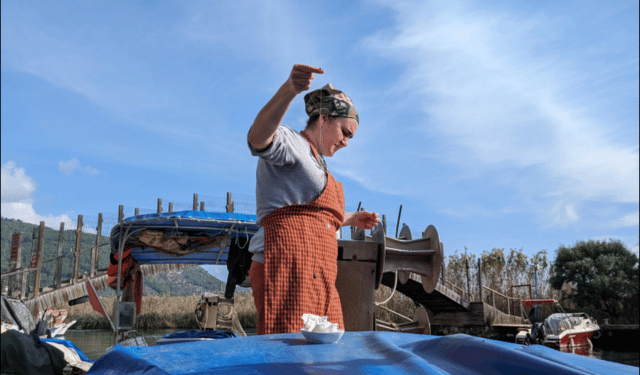
Another important topic raised during the discussions was the role of women in the sector.
Across the Mediterranean and the Black Sea, women represent nearly 30% of the workforce along the fisheries value chain, yet their contribution often remains under-recognized.
Safae Oualla, a young fisher from Morocco, emphasized that women are frequently marginalized despite playing essential roles in processing, marketing and family business management.
Strengthening female participation could therefore become an important lever for improving the sector’s inclusiveness and resilience.
What the Mediterranean risks losing
Despite the challenges, small-scale fisheries remain a cornerstone of the seafood sector in the Mediterranean and the Black Sea.
Small vessels account for around 58% of total onboard employment in the region.
Artisanal fishing is not only an economic activity but also a local food system, a pillar of coastal economies and a safeguard for marine ecosystems.
When young people leave the sector, the loss goes beyond workforce numbers. It involves the disappearance of knowledge, traditions and adaptive practices that have shaped Mediterranean fishing communities for generations.
Italian fisher Elia Gusso expressed a concern shared by many colleagues: with current income levels and existing pension systems, it is increasingly difficult to imagine a stable future in the profession.
The strategy for the future
Youth engagement is one of the pillars of the GFCM 2030 Strategy, which aims to strengthen the social and economic sustainability of small-scale fisheries in the region.
Through initiatives such as the Small-Scale Fishers’ Forum and capacity-building programs including MedSea4Fish and BlackSea4Fish, the goal is to turn dialogue between institutions and fishers into concrete support measures.
Generational renewal in Mediterranean fisheries will depend on several factors: easier access to the profession, more balanced regulations, adequate financial instruments, structured training pathways and stronger recognition of women’s roles.
Without these conditions, the central question may soon shift from why young people are leaving fishing to who will remain to carry it forward.
For more insights on the future of Italian and European fisheries and the blue economy, follow ongoing coverage and analysis on Pesceinrete.