• HOME
  • CHI SIAMO
  • CONTATTI
  • PARTNER
  • PUBBLICITÀ
  • NEWSLETTER
  • ARCHIVIO
    • Bandi e Opportunità
    • Speciali
    • Rubriche
    • Nutrizione e salute
    • Interviste
    • Video
martedì 15 Settembre, 2026
Pesceinrete
  • Pesca
  • Nutrizione e salute
  • Acquacoltura
    • Acquaponica
    • Algocoltura
  • Approfondimenti
  • Tecnologia
  • Sostenibilità
  • Mercati
  • OverseasNew
Nessun Risultato
Vedi tutti i Risultati
Pesceinrete
  • Pesca
  • Nutrizione e salute
  • Acquacoltura
    • Acquaponica
    • Algocoltura
  • Approfondimenti
  • Tecnologia
  • Sostenibilità
  • Mercati
  • OverseasNew
Nessun Risultato
Vedi tutti i Risultati
Pesceinrete
Nessun Risultato
Vedi tutti i Risultati

Home Overseas

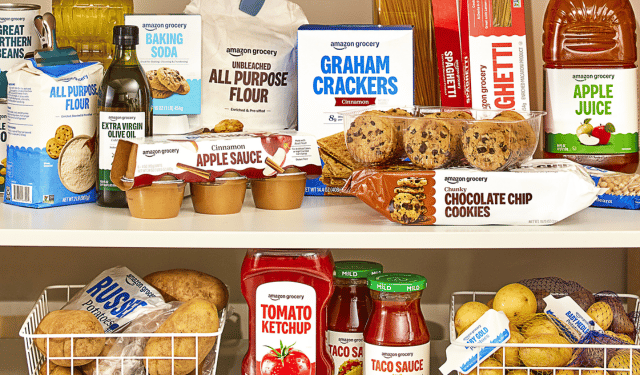
Amazon Grocery reshapes the private label food market

Seafood stands out among key categories, alongside meat, dairy, snacks, and bakery products.

Davide Ciravolo by Davide Ciravolo
8 Ottobre 2025
in Overseas
Amazon Grocery reshapes the private label food market

Amazon Grocery reshapes the private label food market

Just a few days ago, Amazon announced the launch of Amazon Grocery, a single brand uniting and replacing Amazon Fresh and Happy Belly — two private labels already familiar to the group’s customers.

The new brand offers over 1,000 food items — from pantry essentials to fresh products, meat, and fish — with most items priced under $5. The company’s stated goal is to deliver “quality and value without compromise” and make it easier for customers to discover Amazon-branded groceries.

The launch marks a significant expansion of the Seattle giant’s presence in the food sector, both online and across Amazon Fresh stores. It also represents a declaration of intent toward the global grocery market: Amazon aims to consolidate its fresh and packaged food offerings under one identity, in line with the steady growth of its grocery division. Seafood stands out among key categories, alongside meat, dairy, snacks, and bakery products.

Packaging plays a key role in the strategy. Amazon has reduced plastic use — for example, Amazon Grocery apple packs now contain 50% less plastic than before — and introduced clearer, more transparent designs to help customers make informed choices.

A new frontier for private labels

The initiative underscores Amazon’s ambition to strengthen its private label (MDD) strategy, already well established in home care, personal care, and baby care. With Amazon Grocery, the company takes private labels fully into the fresh food arena — a space traditionally dominated by brick-and-mortar retailers.

In the United States, where private label penetration remains lower than in Europe, Amazon aims to build trust and volume through its ecosystem: integrated logistics, consumption data, and a highly competitive price positioning. Each product is presented with an average rating above four stars — proof that verified reputation matters more than brand fame.

Amazon Grocery and the Italian seafood sector: a natural link

At first glance, a U.S. launch might seem distant from the Italian context. In reality, trends from across the Atlantic often anticipate shifts that later reach European markets. Amazon already operates Amazon Fresh in Italy’s main metropolitan areas, supported by a logistics network capable of same-day delivery for fresh and frozen goods.

If the Amazon Grocery format gradually expands to Europe, seafood will naturally rank among its core categories, alongside meat and dairy. The U.S. $5 pricing model would translate to target prices between €3.99 and €4.49 in Europe — with direct implications for canned, frozen, and ready-to-eat seafood segments.

For Italian producers, this means facing a new type of competition — not from discount chains, but from a global player combining convenience, logistics, and digital reputation. In this scenario, product value can no longer rely solely on origin or price, but also on differentiation through traceability, sustainable packaging, and authentic storytelling.

Price, quality, and sustainability: the competitive triangle

Across Europe, private label growth continues steadily: in 2024, store brands reached about 39% of total grocery value share, with Italy up by 2.4% year over year. Consumers increasingly recognize private labels for their compelling balance between quality and price.

Amazon positions itself as a new hybrid player — blending digital strength with the trust typically associated with global brands. For seafood, a category historically shielded by complex supply chains and specialized know-how, this marks its entry into mass online grocery retail.

The challenge for the Italian seafood supply chain is twofold: maintaining leadership in perceived quality and managing digital channels professionally. Every review, return, and consumer comment becomes part of a product’s value — as relevant as ASC, MSC, or FAO certifications. In other words, online reputation becomes a new form of traceability.

Outlook for the Italian seafood industry

For Italian producers of preserved and processed fish, the message is clear: it’s time to anticipate change. Those competing on price alone risk being absorbed into the market’s lower tiers, while those who can communicate origin, sustainability, and reliability will strengthen their position — even against a giant like Amazon.

The arrival of Amazon Grocery should not be seen as an immediate threat, but as a reminder: the battle for value in seafood now happens not just on supermarket shelves, but on consumers’ screens. Those who control the digital narrative — from product content to reviews — will define their market share tomorrow.

The world’s largest e-commerce operator has chosen to unify its food brand, placing seafood among its key categories. For the Italian supply chain, this is a clear signal: seafood is entering the new geography of global grocery, where price, sustainability, and reputation matter as much as — and sometimes more than — the label itself.

Stay informed — subscribe to our weekly newsletter for the most important seafood industry updates.

NEWSLETTER

Tags: Amazon food brandAmazon FreshAmazon Grocerydigital reputatione-commerce foodglobal retailgrocery trends 2025Happy BellyItalian seafood industryMDD strategyprivate labelseafood innovationseafood marketsustainabilitysustainable packaging
CondividiTweetCondividiPinInviaCondividiInvia
Articolo precedente

L’Italia del gusto parla anche il linguaggio del mare

Prossimo articolo

Rinnovato fino al 2029 il protocollo UE–Costa d’Avorio sulla pesca del tonno

Davide Ciravolo

Davide Ciravolo

Autore Pesceinrete, retail ittico e mercati seafood Davide Ciravolo è autore Pesceinrete. Si occupa di mercati, distribuzione e scenari commerciali della filiera ittica, con particolare attenzione al rapporto tra prodotto, retail e consumi. La sua esperienza come ex buyer di Esselunga gli permette di osservare il settore seafood anche dal punto di vista della GDO e delle dinamiche di assortimento.

Articoli Correlati

Fishing vessel at sea as warmer ocean temperatures and El Niño shift fish distribution and fishing grounds

El Niño is set to become very strong. Warmer seas are redrawing the geography of fishing

by Luca Di Noto
15 Settembre 2026

What happens to fisheries when seas become warmer? Warmer seas do not simply mean fewer fish. They can change where...

Imported caviar at the centre of the European debate on origin transparency

Imported caviar, European aquaculture calls for clearer origin information

by Mariella Ballatore
11 Settembre 2026

Imported caviar from non-EU countries has become a test case in European aquaculture’s call for greater origin transparency. FEAP warns...

Italian seafood presented to buyers at Seafood Expo Asia in Singapore

From blue crab to red shrimp, buyers put Italy’s seafood supply chain to the test in Singapore

by Redazione
9 Settembre 2026

From blue crab seeking an industrial supply chain to traceable bivalve molluscs and red shrimp for fine dining, Italy is...

Salmon fillet on the processing line at Freezco Eesti in Tallinn

Freezco expands salmon processing for the italian market

by Davide Ciravolo
7 Settembre 2026

Freezco has expanded salmon processing for the Italian market through Freezco Eesti, a facility in Tallinn launched in May 2026....

Lascia un commento Annulla risposta

Il tuo indirizzo email non sarà pubblicato. I campi obbligatori sono contrassegnati *

Questo sito utilizza Akismet per ridurre lo spam. Scopri come vengono elaborati i dati derivati dai commenti.


Articoli più letti

  • 10 pesci costosi e prelibati
  • Le specie di sarago del Mediterraneo
  • Pesci con più e meno mercurio
  • Molva, una ricchezza del Mare del Nord
  • Molluschi bivalvi: descrizione e caratteristiche
  • Congelare il tonno in scatola
  • Gattuccio e palombo, gli squali buoni da mangiare
  • Triglia: caratteristiche e proprietà nutrizionali
  • Mangiare il tonno crudo: vantaggi e pericoli
  • Sgombro e lanzardo, pesce azzurro per il cuore
Pesceinrete

Pesceinrete è la testata giornalistica unica in Italia ad occuparsi di pesca commerciale ed acquacoltura. In quanto canale tematico e dai contenuti specializzati, si rivolge direttamente agli operatori della filiera con una comunicazione targettizzata che risponde alle esigenze del settore.

Segui le nostre pagine social

Stock images by Depositphotos

Newsletter

Categorie

  • News Ittico
  • Pesca
  • Acquacoltura
  • Associazioni di categoria
  • Sindacati
  • ONG
  • Tecnologia
  • Sostenibilità
  • Mercati
  • Eventi e Fiere
  • Overseas
  • Nutrizione e salute
  • Approfondimenti
  • Chi siamo
  • Policy editoriali
  • Partner
  • Contatti
  • Pubblicità
  • Newsletter
  • Mappa del sito

© 2026 INRETE S.R.L. P.Iva: 02557660814 - Pesceinrete - Il quotidiano del settore ittico | Credits

Pesceinrete
Gestisci Consenso

Usiamo cookie tecnici per far funzionare il sito, e cookie statistici (anche di terze parti) per capire come viene usato e migliorarlo. Puoi accettare tutto, rifiutare tutto o scegliere quali attivare — restando comunque libero di navigare senza restrizioni.

Funzionale Sempre attivo
L'archiviazione tecnica o l'accesso sono strettamente necessari al fine legittimo di consentire l'uso di un servizio specifico esplicitamente richiesto dall'abbonato o dall'utente, o al solo scopo di effettuare la trasmissione di una comunicazione su una rete di comunicazione elettronica.
Preferenze
L'archiviazione tecnica o l'accesso sono necessari per lo scopo legittimo di memorizzare le preferenze che non sono richieste dall'abbonato o dall'utente.
Statistiche
L'archiviazione tecnica o l'accesso che viene utilizzato esclusivamente per scopi statistici. L'archiviazione tecnica o l'accesso che viene utilizzato esclusivamente per scopi statistici anonimi. Senza un mandato di comparizione, una conformità volontaria da parte del vostro Fornitore di Servizi Internet, o ulteriori registrazioni da parte di terzi, le informazioni memorizzate o recuperate per questo scopo da sole non possono di solito essere utilizzate per l'identificazione.
Marketing
L'archiviazione tecnica o l'accesso sono necessari per creare profili di utenti per inviare pubblicità, o per tracciare l'utente su un sito web o su diversi siti web per scopi di marketing simili.
  • Gestisci opzioni
  • Gestisci servizi
  • Gestisci {vendor_count} fornitori
  • Per saperne di più su questi scopi
Personalizza
  • {title}
  • {title}
  • {title}
  • Home
  • Nutrizione e salute
  • Pesca
  • Acquacoltura
  • Approfondimenti
  • Tecnologia
  • Sostenibilità
  • Mercati
  • Overseas English NEW
  • Archivio
  • Chi siamo
  • Contatti
  • Partner
  • Pubblicità
  • Newsletter
Nessun Risultato
Vedi tutti i Risultati

© 2026 INRETE S.R.L. P.Iva: 02557660814 - Pesceinrete - Il quotidiano del settore ittico | Credits