• HOME
  • CHI SIAMO
  • CONTATTI
  • PARTNER
  • PUBBLICITÀ
  • NEWSLETTER
  • ARCHIVIO
    • Bandi e Opportunità
    • Speciali
    • Rubriche
    • Nutrizione e salute
    • Interviste
    • Video
martedì 15 Settembre, 2026
Pesceinrete
  • Pesca
  • Nutrizione e salute
  • Acquacoltura
    • Acquaponica
    • Algocoltura
  • Approfondimenti
  • Tecnologia
  • Sostenibilità
  • Mercati
  • OverseasNew
Nessun Risultato
Vedi tutti i Risultati
Pesceinrete
  • Pesca
  • Nutrizione e salute
  • Acquacoltura
    • Acquaponica
    • Algocoltura
  • Approfondimenti
  • Tecnologia
  • Sostenibilità
  • Mercati
  • OverseasNew
Nessun Risultato
Vedi tutti i Risultati
Pesceinrete
Nessun Risultato
Vedi tutti i Risultati

Home Overseas

Aquaculture in the Desert: NEOM’s Regenerative Strategy

How Saudi Arabia is integrating food security, aquaculture and food-tech into a single industrial ecosystem

Davide Ciravolo by Davide Ciravolo
13 Febbraio 2026
in Overseas
Aquaculture in the Desert: NEOM’s Regenerative Strategy

Aquaculture in the Desert: NEOM’s Regenerative Strategy

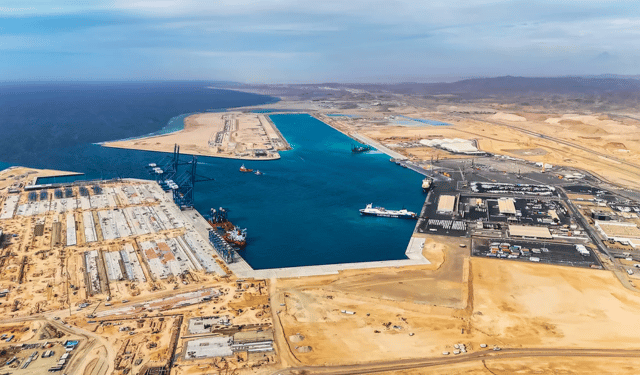
In one of the driest regions on the planet, the NEOM regenerative aquaculture strategy is emerging as a cornerstone of Saudi Arabia’s broader effort to build an integrated food system where primary production, technology and logistics are not developed in isolation, but designed together from the outset. Within this framework, aquaculture – presented as “regenerative” – is positioned not as a standalone production segment, but as an instrument of industrial policy.

NEOM

https://images.openai.com/static-rsc-3/iMeQt3swS1PNson4cb3yYJXEpsr5a1rUljmDtu5EmX70HMYPMBCGTETMfc31TirTvaIYMmpM09AGsnqbkJhrY1qWY5-zrUlNVty9lKyIDdQ?purpose=fullsize&v=1

Within the perimeter of NEOM, the food division Topian states its ambition to contribute to more resilient value chains, structured around food security, efficient resource management and applied innovation. For the European seafood supply chain, the most relevant aspect is not the visual scale of the megaproject, but its method: planning from day one an ecosystem that integrates production, infrastructure and technological trajectories.

When Aquaculture Becomes Infrastructure

In regions where freshwater scarcity is a structural constraint, any promise of production growth is credible only if matched by a leap in efficiency. In this context, “regeneration” takes on a pragmatic meaning: reducing environmental impact, recycling resources, monitoring consumption and managing climate-related risk.

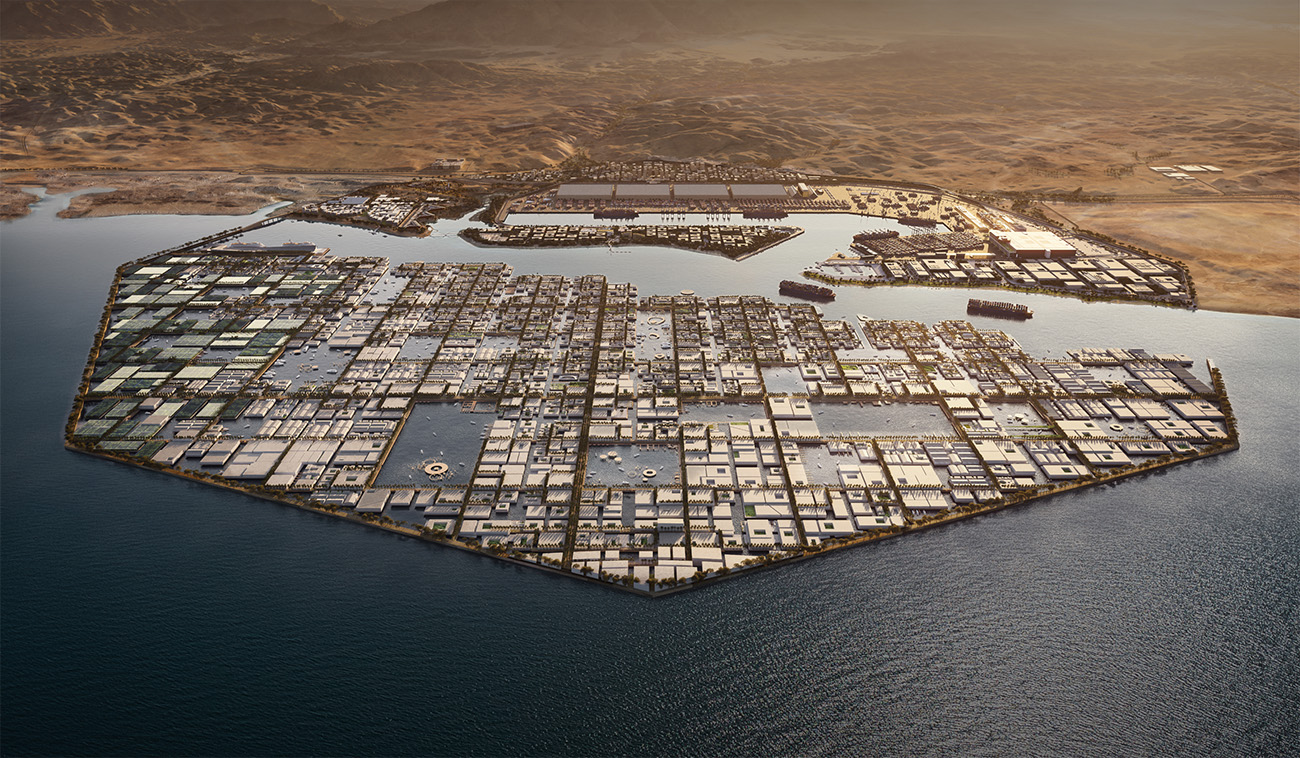
Alongside offshore and coastal aquaculture initiatives, NEOM promotes controlled-environment agriculture and climate-resilient solutions in areas such as Oxagon, the project’s coastal industrial hub.

Oxagon
https://www.neom.com/content/dam/neom/new-oxagon-2024/hero-image.jpg
https://framerusercontent.com/images/TpShhA5sXYcw1sk8e9zSO80qIrs.jpg?height=1080&width=1920
Here again, beyond individual technologies, the strategic direction is what matters: increasing production stability and supply predictability in a geographically and climatically challenging environment.

For the Mediterranean basin – where aquaculture is already an industrial reality but often develops unevenly – the question becomes concrete: how capable are we today of thinking in system terms – permits, infrastructure, innovation and markets – rather than through fragmented operators?

Food Security as Industrial Policy

In Saudi Arabia, food security is not a neutral slogan; it is embedded in a national strategy aimed at reducing vulnerability and external dependence. Food is framed not merely as domestic consumption, but as production capacity, expertise, value chains and, above all, the ability to absorb external shocks such as price volatility, logistics disruptions and geopolitical tensions.

Europe, for different reasons, is also highly dependent on seafood imports. The difference lies in pace and governance models. The EU advances through regulation and support instruments; projects like NEOM operate through ex novo construction and vertical integration. This is not a competition between models, but a shift in perspective: aquaculture is treated as a strategic lever, not as an isolated sector.

The Food-Tech Layer: Fermentation and Biomanufacturing

Another dimension deserving attention is NEOM’s declared openness to biomanufacturing and precision fermentation through partnerships and investments in food-tech. The question is not about “replacing” fish. It is about capturing emerging high-value industrial segments capable of generating functional ingredients and components for the processing industry.

For European operators active in processed and ready-to-eat seafood products, the issue is primarily competitive. If increasing value shifts toward ingredients, inputs and process technologies, then the geography of leadership may also shift accordingly.

A Laboratory to Observe, Not to Replicate

Transferring a model like NEOM directly to the Mediterranean is unrealistic. Regulatory, social, environmental and financial contexts differ significantly. Yet the case is instructive because it highlights three elements that often progress in Europe in a less coordinated way.

First, sustainability is approached as industrial architecture, not as a downstream certification label. Second, innovation is embedded in planning from the outset rather than added incrementally. Third, the value chain is conceived as an integrated system: production, infrastructure, technology and market are treated as one interconnected structure.

For Italian aquaculture, where growth ambitions frequently encounter lengthy permitting procedures and fragmented investment capacity, international comparison is useful not to imitate, but to reflect on governance frameworks, decision-making timelines and coordination mechanisms.

Beyond the Futuristic Narrative

NEOM is often portrayed as a “city of the future.” In the food domain, however, the most relevant development is not architectural spectacle but the attempt to build a resilient system in a climatically and logistically difficult environment by integrating production, infrastructure and technological pathways.

Observing developments outside Europe does not mean endorsing a model. It means anticipating dynamics that could affect the Mediterranean: resource management, supply stability, industrial innovation and competition in processed segments. For a seafood sector exposed to climate change, volatility and import dependency, ignoring these signals would represent a strategic miscalculation.
Tags: AquacultureNEOMNEOM’s Regenerative Strategy
CondividiTweetCondividiPinInviaCondividiInvia
Articolo precedente

Rabobank: il mercato del salmone allevato entra in una fase di offerta più rigida

Prossimo articolo

Blue News Sicilia 16 | Fiere internazionali, bandi ed eolico offshore

Davide Ciravolo

Davide Ciravolo

Autore Pesceinrete, retail ittico e mercati seafood Davide Ciravolo è autore Pesceinrete. Si occupa di mercati, distribuzione e scenari commerciali della filiera ittica, con particolare attenzione al rapporto tra prodotto, retail e consumi. La sua esperienza come ex buyer di Esselunga gli permette di osservare il settore seafood anche dal punto di vista della GDO e delle dinamiche di assortimento.

Articoli Correlati

Fishing vessel at sea as warmer ocean temperatures and El Niño shift fish distribution and fishing grounds

El Niño is set to become very strong. Warmer seas are redrawing the geography of fishing

by Luca Di Noto
15 Settembre 2026

What happens to fisheries when seas become warmer? Warmer seas do not simply mean fewer fish. They can change where...

Imported caviar at the centre of the European debate on origin transparency

Imported caviar, European aquaculture calls for clearer origin information

by Mariella Ballatore
11 Settembre 2026

Imported caviar from non-EU countries has become a test case in European aquaculture’s call for greater origin transparency. FEAP warns...

Italian seafood presented to buyers at Seafood Expo Asia in Singapore

From blue crab to red shrimp, buyers put Italy’s seafood supply chain to the test in Singapore

by Redazione
9 Settembre 2026

From blue crab seeking an industrial supply chain to traceable bivalve molluscs and red shrimp for fine dining, Italy is...

Salmon fillet on the processing line at Freezco Eesti in Tallinn

Freezco expands salmon processing for the italian market

by Davide Ciravolo
7 Settembre 2026

Freezco has expanded salmon processing for the Italian market through Freezco Eesti, a facility in Tallinn launched in May 2026....

Lascia un commento Annulla risposta

Il tuo indirizzo email non sarà pubblicato. I campi obbligatori sono contrassegnati *

Questo sito utilizza Akismet per ridurre lo spam. Scopri come vengono elaborati i dati derivati dai commenti.


Articoli più letti

  • 10 pesci costosi e prelibati
  • Le specie di sarago del Mediterraneo
  • Pesci con più e meno mercurio
  • Molva, una ricchezza del Mare del Nord
  • Molluschi bivalvi: descrizione e caratteristiche
  • Congelare il tonno in scatola
  • Gattuccio e palombo, gli squali buoni da mangiare
  • Triglia: caratteristiche e proprietà nutrizionali
  • Mangiare il tonno crudo: vantaggi e pericoli
  • Sgombro e lanzardo, pesce azzurro per il cuore
Pesceinrete

Pesceinrete è la testata giornalistica unica in Italia ad occuparsi di pesca commerciale ed acquacoltura. In quanto canale tematico e dai contenuti specializzati, si rivolge direttamente agli operatori della filiera con una comunicazione targettizzata che risponde alle esigenze del settore.

Segui le nostre pagine social

Stock images by Depositphotos

Newsletter

Categorie

  • News Ittico
  • Pesca
  • Acquacoltura
  • Associazioni di categoria
  • Sindacati
  • ONG
  • Tecnologia
  • Sostenibilità
  • Mercati
  • Eventi e Fiere
  • Overseas
  • Nutrizione e salute
  • Approfondimenti
  • Chi siamo
  • Policy editoriali
  • Partner
  • Contatti
  • Pubblicità
  • Newsletter
  • Mappa del sito

© 2026 INRETE S.R.L. P.Iva: 02557660814 - Pesceinrete - Il quotidiano del settore ittico | Credits

Pesceinrete
Gestisci Consenso

Usiamo cookie tecnici per far funzionare il sito, e cookie statistici (anche di terze parti) per capire come viene usato e migliorarlo. Puoi accettare tutto, rifiutare tutto o scegliere quali attivare — restando comunque libero di navigare senza restrizioni.

Funzionale Sempre attivo
L'archiviazione tecnica o l'accesso sono strettamente necessari al fine legittimo di consentire l'uso di un servizio specifico esplicitamente richiesto dall'abbonato o dall'utente, o al solo scopo di effettuare la trasmissione di una comunicazione su una rete di comunicazione elettronica.
Preferenze
L'archiviazione tecnica o l'accesso sono necessari per lo scopo legittimo di memorizzare le preferenze che non sono richieste dall'abbonato o dall'utente.
Statistiche
L'archiviazione tecnica o l'accesso che viene utilizzato esclusivamente per scopi statistici. L'archiviazione tecnica o l'accesso che viene utilizzato esclusivamente per scopi statistici anonimi. Senza un mandato di comparizione, una conformità volontaria da parte del vostro Fornitore di Servizi Internet, o ulteriori registrazioni da parte di terzi, le informazioni memorizzate o recuperate per questo scopo da sole non possono di solito essere utilizzate per l'identificazione.
Marketing
L'archiviazione tecnica o l'accesso sono necessari per creare profili di utenti per inviare pubblicità, o per tracciare l'utente su un sito web o su diversi siti web per scopi di marketing simili.
  • Gestisci opzioni
  • Gestisci servizi
  • Gestisci {vendor_count} fornitori
  • Per saperne di più su questi scopi
Personalizza
  • {title}
  • {title}
  • {title}
  • Home
  • Nutrizione e salute
  • Pesca
  • Acquacoltura
  • Approfondimenti
  • Tecnologia
  • Sostenibilità
  • Mercati
  • Overseas English NEW
  • Archivio
  • Chi siamo
  • Contatti
  • Partner
  • Pubblicità
  • Newsletter
Nessun Risultato
Vedi tutti i Risultati

© 2026 INRETE S.R.L. P.Iva: 02557660814 - Pesceinrete - Il quotidiano del settore ittico | Credits