• HOME
  • CHI SIAMO
  • CONTATTI
  • PARTNER
  • PUBBLICITÀ
  • NEWSLETTER
  • ARCHIVIO
    • Bandi e Opportunità
    • Speciali
    • Rubriche
    • Nutrizione e salute
    • Interviste
    • Video
mercoledì 16 Settembre, 2026
Pesceinrete
  • Pesca
  • Nutrizione e salute
  • Acquacoltura
    • Acquaponica
    • Algocoltura
  • Approfondimenti
  • Tecnologia
  • Sostenibilità
  • Mercati
  • OverseasNew
Nessun Risultato
Vedi tutti i Risultati
Pesceinrete
  • Pesca
  • Nutrizione e salute
  • Acquacoltura
    • Acquaponica
    • Algocoltura
  • Approfondimenti
  • Tecnologia
  • Sostenibilità
  • Mercati
  • OverseasNew
Nessun Risultato
Vedi tutti i Risultati
Pesceinrete
Nessun Risultato
Vedi tutti i Risultati

Home Overseas

The Diamond Lizardfish Emerges from the Shadows of the Mediterranean

The observations concern 34 individuals recorded at 18 different sites, spread across the Cyclades Islands, Crete, and Linosa in the Pelagie archipelago. These were not sporadic encounters. Most of the specimens observed were adult fish, a key indicator of structured populations that are likely already stable.

Davide Ciravolo by Davide Ciravolo
29 Gennaio 2026
in Overseas
Diamond Lizardfish Expands in the Mediterranean

Diamond Lizardfish Expands in the Mediterranean

For years, it was a low-visibility fish. It lives close to the seabed, blends in perfectly, and closely resembles species that are already well known. The result is simple: it can be there without being noticed. Today, however, the diamond lizardfish (Synodus synodus) is emerging from the margins—at least in the data. A scientific study documents its presence between Greece and Italy, with evidence consistent with populations that are now established in the Mediterranean.

The research was published in Mediterranean Marine Science and conducted by a team from the Sicily Marine Centre of the Anton Dohrn Zoological Station. The observations concern 34 individuals recorded at 18 different sites, spread across the Cyclades Islands, Crete, and Linosa in the Pelagie archipelago. These were not sporadic encounters. Most of the specimens observed were adult fish, a key indicator of structured populations that are likely already stable.

That Synodus synodus remained under the radar for so long is hardly surprising. It is a demersal predator, strictly associated with the seabed, and relies heavily on camouflage as a core survival strategy. It can remain motionless for long periods, blending into rocky or sandy substrates, striking only when prey passes within close range. This behaviour is compounded by its strong resemblance to a species already well known in the Mediterranean, Synodus saurus. Differences do exist, but they are subtle and difficult to detect without expert observation.

This combination helps explain why the diamond lizardfish may have been present in the Mediterranean Sea longer than previously thought, without being recognised as such. It is a clear example of how marine biodiversity can change quietly—even in one of the most monitored seas in the world.

The study also clarifies another crucial point. Synodus synodus does not fall into the category of alien species directly introduced by human activity, such as the blue crab or the lionfish. Instead, it is classified as a neo-native species—an organism that has naturally expanded its range as environmental conditions became more favourable. In this case, the decisive factor is rising sea temperatures, which are making the Mediterranean increasingly similar to the subtropical environments where the species originated.

Ocean warming is accelerating a profound reshuffling of Mediterranean biodiversity. New ecological niches are opening up, previously marginal species are finding space, and long-established ecosystem balances are being gradually redefined. The diamond lizardfish fits squarely into this process: not a dramatic arrival, but a coherent signal of an ongoing climate-driven transformation.

As for potential ecological impacts, the researchers take a cautious stance. At present, it is not possible to determine with certainty how the establishment of Synodus synodus might affect native fish communities or local food webs. For this reason, the authors stress the importance of long-term monitoring.

The study also highlights the limits of traditional observation methods. Marine environments are complex and difficult to survey continuously and comprehensively, especially when dealing with cryptic species or low-mobility fish. To address these gaps, scientific research is increasingly complementing direct observation with new analytical tools.

This is where the European project CAMBioMed comes into play. Bringing together partners from across the Mediterranean, the initiative aims to harmonise monitoring programmes and improve early detection of alien and neo-native species. Among the most promising approaches is environmental DNA (eDNA) analysis, a technique that allows researchers to detect a species through genetic traces released into the water, even in the absence of direct sightings.

The story of the diamond lizardfish tells of a Mediterranean Sea that is changing quietly. Identifying these signals, interpreting them correctly, and placing them within a solid scientific framework is now essential for understanding the evolution of marine biodiversity and supporting more informed decisions in fisheries management and marine resource governance.

Have you spotted unusual fish or “out-of-place” species while diving, snorkelling, or fishing? Even a single observation can help us understand how the Mediterranean is changing. Leave a comment with location and depth, or share the article with those who spend time at sea—the more observations circulate, the clearer the picture becomes.

For more insights on the future of Italian and European fisheries and the blue economy, follow ongoing coverage and analysis on Pesceinrete.

NEWSLETTER

Tags: climate change marine speciesdemersal fish MediterraneanMediterranean biodiversity changeneo-native species MediterraneanSynodus synodus
CondividiTweetCondividiPinInviaCondividiInvia
Articolo precedente

Il pesce lucertola diamante si è stabilito nel Mediterraneo

Prossimo articolo

The Invasion of the Sea Walnut in Italian Waters

Davide Ciravolo

Davide Ciravolo

Autore Pesceinrete, retail ittico e mercati seafood Davide Ciravolo è autore Pesceinrete. Si occupa di mercati, distribuzione e scenari commerciali della filiera ittica, con particolare attenzione al rapporto tra prodotto, retail e consumi. La sua esperienza come ex buyer di Esselunga gli permette di osservare il settore seafood anche dal punto di vista della GDO e delle dinamiche di assortimento.

Articoli Correlati

Fishing vessel at sea as warmer ocean temperatures and El Niño shift fish distribution and fishing grounds

El Niño is set to become very strong. Warmer seas are redrawing the geography of fishing

by Luca Di Noto
15 Settembre 2026

What happens to fisheries when seas become warmer? Warmer seas do not simply mean fewer fish. They can change where...

Imported caviar at the centre of the European debate on origin transparency

Imported caviar, European aquaculture calls for clearer origin information

by Mariella Ballatore
11 Settembre 2026

Imported caviar from non-EU countries has become a test case in European aquaculture’s call for greater origin transparency. FEAP warns...

Italian seafood presented to buyers at Seafood Expo Asia in Singapore

From blue crab to red shrimp, buyers put Italy’s seafood supply chain to the test in Singapore

by Redazione
9 Settembre 2026

From blue crab seeking an industrial supply chain to traceable bivalve molluscs and red shrimp for fine dining, Italy is...

Salmon fillet on the processing line at Freezco Eesti in Tallinn

Freezco expands salmon processing for the italian market

by Davide Ciravolo
7 Settembre 2026

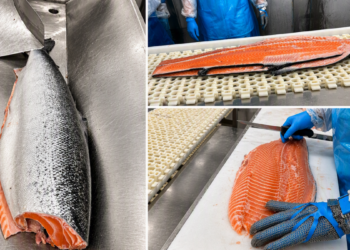
Freezco has expanded salmon processing for the Italian market through Freezco Eesti, a facility in Tallinn launched in May 2026....

Lascia un commento Annulla risposta

Il tuo indirizzo email non sarà pubblicato. I campi obbligatori sono contrassegnati *

Questo sito utilizza Akismet per ridurre lo spam. Scopri come vengono elaborati i dati derivati dai commenti.


Articoli più letti

  • 10 pesci costosi e prelibati
  • Le specie di sarago del Mediterraneo
  • Pesci con più e meno mercurio
  • Molva, una ricchezza del Mare del Nord
  • Molluschi bivalvi: descrizione e caratteristiche
  • Congelare il tonno in scatola
  • Gattuccio e palombo, gli squali buoni da mangiare
  • Triglia: caratteristiche e proprietà nutrizionali
  • Mangiare il tonno crudo: vantaggi e pericoli
  • Sgombro e lanzardo, pesce azzurro per il cuore
Pesceinrete

Pesceinrete è la testata giornalistica unica in Italia ad occuparsi di pesca commerciale ed acquacoltura. In quanto canale tematico e dai contenuti specializzati, si rivolge direttamente agli operatori della filiera con una comunicazione targettizzata che risponde alle esigenze del settore.

Segui le nostre pagine social

Stock images by Depositphotos

Newsletter

Categorie

  • News Ittico
  • Pesca
  • Acquacoltura
  • Associazioni di categoria
  • Sindacati
  • ONG
  • Tecnologia
  • Sostenibilità
  • Mercati
  • Eventi e Fiere
  • Overseas
  • Nutrizione e salute
  • Approfondimenti
  • Chi siamo
  • Policy editoriali
  • Partner
  • Contatti
  • Pubblicità
  • Newsletter
  • Mappa del sito

© 2026 INRETE S.R.L. P.Iva: 02557660814 - Pesceinrete - Il quotidiano del settore ittico | Credits

Pesceinrete
Gestisci Consenso

Usiamo cookie tecnici per far funzionare il sito, e cookie statistici (anche di terze parti) per capire come viene usato e migliorarlo. Puoi accettare tutto, rifiutare tutto o scegliere quali attivare — restando comunque libero di navigare senza restrizioni.

Funzionale Sempre attivo
L'archiviazione tecnica o l'accesso sono strettamente necessari al fine legittimo di consentire l'uso di un servizio specifico esplicitamente richiesto dall'abbonato o dall'utente, o al solo scopo di effettuare la trasmissione di una comunicazione su una rete di comunicazione elettronica.
Preferenze
L'archiviazione tecnica o l'accesso sono necessari per lo scopo legittimo di memorizzare le preferenze che non sono richieste dall'abbonato o dall'utente.
Statistiche
L'archiviazione tecnica o l'accesso che viene utilizzato esclusivamente per scopi statistici. L'archiviazione tecnica o l'accesso che viene utilizzato esclusivamente per scopi statistici anonimi. Senza un mandato di comparizione, una conformità volontaria da parte del vostro Fornitore di Servizi Internet, o ulteriori registrazioni da parte di terzi, le informazioni memorizzate o recuperate per questo scopo da sole non possono di solito essere utilizzate per l'identificazione.
Marketing
L'archiviazione tecnica o l'accesso sono necessari per creare profili di utenti per inviare pubblicità, o per tracciare l'utente su un sito web o su diversi siti web per scopi di marketing simili.
  • Gestisci opzioni
  • Gestisci servizi
  • Gestisci {vendor_count} fornitori
  • Per saperne di più su questi scopi
Personalizza
  • {title}
  • {title}
  • {title}
  • Home
  • Nutrizione e salute
  • Pesca
  • Acquacoltura
  • Approfondimenti
  • Tecnologia
  • Sostenibilità
  • Mercati
  • Overseas English NEW
  • Archivio
  • Chi siamo
  • Contatti
  • Partner
  • Pubblicità
  • Newsletter
Nessun Risultato
Vedi tutti i Risultati

© 2026 INRETE S.R.L. P.Iva: 02557660814 - Pesceinrete - Il quotidiano del settore ittico | Credits