Overseas


What happens to fisheries when seas become warmer?
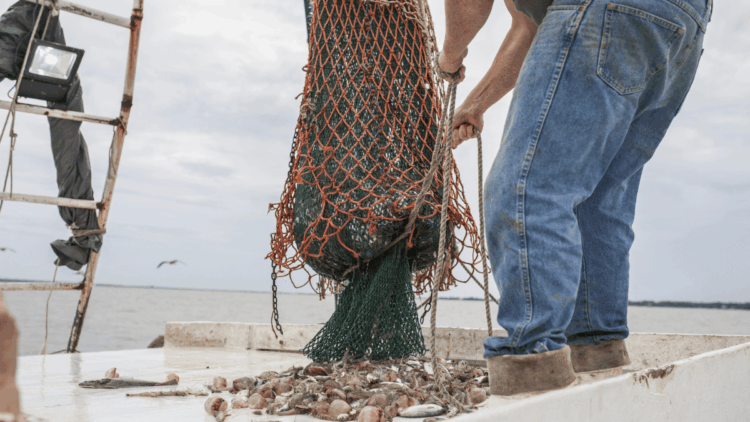
Warmer seas do not simply mean fewer fish. They can change where fish live, how deep they move and when they are present in traditional fishing grounds. As marine populations redistribute in response to changing environmental conditions, fleets may have to travel farther, fish deeper or adjust their seasons and strategies. The result is a changing geography of fishing, with consequences for operating costs, markets and fisheries management.
A warmer sea does not necessarily mean less fish. It may mean fish somewhere else, at a different depth or present during another part of the year.
Ocean warming is altering marine habitats and, together with other environmental and biological factors, can redistribute fish populations. A resource may still exist, but become less accessible to the fleets that have traditionally depended on it.
The El Niño event now strengthening rapidly is developing against the backdrop of an ocean that is already exceptionally warm. In 2025, ocean heat content down to 2,000 metres reached the highest level in the 66-year observational record, while the rate of ocean warming between 2005 and 2025 was more than twice that recorded between 1960 and 2005.
Another record followed in August 2026, when global daily sea surface temperature outside the polar regions reached 21.1°C, according to Copernicus Climate Change Service data.
It is against this background that El Niño is intensifying. The latest World Meteorological Organization update indicates a nearly 100% probability that El Niño will persist through February 2027. The event is expected to strengthen to very strong intensity before peaking towards the end of 2026.
Weekly sea surface temperature anomalies in the Niño 3.4 region of the central-eastern equatorial Pacific had already reached around +2.2°C to +2.6°C between late July and mid-August.
The distinction is important. El Niño is a naturally occurring climate phenomenon and part of the ENSO cycle; it is not the same thing as long-term climate change. But it is now unfolding within an ocean system that is already unusually warm, meaning strong regional anomalies are being superimposed on a longer-term trend that is reshaping marine ecosystems.
As the sea warms, fish distributions shift
Water temperature is a fundamental component of fish habitat. It affects metabolism and physiological performance and interacts with food availability, oxygen, depth, seabed characteristics, life cycles and the many other factors determining where a species can survive and reproduce.
There is therefore no single response to ocean warming.
The IPCC considers the evidence for changes in the distribution, abundance and seasonal behaviour of marine organisms to be increasingly robust. Across the marine taxa assessed globally, average poleward shifts have been estimated at around 59 kilometres per decade, although the scale and direction of change vary considerably among species and regions.
Seasonal events in fish populations have also been observed to occur around three days earlier per decade on average, potentially affecting migration, habitat occupancy and reproduction.
This does not mean that all fish are simply “moving north”. Populations tend to follow the environmental conditions compatible with their ecological niche wherever geography allows them to do so. The resulting movements can therefore be latitudinal, longitudinal, seasonal or vertical.
Not just northward: many populations are moving deeper
A major study published in Nature Communications in 2026 provides a particularly revealing picture. Researchers analysed 92,961 trawl surveys covering 607 species across four decades on the European continental shelf.
The clearest pattern was not latitude, but depth. Around 60% of the populations analysed had increased their average depth. Latitudinal movements, by comparison, were almost evenly divided: 49% of populations shifted poleward while 51% moved in the opposite direction.
The researchers linked these different responses to the interaction between environmental conditions and species-specific characteristics as populations track suitable ecological niches.
Evidence closer to Italy comes from the Strait of Sicily. An analysis of 1,678 scientific trawl hauls conducted between 2007 and 2023, at depths ranging from 10 to 800 metres, identified a reorganisation of demersal fish communities along the depth gradient associated with changes in bottom-water temperature.
Over the period analysed, average seabed temperature in the study area rose from a low of 14.52°C in 2009 to 15.37°C in 2023.
The point is therefore broader than the arrival of new species in Mediterranean waters. The space occupied by populations that are already present can also change.
The same pressure is visible across the Western Mediterranean, where marine heatwaves are already affecting commercially important species and fishing activity.
When fish move, fisheries move with them
This is where biological change becomes an operational and economic issue.
The amount of fish present in the sea and the ability of a fleet to catch it are not the same thing. In fisheries science, catchability also depends on availability: the degree to which a fish population overlaps, in space and time, with the area reached by fishing activity and fishing gear.
A population may therefore experience no equivalent reduction in biomass while becoming harder to catch because it is deeper, farther from port, outside traditional fishing grounds or present at a different time of year.
From the fleet’s perspective, the resource has become less accessible even if it has not disappeared.
The consequences can be very practical: more miles travelled, higher fuel consumption, longer navigation times, different fishing strategies or gear requirements and, in some cases, a resource that becomes uneconomic for certain vessels to pursue.
Not every fleet has the same ability to follow moving fish. Research based on industrial fleets from 82 countries and 13 fishing-gear categories predicts a gradual redistribution of fishing effort towards higher latitudes as fleets follow marine resources. It also suggests that countries particularly dependent on coastal fisheries may find it much harder to adapt.
The changing geography of fish can eventually become a political issue as well.
Research covering 347 stocks shared between exclusive economic zones and the high seas estimates that at least 37% could significantly change their distribution between these areas by 2030 and at least 54% by 2050. When fish cross established boundaries, quota systems, international agreements and management arrangements designed around a relatively stable geography can come under pressure.
Italian catches already contain evidence of a changing thermal composition. ISPRA uses the Mean Temperature of the Catch to measure the average thermal preference of species represented in commercial landings.
The indicator does not measure sea temperature itself. Instead, it shows whether catches are increasingly composed of species associated with warmer or colder waters.
Comparing the averages for 1987–1996 and 2013–2023, the indicator rose from 19.2°C to 20°C in the Adriatic, from 20.3°C to 22.2°C in the Ionian-Central Mediterranean and from 20.5°C to 22.5°C around Sardinia. ISPRA identifies statistically significant increases in all three areas.
Changes of this kind can eventually reach distribution and retail markets as well. Availability, seasonality and origins should no longer be assumed to remain unchanged when the marine environment itself is becoming more dynamic.
Peru shows what rapid redistribution can mean
Off the Peruvian coast, this process is particularly visible.
ENFEN reported in late August that the north-central stock of Peruvian anchoveta (Engraulis ringens) was expected to remain concentrated closer to the coast while forming deeper schools. At the same time, species associated with equatorial and oceanic waters were being recorded off the central coast, while species normally associated with northern areas were found farther south than their usual distribution.
These are precisely the two movements that make the changing geography of fishing tangible: a major resource moves deeper while other species shift geographically.
Anchoveta is particularly important because of its strong relationship with Pacific oceanographic conditions and ENSO.
A Nature Communications study published on 1 September 2026 examined 6,659 time series covering 1,246 species across 254 areas, comparing exceptionally high ocean temperatures, low primary productivity and fisheries catches.
Globally, two consecutive years of extremely high ocean temperatures were associated with an approximately 40% higher probability of exceptionally low catches compared with years without those conditions.
When extreme heat and strong declines in primary productivity occurred together, the increase in risk approached 80% in some configurations.
For Peru’s small pelagic fisheries, dominated by anchoveta, the relationship was even stronger: under prolonged and intense thermal anomalies, the probability of extremely low catches was reported to be more than nine times higher, with median reductions of around 60%.
There is, however, an essential distinction. The study analysed catches, not stock biomass directly. Landings also depend on fishing effort, management measures and operational decisions by fleets. A reduction in catches therefore cannot automatically be interpreted as an equivalent decline in fish populations.
That distinction is central to understanding what warmer oceans mean for fisheries.
It is no longer enough to ask how much fish is in the sea. The sector increasingly needs to know where that fish is, at what depth, during which season and whether the fleets that have historically depended on it can still reach it economically.
The latest ENFEN update, issued on 14 September 2026, confirms that the situation remains highly dynamic. The agency maintained its Coastal El Niño alert and indicated that the Niño 1+2 region has the highest probability of reaching extraordinary intensity between September 2026 and January 2027, while El Niño in the central Pacific Niño 3.4 region is expected to remain very strong over the same period.
For fisheries, the coming months will therefore offer another major test of how rapidly biological geography can change — and how effectively fleets, management systems and seafood markets can adapt.