• HOME
  • CHI SIAMO
  • CONTATTI
  • PARTNER
  • PUBBLICITÀ
  • NEWSLETTER
  • ARCHIVIO
    • Bandi e Opportunità
    • Speciali
    • Rubriche
    • Nutrizione e salute
    • Interviste
    • Video
mercoledì 16 Settembre, 2026
Pesceinrete
  • Pesca
  • Nutrizione e salute
  • Acquacoltura
    • Acquaponica
    • Algocoltura
  • Approfondimenti
  • Tecnologia
  • Sostenibilità
  • Mercati
  • OverseasNew
Nessun Risultato
Vedi tutti i Risultati
Pesceinrete
  • Pesca
  • Nutrizione e salute
  • Acquacoltura
    • Acquaponica
    • Algocoltura
  • Approfondimenti
  • Tecnologia
  • Sostenibilità
  • Mercati
  • OverseasNew
Nessun Risultato
Vedi tutti i Risultati
Pesceinrete
Nessun Risultato
Vedi tutti i Risultati

Home Overseas

EU Fish Production Decline and Import Dependence: A Structural Risk for Europe

Europe consumes more seafood than ever, yet produces less. Structural imbalances are reshaping the future of the EU fisheries and aquaculture sector.

Alice Giacalone by Alice Giacalone
26 Febbraio 2026
in Overseas
EU Fish Production Decline and Import Dependence

EU Fish Production Decline and Import Dependence

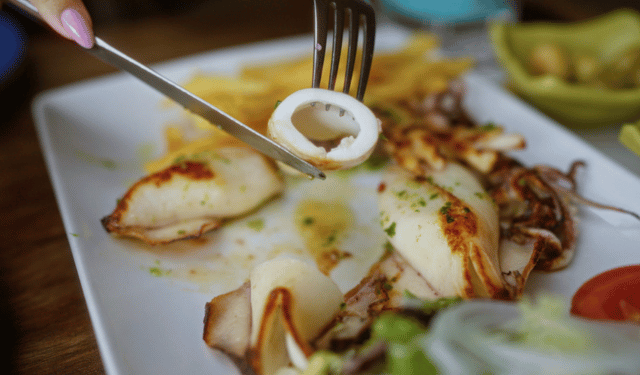
There is an uncomfortable truth that the European seafood sector struggles to address openly: Europe consumes more fish than ever, but produces less and less of it.

This is not perception or political rhetoric. It is a structural reality confirmed by a recent study from the European Parliament.

Today, more than 80% of the fish consumed in the European Union originates from non-EU countries. When considering the portion of domestic production actually available for internal consumption — after exports are deducted — the figure drops to a striking 14%.

This is not the result of a sudden crisis. It is the cumulative outcome of long-standing structural dynamics, regulatory choices, and market conditions. And that is precisely what makes the issue more serious.

Europe Produces Fish — But Not the Fish It Eats

One of the most paradoxical aspects of the EU fish production decline lies in species mismatch.

The European Union continues to fish and farm seafood. However, it does not primarily produce the species most demanded by consumers.

Cod, tuna, salmon, shrimp and Alaska pollock account for nearly half of total EU seafood consumption. Yet EU self-sufficiency for these species is close to zero.

At the same time, a significant share of European catches consists of species exported to international markets.

In practical terms, Europe catches fish, exports it, and then imports the fish it consumes.

Such a system can function under stable global conditions. It becomes fragile when geopolitical, economic or environmental disruptions occur.

Imported Fish Is Often Cheaper

Price is the decisive factor.

On retail shelves, imported fish frequently appears more competitive than EU-produced seafood. This is not solely a matter of efficiency.

EU producers operate under:

  • Higher labor costs

  • Elevated fuel and energy prices

  • Aging fleets that are difficult to modernize

  • Among the strictest environmental and social regulations worldwide

Many supplier countries operate with structurally lower costs or highly integrated production systems. In some cases, competitiveness is accompanied by environmental and labor standards that are not comparable to those required of European operators.

Moreover, a significant share of seafood imports benefits from reduced or zero tariffs, further amplifying competitive imbalance.

The Risk of Silent Dependence

As long as global trade flows smoothly, dependence on imports remains almost invisible.

Recent years have demonstrated how fragile that balance can be.

Wars, sanctions, energy crises, inflation and climate-related disruptions have revealed a fundamental reality: countries that do not maintain control over their food production capacity are exposed to systemic risks.

In the fisheries sector, the European Union finds itself in that position.

If imports decline or become significantly more expensive, internal production is not sufficient to compensate for the gap.

Aquaculture: A Promise That Has Not Taken Off

On paper, aquaculture should represent the solution to the EU fish production decline.

In reality, European aquaculture remains largely stagnant.

Production has hovered around one million tonnes for over a decade and covers only about 10% of EU seafood consumption. This is not due to a lack of technical expertise, but to well-known structural barriers:

  • Slow and fragmented authorization procedures

  • Limited access to maritime space and freshwater resources

  • Rising feed and energy costs

  • Limited attractiveness for private investment

Meanwhile, competing countries have built vertically integrated aquaculture value chains capable of scaling rapidly and supplying the EU market with consistency and competitive pricing.

This Is Not Europe Versus the World

The issue is not to demonize imports. International trade is an integral part of the seafood sector and will remain so.

The problem arises when internal production loses strategic weight and can no longer perform a balancing function.

At that point, the system ceases to be resilient.

The European Parliament study is explicit: without a revision of industrial, trade and investment policies, the EU’s dependence on seafood imports will continue to increase.

A Value Chain Issue

The EU fish production decline does not concern only fishermen and fish farmers.

It affects:

  • Processing industries

  • Retail and distribution

  • Consumers

  • Public policy frameworks

  • The overall competitiveness of the European agri-food system

Strengthening domestic production does not mean closing markets. It means rebuilding equilibrium between global trade and European production capacity.

The Real Question

Europe will continue to consume seafood.

The real question is different: who will produce it over the next twenty years?

If the answer is “increasingly further away,” then the issue will no longer be merely economic — it will be strategic.

And the European seafood sector may realize it too late.

For more insights on the future of Italian and European fisheries and the blue economy, follow ongoing coverage and analysis on Pesceinrete.
NEWSLETTER

Tags: aquaculture Europe stagnationEU aquacultureEU fisheriesEU food securityEuropean Parliament study fisheriesfish consumption Europefisheries policy EUseafood imports Europeseafood market Europeseafood trade imbalance
CondividiTweetCondividiPinInviaCondividiInvia
Articolo precedente

Pesca internazionale, l’UE recepisce le regole globali: più chiarezza per la flotta europea

Prossimo articolo

La bussola. La pesca d’altura nei nuovi scenari geopolitici nel Mediterraneo

Alice Giacalone

Alice Giacalone

Autrice Pesceinrete Alice Giacalone scrive per Pesceinrete occupandosi di attualità, imprese, mercati e scenari della filiera ittica. Nei suoi contributi segue l’evoluzione del settore seafood con attenzione ai temi che incidono sul lavoro degli operatori, dalla pesca all’acquacoltura, dalla sostenibilità alle dinamiche commerciali.

Articoli Correlati

Fishing vessel at sea as warmer ocean temperatures and El Niño shift fish distribution and fishing grounds

El Niño is set to become very strong. Warmer seas are redrawing the geography of fishing

by Luca Di Noto
15 Settembre 2026

What happens to fisheries when seas become warmer? Warmer seas do not simply mean fewer fish. They can change where...

Imported caviar at the centre of the European debate on origin transparency

Imported caviar, European aquaculture calls for clearer origin information

by Mariella Ballatore
11 Settembre 2026

Imported caviar from non-EU countries has become a test case in European aquaculture’s call for greater origin transparency. FEAP warns...

Italian seafood presented to buyers at Seafood Expo Asia in Singapore

From blue crab to red shrimp, buyers put Italy’s seafood supply chain to the test in Singapore

by Redazione
9 Settembre 2026

From blue crab seeking an industrial supply chain to traceable bivalve molluscs and red shrimp for fine dining, Italy is...

Salmon fillet on the processing line at Freezco Eesti in Tallinn

Freezco expands salmon processing for the italian market

by Davide Ciravolo
7 Settembre 2026

Freezco has expanded salmon processing for the Italian market through Freezco Eesti, a facility in Tallinn launched in May 2026....

Lascia un commento Annulla risposta

Il tuo indirizzo email non sarà pubblicato. I campi obbligatori sono contrassegnati *

Questo sito utilizza Akismet per ridurre lo spam. Scopri come vengono elaborati i dati derivati dai commenti.


Articoli più letti

  • 10 pesci costosi e prelibati
  • Le specie di sarago del Mediterraneo
  • Pesci con più e meno mercurio
  • Molva, una ricchezza del Mare del Nord
  • Molluschi bivalvi: descrizione e caratteristiche
  • Congelare il tonno in scatola
  • Gattuccio e palombo, gli squali buoni da mangiare
  • Triglia: caratteristiche e proprietà nutrizionali
  • Mangiare il tonno crudo: vantaggi e pericoli
  • Sgombro e lanzardo, pesce azzurro per il cuore
Pesceinrete

Pesceinrete è la testata giornalistica unica in Italia ad occuparsi di pesca commerciale ed acquacoltura. In quanto canale tematico e dai contenuti specializzati, si rivolge direttamente agli operatori della filiera con una comunicazione targettizzata che risponde alle esigenze del settore.

Segui le nostre pagine social

Stock images by Depositphotos

Newsletter

Categorie

  • News Ittico
  • Pesca
  • Acquacoltura
  • Associazioni di categoria
  • Sindacati
  • ONG
  • Tecnologia
  • Sostenibilità
  • Mercati
  • Eventi e Fiere
  • Overseas
  • Nutrizione e salute
  • Approfondimenti
  • Chi siamo
  • Policy editoriali
  • Partner
  • Contatti
  • Pubblicità
  • Newsletter
  • Mappa del sito

© 2026 INRETE S.R.L. P.Iva: 02557660814 - Pesceinrete - Il quotidiano del settore ittico | Credits

Pesceinrete
Gestisci Consenso

Usiamo cookie tecnici per far funzionare il sito, e cookie statistici (anche di terze parti) per capire come viene usato e migliorarlo. Puoi accettare tutto, rifiutare tutto o scegliere quali attivare — restando comunque libero di navigare senza restrizioni.

Funzionale Sempre attivo
L'archiviazione tecnica o l'accesso sono strettamente necessari al fine legittimo di consentire l'uso di un servizio specifico esplicitamente richiesto dall'abbonato o dall'utente, o al solo scopo di effettuare la trasmissione di una comunicazione su una rete di comunicazione elettronica.
Preferenze
L'archiviazione tecnica o l'accesso sono necessari per lo scopo legittimo di memorizzare le preferenze che non sono richieste dall'abbonato o dall'utente.
Statistiche
L'archiviazione tecnica o l'accesso che viene utilizzato esclusivamente per scopi statistici. L'archiviazione tecnica o l'accesso che viene utilizzato esclusivamente per scopi statistici anonimi. Senza un mandato di comparizione, una conformità volontaria da parte del vostro Fornitore di Servizi Internet, o ulteriori registrazioni da parte di terzi, le informazioni memorizzate o recuperate per questo scopo da sole non possono di solito essere utilizzate per l'identificazione.
Marketing
L'archiviazione tecnica o l'accesso sono necessari per creare profili di utenti per inviare pubblicità, o per tracciare l'utente su un sito web o su diversi siti web per scopi di marketing simili.
  • Gestisci opzioni
  • Gestisci servizi
  • Gestisci {vendor_count} fornitori
  • Per saperne di più su questi scopi
Personalizza
  • {title}
  • {title}
  • {title}
  • Home
  • Nutrizione e salute
  • Pesca
  • Acquacoltura
  • Approfondimenti
  • Tecnologia
  • Sostenibilità
  • Mercati
  • Overseas English NEW
  • Archivio
  • Chi siamo
  • Contatti
  • Partner
  • Pubblicità
  • Newsletter
Nessun Risultato
Vedi tutti i Risultati

© 2026 INRETE S.R.L. P.Iva: 02557660814 - Pesceinrete - Il quotidiano del settore ittico | Credits