• HOME
  • CHI SIAMO
  • CONTATTI
  • PARTNER
  • PUBBLICITÀ
  • NEWSLETTER
  • ARCHIVIO
    • Bandi e Opportunità
    • Speciali
    • Rubriche
    • Nutrizione e salute
    • Interviste
    • Video
martedì 15 Settembre, 2026
Pesceinrete
  • Pesca
  • Nutrizione e salute
  • Acquacoltura
    • Acquaponica
    • Algocoltura
  • Approfondimenti
  • Tecnologia
  • Sostenibilità
  • Mercati
  • OverseasNew
Nessun Risultato
Vedi tutti i Risultati
Pesceinrete
  • Pesca
  • Nutrizione e salute
  • Acquacoltura
    • Acquaponica
    • Algocoltura
  • Approfondimenti
  • Tecnologia
  • Sostenibilità
  • Mercati
  • OverseasNew
Nessun Risultato
Vedi tutti i Risultati
Pesceinrete
Nessun Risultato
Vedi tutti i Risultati

Home Overseas

EU tuna imports 2025: extra-EU dependence grows

EUMOFA’s latest Monthly Highlights confirm rising volumes and value, and show how concentrated trade flows shape Europe’s processing hubs.

Davide Ciravolo by Davide Ciravolo
29 Dicembre 2025
in Overseas
EU tuna imports 2025: extra-EU dependence grows

EU tuna imports 2025: extra-EU dependence grows

Extra-EU imports of tuna and related species have long held a distinctive place in debates on European seafood markets. They are mass-market products, deeply embedded in industrial and commercial supply chains, yet structurally dependent on sourcing beyond the European Union. The latest EUMOFA Monthly Highlights offer a chance to look at this pattern with greater precision, moving beyond a surface reading of imported volumes.

Between January and September 2025, extra-EU imports of tuna and related species rose again, both in quantity and in value. Taken as a whole, the figures reinforce an established trajectory: Europe’s tuna market relies on global supply flows to meet the needs of processing industry capacity and domestic consumption.

This dependence is neither occasional nor driven by short-term shocks. It reflects structural factors: biological limits on resources, fisheries management regimes, internal production capacity, and the characteristics of demand. European production, however relevant from an industrial standpoint, cannot ensure continuity and sufficient volumes without a steady contribution from third-country imports.

EUMOFA’s analysis also highlights another key feature: the geographic concentration of imports. A significant share of extra-EU flows is absorbed by a limited number of Member States, particularly those hosting the main processing and marketing clusters. This concentration supports supply-chain efficiency, but it also makes the system more exposed to shifts in international markets, logistics costs, and trade relations with supplier countries.

Within the “tuna and related species” grouping, individual species behave differently. Skipjack tuna remains central to trade, sustaining high volumes and offering a degree of supply stability. Other species, such as yellowfin tuna or swordfish, tend to show patterns that are more sensitive to biological, regulatory, and market drivers, with direct effects on prices and availability.

From an economic perspective, EUMOFA reports values in millions of euros, a convention that requires careful reading. When volumes and values are considered together, the overall scale becomes clear: extra-EU imports of tuna and related species amount to a market worth several billion euros, confirming the strategic weight of this category within Europe’s seafood industry.

What stands out most is not simply the increase in imports, but their full integration into how the market functions. Extra-EU tuna is no longer treated as a secondary component: it has become an ordinary element of the supply chain. That reality shifts the analytical center of gravity. The question is no longer whether Europe imports tuna, but how to manage—fairly and sustainably—a dependence that is now structural.

The implications are broad. They touch on origin diversification, industrial supply-chain resilience, transparency in trade flows, and the coherence between sustainability policies and the realities of a highly interconnected global market. These issues cannot be solved by a single indicator, but they emerge clearly from a careful, contextual reading of the data.

In that sense, EUMOFA does not provide definitive conclusions, yet it delivers essential elements for understanding the current market and guiding future reflection. Extra-EU imports of tuna and related species are not an anomaly, but a key lens for interpreting how European seafood markets are evolving in an increasingly interdependent context.

For more insights on the future of Italian fisheries and the blue economy, follow ongoing coverage and analysis on Pesceinrete.


NEWSLETTER

Tags: EU seafood marketEUMOFAextra-EU importsseafood processingskipjack tunasupply chain resiliencesustainabilityswordfishtrade flowstunatuna importsyellowfin tuna
CondividiTweetCondividiPinInviaCondividiInvia
Articolo precedente

Importazioni extra-UE di tonno: 568.716 tonnellate in 9 mesi

Prossimo articolo

Gli scarti del pesce? A volte valgono più delle carni

Davide Ciravolo

Davide Ciravolo

Autore Pesceinrete, retail ittico e mercati seafood Davide Ciravolo è autore Pesceinrete. Si occupa di mercati, distribuzione e scenari commerciali della filiera ittica, con particolare attenzione al rapporto tra prodotto, retail e consumi. La sua esperienza come ex buyer di Esselunga gli permette di osservare il settore seafood anche dal punto di vista della GDO e delle dinamiche di assortimento.

Articoli Correlati

Fishing vessel at sea as warmer ocean temperatures and El Niño shift fish distribution and fishing grounds

El Niño is set to become very strong. Warmer seas are redrawing the geography of fishing

by Luca Di Noto
15 Settembre 2026

What happens to fisheries when seas become warmer? Warmer seas do not simply mean fewer fish. They can change where...

Imported caviar at the centre of the European debate on origin transparency

Imported caviar, European aquaculture calls for clearer origin information

by Mariella Ballatore
11 Settembre 2026

Imported caviar from non-EU countries has become a test case in European aquaculture’s call for greater origin transparency. FEAP warns...

Italian seafood presented to buyers at Seafood Expo Asia in Singapore

From blue crab to red shrimp, buyers put Italy’s seafood supply chain to the test in Singapore

by Redazione
9 Settembre 2026

From blue crab seeking an industrial supply chain to traceable bivalve molluscs and red shrimp for fine dining, Italy is...

Salmon fillet on the processing line at Freezco Eesti in Tallinn

Freezco expands salmon processing for the italian market

by Davide Ciravolo
7 Settembre 2026

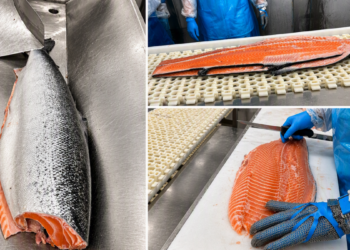
Freezco has expanded salmon processing for the Italian market through Freezco Eesti, a facility in Tallinn launched in May 2026....

Lascia un commento Annulla risposta

Il tuo indirizzo email non sarà pubblicato. I campi obbligatori sono contrassegnati *

Questo sito utilizza Akismet per ridurre lo spam. Scopri come vengono elaborati i dati derivati dai commenti.


Articoli più letti

  • 10 pesci costosi e prelibati
  • Le specie di sarago del Mediterraneo
  • Pesci con più e meno mercurio
  • Molva, una ricchezza del Mare del Nord
  • Molluschi bivalvi: descrizione e caratteristiche
  • Congelare il tonno in scatola
  • Gattuccio e palombo, gli squali buoni da mangiare
  • Triglia: caratteristiche e proprietà nutrizionali
  • Mangiare il tonno crudo: vantaggi e pericoli
  • Sgombro e lanzardo, pesce azzurro per il cuore
Pesceinrete

Pesceinrete è la testata giornalistica unica in Italia ad occuparsi di pesca commerciale ed acquacoltura. In quanto canale tematico e dai contenuti specializzati, si rivolge direttamente agli operatori della filiera con una comunicazione targettizzata che risponde alle esigenze del settore.

Segui le nostre pagine social

Stock images by Depositphotos

Newsletter

Categorie

  • News Ittico
  • Pesca
  • Acquacoltura
  • Associazioni di categoria
  • Sindacati
  • ONG
  • Tecnologia
  • Sostenibilità
  • Mercati
  • Eventi e Fiere
  • Overseas
  • Nutrizione e salute
  • Approfondimenti
  • Chi siamo
  • Policy editoriali
  • Partner
  • Contatti
  • Pubblicità
  • Newsletter
  • Mappa del sito

© 2026 INRETE S.R.L. P.Iva: 02557660814 - Pesceinrete - Il quotidiano del settore ittico | Credits

Pesceinrete
Gestisci Consenso

Usiamo cookie tecnici per far funzionare il sito, e cookie statistici (anche di terze parti) per capire come viene usato e migliorarlo. Puoi accettare tutto, rifiutare tutto o scegliere quali attivare — restando comunque libero di navigare senza restrizioni.

Funzionale Sempre attivo
L'archiviazione tecnica o l'accesso sono strettamente necessari al fine legittimo di consentire l'uso di un servizio specifico esplicitamente richiesto dall'abbonato o dall'utente, o al solo scopo di effettuare la trasmissione di una comunicazione su una rete di comunicazione elettronica.
Preferenze
L'archiviazione tecnica o l'accesso sono necessari per lo scopo legittimo di memorizzare le preferenze che non sono richieste dall'abbonato o dall'utente.
Statistiche
L'archiviazione tecnica o l'accesso che viene utilizzato esclusivamente per scopi statistici. L'archiviazione tecnica o l'accesso che viene utilizzato esclusivamente per scopi statistici anonimi. Senza un mandato di comparizione, una conformità volontaria da parte del vostro Fornitore di Servizi Internet, o ulteriori registrazioni da parte di terzi, le informazioni memorizzate o recuperate per questo scopo da sole non possono di solito essere utilizzate per l'identificazione.
Marketing
L'archiviazione tecnica o l'accesso sono necessari per creare profili di utenti per inviare pubblicità, o per tracciare l'utente su un sito web o su diversi siti web per scopi di marketing simili.
  • Gestisci opzioni
  • Gestisci servizi
  • Gestisci {vendor_count} fornitori
  • Per saperne di più su questi scopi
Personalizza
  • {title}
  • {title}
  • {title}
  • Home
  • Nutrizione e salute
  • Pesca
  • Acquacoltura
  • Approfondimenti
  • Tecnologia
  • Sostenibilità
  • Mercati
  • Overseas English NEW
  • Archivio
  • Chi siamo
  • Contatti
  • Partner
  • Pubblicità
  • Newsletter
Nessun Risultato
Vedi tutti i Risultati

© 2026 INRETE S.R.L. P.Iva: 02557660814 - Pesceinrete - Il quotidiano del settore ittico | Credits