Overseas


Today, the success of a food product is no longer determined solely by quality, but by its ability to perform within the retail environment. In supermarkets where dwell time is shrinking and consumer attention is increasingly fragmented, what truly matters is how a product fits into the shopping journey, how quickly it can be recognized, and how effectively it aligns with the real habits of shoppers.
It is within this context that the fish preserves market is undergoing a profound phase of reassessment. A historic and resilient category, long shaped by consolidated merchandising dynamics, is now facing a new challenge: becoming visible, readable, and coherent with the way consumers move through today’s stores.
Unifrigo Gadus approaches this shift from a clear standpoint: a product can no longer be designed as an isolated item. Instead, it must be conceived from the outset with the point of sale and the people who will encounter it along their shopping path in mind.
In recent years, large-scale retail has begun rethinking store layouts, moving beyond rigid departmental structures toward more fluid pathways. These new configurations are designed to accompany consumers across different needs: quick meals, lunch breaks, on-the-go consumption, and practical everyday solutions. Within this evolving scenario, fish preserves are also being called upon to reconsider their role.
It is no longer just about “going to buy tuna,” but about intercepting attention naturally, at the right moment and in the most coherent location. This is where new formats and new presentation strategies come into play, designed to adapt to a changing supermarket and to a consumer who is less willing to search and more inclined to be guided.
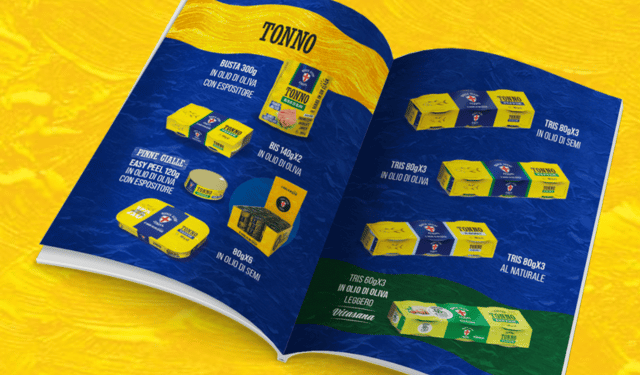
The tuna pouch developed by Unifrigo Gadus fits precisely into this logic. It is not conceived as a simple alternative to the traditional can, but as a tool capable of offering greater display flexibility to modern retail and a more immediate relationship with the product for consumers.

The possibility of placement outside the traditional preserves aisle, vertical display, lightness, and ease of handling make the product suitable for new sales contexts, where visibility and speed of choice become decisive factors.
For retailers, this translates into the ability to manage the category more dynamically, experimenting with cross-merchandising solutions and enhancing consumption occasions that extend beyond the home pantry. For end consumers, it means encountering a product that responds to a concrete need: simplicity, immediacy, and intuitive use.
It is within this balance between commercial requirements and purchasing behavior that Unifrigo Gadus’ approach takes shape. Not innovation for its own sake, but a design philosophy that connects product, point of sale, and people. A way of interpreting the market that views large-scale distribution not merely as a sales channel, but as a strategic space where product value is also built through placement and clarity.
Making fish preserves coherent with the contemporary supermarket means restoring their centrality without compromising their identity. It is a challenge that requires attention, listening, and adaptability. And it is on this ground that Unifrigo Gadus continues to operate, supporting the evolution of the category with solutions designed for the present—capable of speaking both to distribution and to today’s consumer.
For more insights on the future of Italian fisheries and the blue economy, follow ongoing coverage and analysis on Pesceinrete.