Overseas


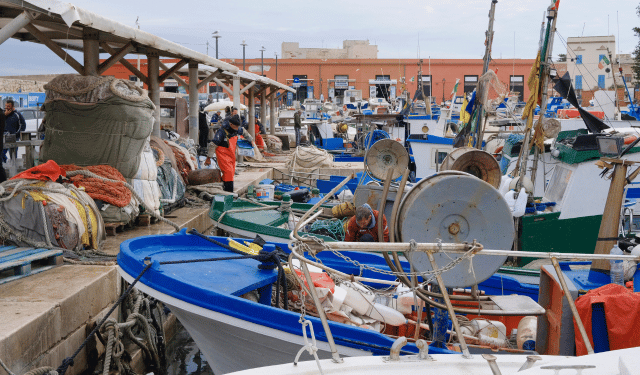
Fuel costs in Italian fisheries have returned to the centre of the debate as recent increases in petroleum prices, driven by ongoing conflict in the Middle East, have pushed fuel prices higher and intensified an already serious energy-cost problem for maritime businesses.
For fishing companies, energy is not a marginal expense. It is one of the most significant cost items in their accounts, often rising faster than revenues and reducing margins in a sector already exposed to market pressure, regulatory restrictions and environmental obligations.
In the Italian fishing industry, this issue is commonly known as the “caro gasolio”, the high cost of marine diesel. For more than twenty years, it has been a recurring source of concern for the sector. Public measures have partially mitigated the impact during emergency phases, especially when sudden increases in petroleum prices have made daily operations financially unsustainable for both small and large fishing enterprises.
The problem is structural. Studies on the sector have repeatedly shown that revenues do not follow the same upward trend as energy expenditure. This imbalance is influenced by commercial competitiveness, pressure from imported seafood products and European policies increasingly focused on environmental protection, including reductions in fishing activity, catches and fishing days.
Why fishing vessel engines matter
This context brings attention to an issue that is not always widely discussed but is central to the future of fishing: the engines of fishing vessels.
Within the broader framework of the Common Fisheries Policy, vessel propulsion is one of the key factors used to manage fishing licences. The fishing capacity of a vessel is measured not only by its size, expressed in gross tonnage, but also by the power of its engine, expressed in kilowatts.
This means that engine power has long been subject to specific limits and restrictions, especially when engines are replaced. The issue is now becoming even more relevant in light of recent European rules on control, monitoring and energy efficiency.
According to the latest available annual report on fisheries published by the Italian Ministry of Agriculture, Food Sovereignty and Forests, relating to 2024, measures encouraging the voluntary exit of national fishing vessels under the Common Fisheries Policy have already led to a clear reduction in the Italian fishing fleet. This reduction concerns the number of vessels, total tonnage and overall engine power.
However, the Italian fleet remains significant. In the current economic and geopolitical climate, attention must therefore shift to the technical question of energy efficiency and, above all, to how realistically this objective can be applied to maritime fishing, particularly offshore and long-distance fishing activities.
Energy efficiency means obtaining the same result, or a better one, by using less energy, reducing waste and environmental impact. In the case of fishing vessels, this inevitably means looking at propulsion systems.
The limits of fleet modernisation
From a shipbuilding perspective, hulls have reached high standards in terms of lighter materials and navigation performance, at least where these improvements can be applied to vessels designed for fishing activity. In theory, better hull design can reduce the need for engine power and improve fuel consumption.
In practice, however, the Italian fishing fleet is old, and the entry of new vessels is rare. This makes hull innovation almost irrelevant as a broad strategy for improving the overall energy performance of the sector.
For this reason, the most concrete improvements can come from replacing old engines with more efficient ones, both in terms of fuel consumption and emissions.
The European Union has moved in this direction through the EMFAF 2021–2027 programme, which includes financial support of up to 40% of eligible expenditure to increase energy efficiency and reduce CO2 emissions through the replacement or modernisation of fishing vessel engines.
This support, however, is subject to limits. It applies only to fishing vessels of up to 24 metres in overall length and only where specific conditions are met.
The broader question remains whether alternative propulsion systems, such as hybrid or electric engines, are technically and economically feasible for fishing vessels. Studies and sector analyses suggest that while the current emergency may encourage experimentation, there still appears to be limited room for sufficient investment in both research and practical application.
In the short term, the most realistic path is therefore the technological improvement of traditional internal combustion engines, with a focus on reducing fuel consumption. Further concrete steps are still needed before alternative fuels such as LNG or hydrogen can become a realistic option for the fishing fleet.
Why investment remains difficult
The economic uncertainty affecting the sector does not encourage fishing companies to invest in technologies that are not yet fully tested. For many operators, adopting unproven propulsion systems would mean adding new risks to an activity that is already financially fragile and operationally complex.
Yet dependence on petroleum products remains one of the sector’s most serious weaknesses, especially for companies engaged in offshore fishing. These businesses are increasingly exposed to sudden and uncontrollable increases in fuel prices.
It could be argued that energy crises affect all productive sectors. But fishing has a particularly weak market position. When the national fleet is forced to stop, the market often reacts by increasing imports, which are already significant in normal times. These imports compensate for the lack of domestic seafood supply in quantitative terms, but once import flows increase, they rarely return fully to previous levels.
This means that every prolonged fuel crisis risks creating a lasting loss of market space for domestic production.
Engine power and EU control rules
There is another aspect linked to fishing vessel engine power: control.
Engine power is directly connected to the fishing licence system and is part of the broader control framework through which the European Union supervises fishing activities and pursues the objectives of the Common Fisheries Policy.
Under the amendments to Regulation No 1224/2009 introduced by Regulation No 2023/2842, the EU aims to establish an effective, efficient, modern and transparent control and enforcement system for the Common Fisheries Policy.
As part of this framework, Member States must identify which catching vessels using towed gear, such as trawls, and with engine power above 221 kW, will be required from 10 January 2028 to install a continuous engine power monitoring system.
In practice, these vessels will have to be equipped with permanently installed systems capable of continuously measuring and recording engine power, while ensuring that the data are stored on board.
For vessels not covered by this obligation, a sampling plan will still apply. This may lead to physical checks of declared engine power or, in some cases, to the mandatory installation of continuous monitoring systems.
The European Commission’s Directorate-General for Maritime Affairs and Fisheries has already issued two manuals at the end of 2024: one containing guidelines for implementing continuous engine power monitoring systems and another providing technical guidance for physical engine power verification.
What remains to be clarified is Italy’s position, both in operational and economic terms. The cost of installing these monitoring systems may be covered entirely by public funds, or fishing companies may be required to contribute.
EMFAF support for engine replacement
Returning to the administrative aspects of engine replacement, EMFAF 2021–2027 financial support is granted to small-scale coastal fishing vessels provided that the power in kW of the new or modernised engine does not exceed that of the existing engine.
For other fishing vessels up to 24 metres in overall length, an additional condition applies: the new or modernised engine must emit at least 20% less CO2 than the current one.
These engines must also undergo physical checks, anticipating some of the logic of the new control system described above.
If direct information on the required CO2 reduction is not available, the condition may still be considered fulfilled in specific cases. This may apply where the new engine uses energy-efficient technology and the age difference between the new engine and the replaced one is at least seven years. It may also apply where the new engine uses a fuel type or propulsion system considered to emit less CO2, or where it consumes at least 20% less fuel than the engine it replaces.
The national EMFAF operational programme also includes the possibility of intervening on the vessel’s propeller, a key element in completing the efficiency of the propulsion system because it directly affects performance and fuel consumption.
Safety is also part of the equation
Beyond energy and environmental objectives, installing new engines can also bring important safety benefits.
Engine failure at sea can make a vessel unmanageable, especially in adverse weather conditions. In such cases, the entire crew and the vessel itself can be placed in serious danger. For this reason, engine modernisation should not be seen only as an environmental or economic measure, but also as a safety priority.
There are therefore several reasons to support a broader modernisation of fishing vessel engines: lower fuel consumption, reduced emissions, improved safety, greater operational reliability and lower exposure to fuel-price shocks.
However, this process requires more than individual investment by fishing companies. It needs technological development, targeted public support and fewer excessive limitations that risk slowing down the adoption of more efficient solutions.
The issue should now be brought to the appropriate institutional tables in a focused and practical way. All technical, economic and regulatory aspects need to be examined together, with the clear intention of providing strong guidance for future intervention plans in the maritime fishing sector.
Only then can the debate on fuel costs move beyond emergency measures and become part of a wider strategy for the resilience, competitiveness and sustainability of the Italian fishing fleet.