Overseas


Marine biotechnology medical innovation is increasingly redefining the boundaries of scientific research, pushing beyond traditional domains into areas once considered marginal. Among these, the ocean is emerging as one of the most promising frontiers, not only as a source of food but as a biological laboratory capable of delivering concrete solutions for modern medicine.
Fish skin and tissue regeneration
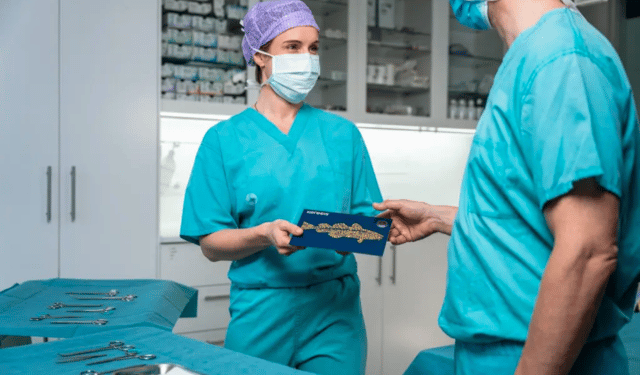
In recent years, several biotechnology companies have begun to unlock the potential of often overlooked marine resources, transforming them into advanced tools for tissue repair and regeneration. A notable example is Kerecis, which has developed medical devices based on the skin of wild Atlantic cod. Processed to retain its natural structure, this material acts as a scaffold for human tissue growth, supporting the healing of complex wounds, burns and chronic ulcers, including diabetic lesions.
The approach is both simple and effective: providing the body with a natural matrix on which new tissue can regenerate. This reduces the risk of severe complications, such as amputations, while accelerating patient recovery. The product’s versatility, available in multiple formats, allows it to be adapted to a wide range of clinical applications.
Marine oxygen carriers and wound healing
A different yet equally innovative direction is emerging in France, where Hemarina has developed technologies based on a hemoglobin molecule extracted from a little-known marine organism, the lugworm (Arenicola marina). This species thrives in low-oxygen environments and has an extraordinary ability to transport oxygen.
Building on this biological feature, researchers have created solutions designed to enhance oxygen delivery to damaged tissues, a critical factor in wound healing. In some applications, the molecule is incorporated into hydrogels applied directly to wounds, helping to create an optimal environment for tissue regeneration. Its recognition by the European Union as the first universal oxygen carrier highlights the significant potential of this technology.
Green-lipped mussels and anti-inflammatory compounds
On the other side of the world, in New Zealand, MacLab is focusing on bioactive compounds found in green-lipped mussels. Rich in omega-3 fatty acids, these mussels are a natural source of substances with anti-inflammatory properties. Extracts derived from them are currently being studied for the treatment of conditions such as arthritis and asthma.
While research is still ongoing and requires further scientific validation, preliminary findings suggest strong potential for future therapeutic applications.
From overlooked resources to high-value biotechnology
These examples illustrate how the ocean is becoming increasingly central to medical innovation. Resources long considered secondary — or even waste — are now being re-evaluated as high-value inputs for biotechnology. This is not merely a collection of isolated breakthroughs, but part of a broader shift in perspective: viewing marine ecosystems as reservoirs of untapped solutions.
A strategic opportunity for the seafood sector
For the seafood sector, this evolving landscape raises important considerations. The full valorisation of marine resources, extending beyond food applications, can foster the development of new value chains, increase the economic potential of raw materials and support more sustainable production models.
In this context, scientific research is not only a driver of technological progress, but also a strategic opportunity to rethink the relationship between industry, environment and human health.
Photo credit: Kerecis