Overseas


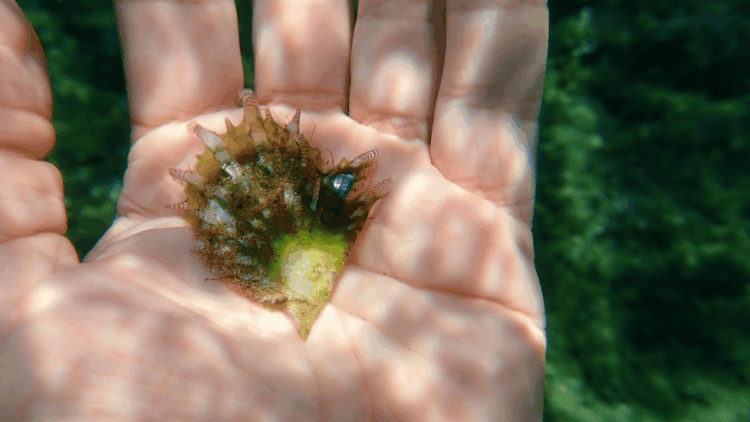
The rayed pearl oyster (Pinctada radiata) is expanding across the western Mediterranean and parts of the Adriatic. An international monitoring network using larval collectors has shown that the species can be detected several years before established populations become evident in the natural environment. Rising sea temperatures are helping create favourable conditions, but currents, larval dispersal and coastal infrastructure also influence its spread. Early detection could therefore become an important tool for monitoring and managing marine biological invasions.
The rayed pearl oyster (Pinctada radiata) is extending its range across the western Mediterranean and parts of the Adriatic Sea.
An international monitoring network based on larval collectors has documented the expansion and, at some sites, detected the species three to four years before individuals were observed in the surrounding natural environment.
Warmer waters are making new areas increasingly suitable for this Indo-Pacific bivalve. But the most operationally relevant finding concerns monitoring: detecting colonisation at an early stage can provide valuable time to assess where the species is spreading and what impacts may follow.
The rayed pearl oyster is moving west
The presence of Pinctada radiata in the eastern Mediterranean is not new. It was one of the earliest bivalves to enter the basin through the Suez Canal, and for decades its distribution remained concentrated mainly in the eastern and south-central Mediterranean.
That geography is now changing.
A study published in Marine Environmental Research analysed data collected between 2015 and 2024 using 1,014 larval collectors deployed across 132 sites in Algeria, Croatia, Cyprus, France, Greece, Italy, Slovenia and Spain.
The results show new colonisation events particularly in the western Mediterranean, alongside evidence of expansion in the Adriatic and Aegean seas. The scientific paper identifies P. radiata as an invasive bivalve whose Mediterranean range has progressively expanded westward and northward.
From the Balearic Islands to mainland Spain
In Spain, the first detections recorded through the monitoring network date back to 2016 in the Balearic Islands. The species was subsequently found farther west and along the mainland coast.
At the Columbretes Islands, for example, larval collectors detected the rayed pearl oyster in 2020, while its establishment in the surrounding natural environment was not observed until 2022.
This time advantage is particularly significant.
When an invasive organism is discovered only after it has established a population, management options may already be limited. Detecting its arrival during the earliest stages makes it possible to identify areas where monitoring and assessment should be intensified.
The trend forms part of a wider transformation of Mediterranean biodiversity. Other species are also changing their distribution as environmental conditions shift, as shown by the expansion of the diamond lizardfish in the Mediterranean.
Warmer water matters, but temperature is not the whole story
The rayed pearl oyster is adapted to warm waters, meaning that the warming Mediterranean can allow it to survive in areas that previously acted as geographical or environmental limits.
Colder sectors, including the Gulf of Lion and the northern Adriatic, remain less favourable to its establishment.
Temperature, however, is only part of the picture.
Larvae can travel considerable distances with marine currents. Shipping, coastal infrastructure and shellfish farming activities may also contribute to dispersal or provide surfaces suitable for settlement. Local currents and water-mass characteristics can, conversely, slow the expansion.
The species’ spread should therefore not be attributed to warming alone. Climate, larval dispersal and local coastal conditions interact to determine where colonisation ultimately succeeds.
Larval collectors become an early-warning system
One of the most practical outcomes of the research concerns the monitoring technology itself.
Larval collectors are artificial devices placed in the sea that provide a surface on which larvae transported by currents can settle. Once recovered, they allow researchers to identify the organisms present and potentially detect new species before their establishment becomes evident through conventional observation.
They are relatively simple, low-cost tools that can be deployed over large areas and checked periodically.
Originally used at several Mediterranean sites to monitor the recruitment of other bivalves, the collectors have now demonstrated their potential as an early-warning system for non-indigenous species.
For aquaculture operators, marine protected areas and coastal authorities, this could provide a practical monitoring network capable of detecting ecological change before it becomes obvious.
That may prove increasingly important in a warming Mediterranean. Preventing every new colonisation is unlikely to be realistic. Knowing where one is beginning, however, can make the difference between responding to an already established invasion and having enough time to understand, monitor and manage its potential effects.