• HOME
  • CHI SIAMO
  • CONTATTI
  • PARTNER
  • PUBBLICITÀ
  • NEWSLETTER
  • ARCHIVIO
    • Bandi e Opportunità
    • Speciali
    • Rubriche
    • Nutrizione e salute
    • Interviste
    • Video
mercoledì 16 Settembre, 2026
Pesceinrete
  • Pesca
  • Nutrizione e salute
  • Acquacoltura
    • Acquaponica
    • Algocoltura
  • Approfondimenti
  • Tecnologia
  • Sostenibilità
  • Mercati
  • OverseasNew
Nessun Risultato
Vedi tutti i Risultati
Pesceinrete
  • Pesca
  • Nutrizione e salute
  • Acquacoltura
    • Acquaponica
    • Algocoltura
  • Approfondimenti
  • Tecnologia
  • Sostenibilità
  • Mercati
  • OverseasNew
Nessun Risultato
Vedi tutti i Risultati
Pesceinrete
Nessun Risultato
Vedi tutti i Risultati

Home Overseas

Sea bream imports in Italy: EUMOFA 2026 analysis

Rising imports, increasing prices and declining consumption reshape Italy’s sea bream market and challenge domestic aquaculture competitiveness.

Davide Ciravolo by Davide Ciravolo
7 Aprile 2026
in Overseas
Sea bream imports in Italy: EUMOFA 2026 analysis

Sea bream imports in Italy: EUMOFA 2026 analysis

Sea bream imports in Italy: a structural shift in the EU seafood market

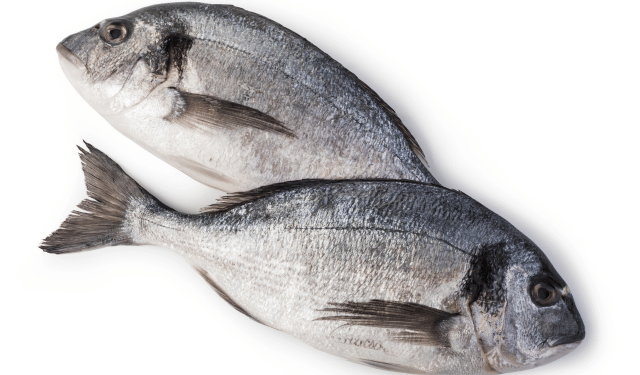
Let’s start with a concrete image. You are standing at the fish counter of an Italian supermarket. In front of you, two gilthead sea bream look almost identical: one labeled “Italy”, the other “Turkey”. The Italian one is noticeably more expensive. For many consumers, the choice is quick and almost automatic. For Italian sea bream farmers, that choice represents a daily wound repeated across every retail outlet in the country.

The March 2026 EUMOFA report leaves little room for optimistic interpretation: extra-EU sea bream imports are rising, prices are increasing, and the domestic market is showing clear signs of strain. Here are the numbers, unfiltered.

18,000 tonnes of imported sea bream: a defining figure

The most significant data point concerns volumes of sea bream imported into Italy from non-EU countries. In 2025, Italy imported 18,327 tonnes of gilthead sea bream (Sparus aurata), marking a 26% increase compared to 2024, alongside a 10% rise in average prices over the same period.

The origin is highly concentrated: 77% comes from Turkey, 18% from Albania, while Tunisia, Morocco, Israel and Algeria share the remaining fraction. Together, Turkey and Albania account for 95% of all imported sea bream entering Italy.

This is not a new phenomenon, but the speed of growth — a quarter increase in just one year — is a signal the sector cannot afford to ignore.

Price trends: imports rising, retail following

One striking element in the EUMOFA analysis is that imported sea bream prices are not declining, as might be expected in an expanding commodity market. On the contrary, they are increasing.

Between January 2023 and December 2025, imported sea bream prices rose by 12% in Italy, 17% in Greece and 13% in the Netherlands — the three main European destination markets monitored in the report.

This suggests that rising imports are not driven by short-term price dumping, but by structurally growing demand that domestic producers are unable to meet. Turkish and Albanian producers do not yet need to lower prices to gain market share: European production capacity simply does not cover consumption.

At retail level, the average price reached €11.10/kg in 2025, up from €10.36 in 2024 and €9.24 in 2023. This steady annual increase is compressing margins across the supply chain and weakening domestic consumption resilience.

Domestic consumption: declining volumes, rising prices

On the demand side, the EUMOFA report highlights a dynamic that should concern the entire Italian seafood sector. Between January 2023 and December 2025, household purchase volumes declined structurally, while prices continued to rise.

Seasonality remains strong: consumption drops significantly in July and August, then recovers in autumn. Price peaks are concentrated in winter months, when fresh product availability decreases.

This pattern penalizes both consumers and producers, who must manage irregular demand in an increasingly competitive and price-sensitive market.

Sea bream within Italy’s seafood import structure

To understand the weight of sea bream within Italy’s broader seafood imports, the data must be read in context. In 2025, Italy imported 493,731 tonnes of extra-EU seafood products, worth nearly €3 billion — up 6% in volume and 9% in value compared to 2024. Italy confirms its position as the third largest EU seafood import market, after Spain and the Netherlands.

Within this framework, sea bream falls under the category “other marine fish”, which reached €1.9 billion in import value and 309,243 tonnes in volume in 2025. This represents an 8% increase in value and a slight 1% decrease in volume.

Sea bream accounts for 14% of this category’s value, making it one of the most economically relevant species within the segment.

Among European importers, Italy recorded the highest volumes in 2025, with a clear seasonal peak between January and April, confirming a distinct import pattern concentrated in the first four months of the year.

The European picture: Turkey leads, Europe adapts

The phenomenon extends beyond Italy. At EU level, total extra-EU sea bream imports reached 43,568 tonnes in 2025, valued at €269.7 million. Turkey alone accounts for 89% of volumes, followed by Albania (8%) and Tunisia (2%).

Compared to 2024, total volumes declined by 5%, while value increased by 5%, confirming that unit prices continue to rise even for imported products.

Turkish exports decreased by 5% in volume but increased by 6% in value — less fish, but more expensive. This indicates a strategic shift toward higher value positioning rather than pure volume expansion in the European market.

Signals from household consumption

EUMOFA also provides a detailed analysis of household consumption trends. Between 2023 and 2025, two parallel but diverging dynamics emerge: decreasing purchase volumes and steadily increasing retail prices.

In 2025, total consumption in monitored countries reached 64,621 tonnes, almost identical to 2024, but with a different composition: less fresh product purchased and higher average prices.

This apparent stability hides a real decline in per capita consumption, especially in a context of relatively stable population levels.

This data must also be considered alongside overall inflation in fresh seafood products, which reached +3.3% year-on-year in Europe in January 2026. In a market where household purchasing power has been under pressure for years, higher prices inevitably shift demand toward more affordable alternatives — including imported sea bream displayed alongside domestic product in retail outlets.

What these data tell us

The EUMOFA report does not explicitly assess the competitiveness of Italian aquaculture, but the figures speak clearly. Sea bream imports increased by 26% in one year. Retail prices continue to rise. Household consumption is declining.

The market is reorganizing around a structure where extra-EU production gains increasing space, while European — and particularly Italian — production struggles to keep pace.

The European Commission has launched a public consultation to define a “Vision 2040” for fisheries and aquaculture, explicitly addressing competitiveness and market access conditions for non-EU products.

For Italian aquaculture operators, this represents a concrete opportunity to bring these data into the decision-making process. The numbers are available. Using them is a strategic choice.
Tags: Albania aquaculture exportsaquaculture competitiveness EuropeEU seafood importsEUMOFA report 2026fresh fish market Italygilthead sea bream Sparus aurataItalian aquacultureItalian fish farmingItaly fish consumption trendsmediterranean aquaculturesea bream imports Italyseafood market Europeseafood retail prices Europeseafood supply chain EUTurkey sea bream exports
CondividiTweetCondividiPinInviaCondividiInvia
Articolo precedente

GDO, discount e potere contrattuale: cosa cambia davvero per chi vende pesce

Prossimo articolo

Mediterraneo occidentale, le ondate di calore cambiano la pesca: catture giù oltre il 10%

Davide Ciravolo

Davide Ciravolo

Autore Pesceinrete, retail ittico e mercati seafood Davide Ciravolo è autore Pesceinrete. Si occupa di mercati, distribuzione e scenari commerciali della filiera ittica, con particolare attenzione al rapporto tra prodotto, retail e consumi. La sua esperienza come ex buyer di Esselunga gli permette di osservare il settore seafood anche dal punto di vista della GDO e delle dinamiche di assortimento.

Articoli Correlati

Fishing vessel at sea as warmer ocean temperatures and El Niño shift fish distribution and fishing grounds

El Niño is set to become very strong. Warmer seas are redrawing the geography of fishing

by Luca Di Noto
15 Settembre 2026

What happens to fisheries when seas become warmer? Warmer seas do not simply mean fewer fish. They can change where...

Imported caviar at the centre of the European debate on origin transparency

Imported caviar, European aquaculture calls for clearer origin information

by Mariella Ballatore
11 Settembre 2026

Imported caviar from non-EU countries has become a test case in European aquaculture’s call for greater origin transparency. FEAP warns...

Italian seafood presented to buyers at Seafood Expo Asia in Singapore

From blue crab to red shrimp, buyers put Italy’s seafood supply chain to the test in Singapore

by Redazione
9 Settembre 2026

From blue crab seeking an industrial supply chain to traceable bivalve molluscs and red shrimp for fine dining, Italy is...

Salmon fillet on the processing line at Freezco Eesti in Tallinn

Freezco expands salmon processing for the italian market

by Davide Ciravolo
7 Settembre 2026

Freezco has expanded salmon processing for the Italian market through Freezco Eesti, a facility in Tallinn launched in May 2026....

Lascia un commento Annulla risposta

Il tuo indirizzo email non sarà pubblicato. I campi obbligatori sono contrassegnati *

Questo sito utilizza Akismet per ridurre lo spam. Scopri come vengono elaborati i dati derivati dai commenti.


Articoli più letti

  • 10 pesci costosi e prelibati
  • Le specie di sarago del Mediterraneo
  • Pesci con più e meno mercurio
  • Molva, una ricchezza del Mare del Nord
  • Molluschi bivalvi: descrizione e caratteristiche
  • Congelare il tonno in scatola
  • Gattuccio e palombo, gli squali buoni da mangiare
  • Triglia: caratteristiche e proprietà nutrizionali
  • Mangiare il tonno crudo: vantaggi e pericoli
  • Sgombro e lanzardo, pesce azzurro per il cuore
Pesceinrete

Pesceinrete è la testata giornalistica unica in Italia ad occuparsi di pesca commerciale ed acquacoltura. In quanto canale tematico e dai contenuti specializzati, si rivolge direttamente agli operatori della filiera con una comunicazione targettizzata che risponde alle esigenze del settore.

Segui le nostre pagine social

Stock images by Depositphotos

Newsletter

Categorie

  • News Ittico
  • Pesca
  • Acquacoltura
  • Associazioni di categoria
  • Sindacati
  • ONG
  • Tecnologia
  • Sostenibilità
  • Mercati
  • Eventi e Fiere
  • Overseas
  • Nutrizione e salute
  • Approfondimenti
  • Chi siamo
  • Policy editoriali
  • Partner
  • Contatti
  • Pubblicità
  • Newsletter
  • Mappa del sito

© 2026 INRETE S.R.L. P.Iva: 02557660814 - Pesceinrete - Il quotidiano del settore ittico | Credits

Pesceinrete
Gestisci Consenso

Usiamo cookie tecnici per far funzionare il sito, e cookie statistici (anche di terze parti) per capire come viene usato e migliorarlo. Puoi accettare tutto, rifiutare tutto o scegliere quali attivare — restando comunque libero di navigare senza restrizioni.

Funzionale Sempre attivo
L'archiviazione tecnica o l'accesso sono strettamente necessari al fine legittimo di consentire l'uso di un servizio specifico esplicitamente richiesto dall'abbonato o dall'utente, o al solo scopo di effettuare la trasmissione di una comunicazione su una rete di comunicazione elettronica.
Preferenze
L'archiviazione tecnica o l'accesso sono necessari per lo scopo legittimo di memorizzare le preferenze che non sono richieste dall'abbonato o dall'utente.
Statistiche
L'archiviazione tecnica o l'accesso che viene utilizzato esclusivamente per scopi statistici. L'archiviazione tecnica o l'accesso che viene utilizzato esclusivamente per scopi statistici anonimi. Senza un mandato di comparizione, una conformità volontaria da parte del vostro Fornitore di Servizi Internet, o ulteriori registrazioni da parte di terzi, le informazioni memorizzate o recuperate per questo scopo da sole non possono di solito essere utilizzate per l'identificazione.
Marketing
L'archiviazione tecnica o l'accesso sono necessari per creare profili di utenti per inviare pubblicità, o per tracciare l'utente su un sito web o su diversi siti web per scopi di marketing simili.
  • Gestisci opzioni
  • Gestisci servizi
  • Gestisci {vendor_count} fornitori
  • Per saperne di più su questi scopi
Personalizza
  • {title}
  • {title}
  • {title}
  • Home
  • Nutrizione e salute
  • Pesca
  • Acquacoltura
  • Approfondimenti
  • Tecnologia
  • Sostenibilità
  • Mercati
  • Overseas English NEW
  • Archivio
  • Chi siamo
  • Contatti
  • Partner
  • Pubblicità
  • Newsletter
Nessun Risultato
Vedi tutti i Risultati

© 2026 INRETE S.R.L. P.Iva: 02557660814 - Pesceinrete - Il quotidiano del settore ittico | Credits