• HOME
  • CHI SIAMO
  • CONTATTI
  • PARTNER
  • PUBBLICITÀ
  • NEWSLETTER
  • ARCHIVIO
    • Bandi e Opportunità
    • Speciali
    • Rubriche
    • Nutrizione e salute
    • Interviste
    • Video
mercoledì 16 Settembre, 2026
Pesceinrete
  • Pesca
  • Nutrizione e salute
  • Acquacoltura
    • Acquaponica
    • Algocoltura
  • Approfondimenti
  • Tecnologia
  • Sostenibilità
  • Mercati
  • OverseasNew
Nessun Risultato
Vedi tutti i Risultati
Pesceinrete
  • Pesca
  • Nutrizione e salute
  • Acquacoltura
    • Acquaponica
    • Algocoltura
  • Approfondimenti
  • Tecnologia
  • Sostenibilità
  • Mercati
  • OverseasNew
Nessun Risultato
Vedi tutti i Risultati
Pesceinrete
Nessun Risultato
Vedi tutti i Risultati

Home Overseas

Seafood Traceability Under the New Control Standard

At the core lies a simple principle: the product travels together with its data.

Alice Giacalone by Alice Giacalone
21 Gennaio 2026
in Overseas
Seafood Traceability Under the New Control Standard

Seafood Traceability Under the New Control Standard

In the days following 10 January 2026, seafood supply chain companies have not been focusing on legal articles or new formal obligations. The conversations revolve around documents that no longer match, information that changes shape as it moves along the chain, and data that gets lost somewhere in between. This is where the new control standard truly begins to make itself felt.

Not because it introduces radically new actions, but because it brings to light what previously remained invisible. The issue is no longer simply having information, but being able to follow it as it passes from hand to hand: from landing to transport, from first sale to inspection.

It is along this route that today’s seafood supply chain is being tested.

At the core lies a simple principle: the product travels together with its data. And that data must remain consistent, readable, and digitally available throughout the entire chain. When this does not happen, the problem does not always emerge immediately. More often, it surfaces later—when the product has already been sold, delivered, or subjected to checks.

Landing is the first moment when information takes shape. Species, fishing area, quantities, date: everything starts there. In many cases, however, what happens next is far less linear. Information is copied, reprocessed, and adapted to different systems. Data that is correct at origin can already shift course at the very next step, often without anyone noticing.

Transport represents a particularly sensitive junction for this reason. It is the moment when the product physically moves while simultaneously carrying a set of information that can no longer be approximate. Accompanying documents, batch references, quantities: when these elements do not perfectly match what was recorded upstream, the first fracture appears. Often invisible, but real.

The first sale is where that fracture risks becoming evident. This is the point at which data becomes fixed. Sales notes are recorded and transmitted electronically within precise timeframes. It is the moment when one version of events becomes official. If that version does not align with what was landed or transported, the inconsistency can no longer be resolved with a phone call or an informal note. It remains in the system.

And it is precisely when documents begin to interact with one another that the new control framework reveals its full weight. Declarations, sales notes, transport documents, invoices: they are no longer isolated elements. They are cross-checked, compared, reconstructed. When they tell different stories, discrepancies emerge—not as formal errors, but as signals.

In these early days, many companies are discovering that the real critical issue is not the individual document, but how documents communicate with each other. Misaligned master data, different codes for the same species, batches split or aggregated without clear traceability. Practices that for years were managed through personal experience and operational flexibility are no longer sufficient.

The control system does not ask for theoretical explanations. It demands simple reconstructions: where does this product come from, what path has it followed, how was it sold. If answering requires manual steps, personal recollections, or after-the-fact adjustments, the system immediately exposes its limits.

Alongside the difficulties, positive examples are also emerging. Companies that had already invested in structured data flows, interoperable systems, and shared procedures across departments are navigating this phase with less tension. Not because they are “more compliant” than others, but because they can demonstrate compliance effortlessly.

This is where traceability ceases to be merely an obligation and becomes a factor of reliability. For buyers, commercial partners, and anyone required to make fast decisions. Clean data flows reduce time, lower risk, and simplify relationships.

Ten days after the new standard came into force, the key question is not what additional obligations may arrive in the future. The real question is whether, today, the product’s journey truly holds together from start to finish. Whether the data generated at landing is the same data that reaches the point of sale. Whether what is delivered is consistent with what has been declared.

It is in these steps—more than in the regulations themselves—that the real challenge of the coming weeks will be decided.

For more insights on the future of Italian and European fisheries and the blue economy, follow ongoing coverage and analysis on Pesceinrete.
NEWSLETTER

Tags: digital traceabilityfisheries controlseafood documentationseafood inspectionsseafood traceabilitysupply chain compliance
CondividiTweetCondividiPinInviaCondividiInvia
Articolo precedente

Conserve e pesce surgelato: come la MDD ridisegna l’industria ittica

Prossimo articolo

Scognamiglio: ricorso governo contro sistemi controllo pesca Ue entra nella fase decisiva

Alice Giacalone

Alice Giacalone

Autrice Pesceinrete Alice Giacalone scrive per Pesceinrete occupandosi di attualità, imprese, mercati e scenari della filiera ittica. Nei suoi contributi segue l’evoluzione del settore seafood con attenzione ai temi che incidono sul lavoro degli operatori, dalla pesca all’acquacoltura, dalla sostenibilità alle dinamiche commerciali.

Articoli Correlati

Fishing vessel at sea as warmer ocean temperatures and El Niño shift fish distribution and fishing grounds

El Niño is set to become very strong. Warmer seas are redrawing the geography of fishing

by Luca Di Noto
15 Settembre 2026

What happens to fisheries when seas become warmer? Warmer seas do not simply mean fewer fish. They can change where...

Imported caviar at the centre of the European debate on origin transparency

Imported caviar, European aquaculture calls for clearer origin information

by Mariella Ballatore
11 Settembre 2026

Imported caviar from non-EU countries has become a test case in European aquaculture’s call for greater origin transparency. FEAP warns...

Italian seafood presented to buyers at Seafood Expo Asia in Singapore

From blue crab to red shrimp, buyers put Italy’s seafood supply chain to the test in Singapore

by Redazione
9 Settembre 2026

From blue crab seeking an industrial supply chain to traceable bivalve molluscs and red shrimp for fine dining, Italy is...

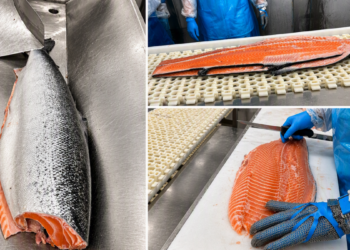
Salmon fillet on the processing line at Freezco Eesti in Tallinn

Freezco expands salmon processing for the italian market

by Davide Ciravolo
7 Settembre 2026

Freezco has expanded salmon processing for the Italian market through Freezco Eesti, a facility in Tallinn launched in May 2026....

Lascia un commento Annulla risposta

Il tuo indirizzo email non sarà pubblicato. I campi obbligatori sono contrassegnati *

Questo sito utilizza Akismet per ridurre lo spam. Scopri come vengono elaborati i dati derivati dai commenti.


Articoli più letti

  • 10 pesci costosi e prelibati
  • Le specie di sarago del Mediterraneo
  • Pesci con più e meno mercurio
  • Molva, una ricchezza del Mare del Nord
  • Molluschi bivalvi: descrizione e caratteristiche
  • Congelare il tonno in scatola
  • Gattuccio e palombo, gli squali buoni da mangiare
  • Triglia: caratteristiche e proprietà nutrizionali
  • Mangiare il tonno crudo: vantaggi e pericoli
  • Sgombro e lanzardo, pesce azzurro per il cuore
Pesceinrete

Pesceinrete è la testata giornalistica unica in Italia ad occuparsi di pesca commerciale ed acquacoltura. In quanto canale tematico e dai contenuti specializzati, si rivolge direttamente agli operatori della filiera con una comunicazione targettizzata che risponde alle esigenze del settore.

Segui le nostre pagine social

Stock images by Depositphotos

Newsletter

Categorie

  • News Ittico
  • Pesca
  • Acquacoltura
  • Associazioni di categoria
  • Sindacati
  • ONG
  • Tecnologia
  • Sostenibilità
  • Mercati
  • Eventi e Fiere
  • Overseas
  • Nutrizione e salute
  • Approfondimenti
  • Chi siamo
  • Policy editoriali
  • Partner
  • Contatti
  • Pubblicità
  • Newsletter
  • Mappa del sito

© 2026 INRETE S.R.L. P.Iva: 02557660814 - Pesceinrete - Il quotidiano del settore ittico | Credits

Pesceinrete
Gestisci Consenso

Usiamo cookie tecnici per far funzionare il sito, e cookie statistici (anche di terze parti) per capire come viene usato e migliorarlo. Puoi accettare tutto, rifiutare tutto o scegliere quali attivare — restando comunque libero di navigare senza restrizioni.

Funzionale Sempre attivo
L'archiviazione tecnica o l'accesso sono strettamente necessari al fine legittimo di consentire l'uso di un servizio specifico esplicitamente richiesto dall'abbonato o dall'utente, o al solo scopo di effettuare la trasmissione di una comunicazione su una rete di comunicazione elettronica.
Preferenze
L'archiviazione tecnica o l'accesso sono necessari per lo scopo legittimo di memorizzare le preferenze che non sono richieste dall'abbonato o dall'utente.
Statistiche
L'archiviazione tecnica o l'accesso che viene utilizzato esclusivamente per scopi statistici. L'archiviazione tecnica o l'accesso che viene utilizzato esclusivamente per scopi statistici anonimi. Senza un mandato di comparizione, una conformità volontaria da parte del vostro Fornitore di Servizi Internet, o ulteriori registrazioni da parte di terzi, le informazioni memorizzate o recuperate per questo scopo da sole non possono di solito essere utilizzate per l'identificazione.
Marketing
L'archiviazione tecnica o l'accesso sono necessari per creare profili di utenti per inviare pubblicità, o per tracciare l'utente su un sito web o su diversi siti web per scopi di marketing simili.
  • Gestisci opzioni
  • Gestisci servizi
  • Gestisci {vendor_count} fornitori
  • Per saperne di più su questi scopi
Personalizza
  • {title}
  • {title}
  • {title}
  • Home
  • Nutrizione e salute
  • Pesca
  • Acquacoltura
  • Approfondimenti
  • Tecnologia
  • Sostenibilità
  • Mercati
  • Overseas English NEW
  • Archivio
  • Chi siamo
  • Contatti
  • Partner
  • Pubblicità
  • Newsletter
Nessun Risultato
Vedi tutti i Risultati

© 2026 INRETE S.R.L. P.Iva: 02557660814 - Pesceinrete - Il quotidiano del settore ittico | Credits