Overseas


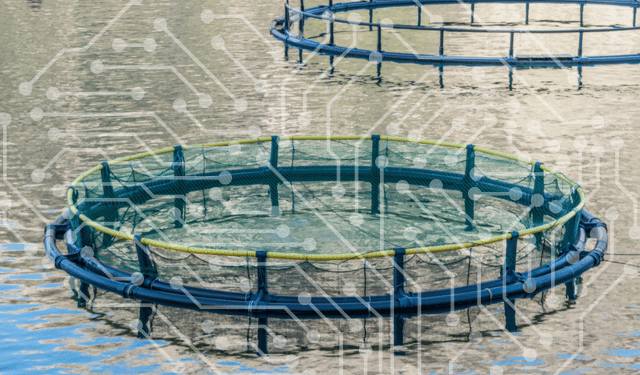
In the debate on innovation in aquaculture, artificial intelligence has gone through a phase of almost automatic enthusiasm. For years, it was presented as the decisive step toward more efficient, sustainable, and “smart” farms. Today, the tone is changing. Not because AI has failed, but because the sector is beginning to assess it for what it truly is: a powerful tool, not an autonomous one, capable of creating value only when embedded within already solid management systems.
The era of eye-catching promises is giving way to a more useful phase: real-world validation.
In recent years, computer vision and deep learning models have made significant progress. Observing fish behavior with precision, measuring movement patterns, detecting changes in spatial distribution or group cohesion is now possible with increasing levels of accuracy. The question today is no longer whether AI can “see” what happens in tanks or cages. The real challenge is turning what it sees into operational guidance that is reliable, repeatable, and genuinely useful for those who make decisions every day.
A recent scientific review focusing on these issues offers a sober assessment. The technology is moving beyond the theoretical phase, but the gap between a model that performs well in controlled tests and a solution that can withstand the complexity of commercial farming remains substantial. And this gap cannot be closed with better algorithms alone. It requires integration, infrastructure, and realistic expectations.
When AI leaves theory behind: feeding management
The application closest to everyday operations is feeding management. Not because it is the most spectacular, but because it addresses a concrete, measurable need universally recognized by operators. Through computer vision, it is now possible to assess feeding activity intensity, detect signals of over- or under-feeding, and identify uneaten feed with good reliability—especially in relatively stable environments such as RAS systems or land-based facilities with controlled conditions.
Here, the link between technology and outcome is direct. Feed remains the main cost item in most farming systems, and aligning feed delivery more closely with the fish’s actual needs offers immediate benefits: improved feed conversion ratios, reduced waste, lower organic load, and consequently, a more manageable environmental impact.
However, one critical aspect is often underestimated. The weak point is no longer the model’s ability to recognize signals. Increasingly, the limitation lies in integration. A solution that “sees” correctly but does not communicate reliably with feeding systems, does not fit operational schedules, or cannot cope with real-world variability across sites and species risks remaining an isolated technical exercise. In practice, the technology may be ready, while the organization and infrastructure are not.
Stress and behavior: signals to interpret, not automatic answers
Another area where AI is showing growing usefulness is stress monitoring through behavioral analysis. Changes in swimming speed, group cohesion, or space utilization can be detected with good accuracy, particularly during acute events such as hypoxia or sudden environmental shifts.
The critical step, however, is interpretation. Detecting an anomaly does not mean understanding its cause. In real farming conditions, stressors rarely act in isolation. Water quality, density, feeding, handling, temperature, currents, noise, and many other variables interact simultaneously. This is the operational norm, not the exception.
For this reason, AI-based behavioral monitoring should realistically be viewed as an early warning system. It can indicate that something is changing before it becomes obvious, guiding the operator’s attention and prompting further checks. It does not replace sensors, sampling, or veterinary assessments. The value is real, but it depends on how well it is embedded in a decision-making chain that remains, inevitably, multidisciplinary.
Disease and welfare: the gray zone of automation
When the focus shifts to disease and welfare, the picture becomes more complex. Behavioral signals associated with pathology are often subtle, non-specific, and easily confused with other conditions. Even advanced systems struggle to distinguish between transient physiological responses, environmental effects, and genuine health issues. Moreover, the same behavioral expression can vary depending on species, growth stage, density, and production system.
There are promising applications and robust studies in specific contexts, but large-scale transferability remains an open question. Many solutions currently offer clearer value in controlled environments or specific segments, such as broodstock management or early life stages, where behaviors are more standardized and conditions easier to manage. For most commercial farms, however, adoption is still experimental or pre-operational, with timelines driven more by the surrounding technological ecosystem than by the algorithm itself.
The technology exists. The conditions often do not
One of the most instructive insights from the scientific literature concerns what truly limits AI adoption in aquaculture. The bottleneck is not the lack of sophisticated models, but the fragility of the conditions in which they are expected to operate.
Variable underwater visibility, unstable lighting, biofouling, maintenance demands, connectivity issues, installation and operating costs, data availability, and the need for annotated datasets all directly affect system reliability. And this is not a minor detail. In production, reliability matters more than theoretical performance. Many models work well on curated datasets or specific facilities but lose effectiveness when transferred to different sites, species, or production setups. This is one of the main reasons why many pilot solutions struggle to become industry standards.
Less automation, more intelligence—human included
If there is one conclusion that appears increasingly realistic, it is that artificial intelligence in aquaculture should be conceived as decision support, not management replacement. Its most tangible value lies in amplifying observational capacity and reducing the time between a signal and an intervention, without turning into a “black box” that claims to run the farm on its own.
The most credible future is that of hybrid systems: computer vision, environmental sensors, production data, and human supervision coherently integrated. This vision may be less spectacular than narratives about fully autonomous farms, but it is far more aligned with the realities of a sector that must ensure operational continuity, cost control, and consistent quality.
Artificial intelligence will not automatically make aquaculture more sustainable, nor will it eliminate health problems. But it has moved beyond abstract promises. In certain areas, it is already a practical tool. The real challenge now is not to make models more “intelligent,” but to make production systems mature enough to use them effectively—with realistic expectations and farm management firmly at the center.