Overseas


A growing presence in Italian seas
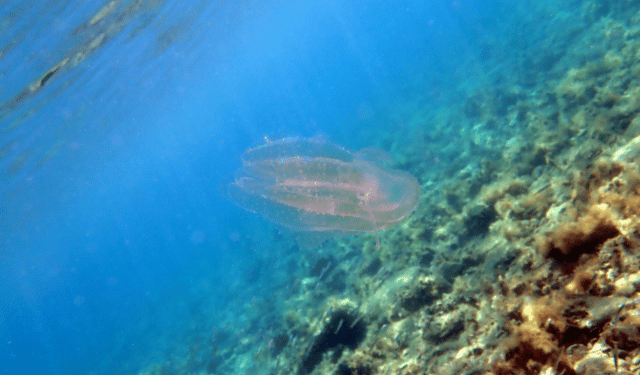
The sea walnut invasion in Italy is a real and long-documented phenomenon, now increasingly visible—especially along the Adriatic coast and in lagoon environments. The species is Mnemiopsis leidyi and, although it may look like a jellyfish, it is actually a ctenophore, a gelatinous organism from a different biological group.
Transparent, fragile and almost hypnotic in its iridescent reflections, the sea walnut is non-stinging and poses no direct risk to humans. The problem is not related to bathing or health: it is primarily ecological and, indirectly, economic for marine production systems.
Native to the Atlantic coasts of the Americas, Mnemiopsis leidyi likely arrived in the Mediterranean via international shipping, transported in ships’ ballast water. Once introduced, it found ideal conditions—especially in enclosed or semi-enclosed basins such as lagoons, gulfs, and warm, nutrient-rich coastal waters.
Where it is most established in Italy
In Italy, its presence is reported consistently, particularly in the northern Adriatic, the Gulf of Trieste, and the Venice Lagoon. In these areas, high concentrations have been recorded in recent years, prompting growing attention from researchers and the fisheries sector.
The key concern is feeding behaviour. The sea walnut consumes zooplankton, but also fish eggs and larvae. In practice, it competes for and removes the resources needed for the reproduction of many fish species, disrupting natural recruitment. It does not attack adult fish, but it can reduce the ability of populations to renew themselves.
The Black Sea case—often cited in scientific literature—shows what can happen when Mnemiopsis leidyi proliferates unchecked: ecosystem imbalance, a sharp drop in fish stocks, and serious economic impacts. The Mediterranean is not the Black Sea, but the precedent remains a significant warning sign.
Broader environmental drivers can further support its spread. Rising sea temperatures, salinity changes, and increasingly unstable coastal conditions linked to climate change make some areas particularly favourable to opportunistic, adaptable species such as Mnemiopsis leidyi.
From a management standpoint, there are no fast, definitive interventions. Large-scale physical removal is not feasible, while introducing natural predators can create additional risks that are difficult to predict. For now, the most effective approach is continuous scientific monitoring, paired with accurate information for seafood and fisheries operators.
A structural signal for the seafood supply chain
For the seafood supply chain, the spread of the sea walnut highlights how fragile and interconnected marine ecosystems have become. This is not a sudden emergency, but a structural phenomenon unfolding within a complex context of environmental pressure, resource sustainability, and long-term planning needs.
Understanding what is happening—without alarmism but without underestimation—is the first step toward managing a Mediterranean transformation that is already underway.
For more insights on the future of Italian and European fisheries and the blue economy, follow ongoing coverage and analysis on Pesceinrete.