Overseas


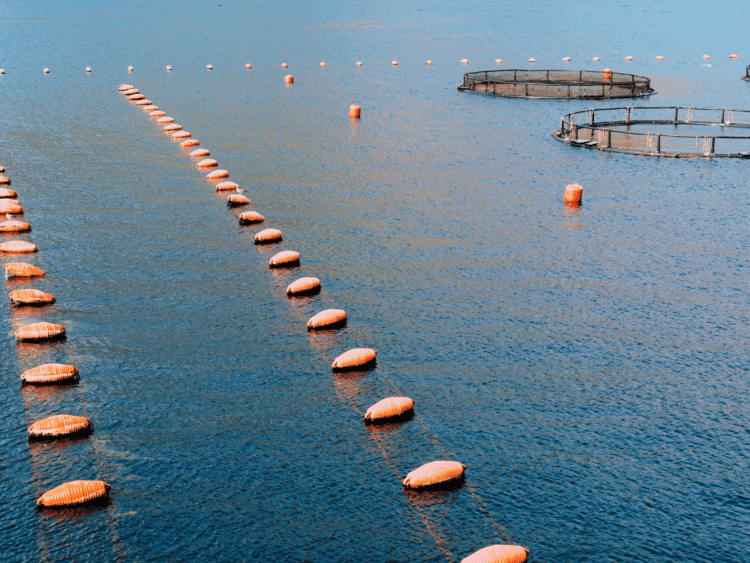
Rising water temperatures can reduce dissolved oxygen, slow growth, increase biological stress and trigger mortality, particularly when combined with poor water exchange, stratification, algal blooms and salinity changes. In the open sea, warming is also altering the distribution, depth and biological cycles of commercial species. For fisheries and aquaculture, climate is no longer the background to production: it has become one of its decisive variables.
The sea has never been static. Fishers and farmers have always worked in a changing environment, learning to read currents, winds, temperatures and biological cycles.
What is changing is the frequency with which familiar balances are being exceeded.
A lagoon can shift rapidly from productive conditions to an oxygen crisis. A species traditionally associated with a particular area may move elsewhere, change depth or appear at a different time of year. A farming cycle planned around previous seasons may be disrupted by unusually high and persistent temperatures.
The problem, therefore, is not heat alone. It is the growing difficulty of predicting its intensity, duration and consequences.
Climate is entering the balance sheet
In June 2026, the average sea surface temperature across the extra-polar oceans, between 60° South and 60° North, reached 20.86°C. It was the highest value ever recorded for June in the ERA5 dataset, just 0.01°C above the previous record set in June 2024.
The figure published by the Copernicus Climate Change Service does not directly measure conditions in individual Italian lagoons and cannot, by itself, explain every local crisis. It does, however, point to an ocean system that continues to accumulate heat. ntal Panel on Climate Change](https://www.ipcc.ch/2019/09/25/srocc-press-release/) reports that marine heatwaves have approximately doubled in frequency since 1982. It also notes that oxygen levels have declined across many regions of the upper ocean since the mid-20th century and identifies warming, marine heatwaves, acidification and dissolved oxygen as variables of particular importance to fisheries and aquaculture. i-enclosed coastal environments, the effects can develop particularly quickly. As water warms, many organisms experience greater physiological stress, while the amount of oxygen the water can retain decreases.
When high temperatures are combined with stagnation, organic matter, high biological density or algal blooms, hypoxic conditions may develop. In the most severe cases, the result is anoxia: the almost complete absence of oxygen.
It would nevertheless be misleading to attribute every mortality event exclusively to temperature.
In lagoons and coastal ponds, water exchange with the sea, freshwater inflows, salinity, wind, depth, nutrient loads and overall environmental quality all interact. Heat may become the factor that breaks an already fragile balance, but it rarely acts alone.
For businesses, the complexity of the causes does not reduce the damage.
A farmer may spend months covering the costs of labour, energy, maintenance, seed or juveniles and, for fed species, aquaculture feed. When environmental conditions exceed a critical threshold, production built up over time can be severely reduced or lost within a matter of hours.
In lagoons, the safety margin is narrowing
Reports released in recent days by Coldiretti Pesca and Legacoop Agroalimentare point to critical conditions in different parts of Italy, although they should not be interpreted as a single, scientifically coordinated national monitoring programme.
Coldiretti reported water temperatures above 30°C in the Po Delta lagoons and anoxic conditions in the Sacca di Goro. According to the organisation, poor water exchange and microalgal proliferation were associated with losses of up to 90% of farmed clams in some areas.
Legacoop reported a fish mortality event in the S’Ena Arrubia lagoon in Sardinia. The fishery sluices had to be opened to increase water exchange with the sea, with the additional consequence that some surviving fish escaped into open water. Initial losses were estimated at around €150,000, while the production season was considered compromised. r in terms of species, geography and production systems. They nevertheless reveal the same vulnerability: when the environment loses stability, businesses lose their ability to plan.
Mortality is only the most visible outcome.
Before organisms die, businesses may experience slower growth, greater biological vulnerability, early harvesting, lower commercial yields and higher management costs. These effects attract less attention than sudden mass mortality, but they can progressively erode operating margins.
Pesceinrete has already examined the effects of marine heatwaves on the Mediterranean seafood sector and the climate-driven redistribution of marine species in the Mediterranean. The current difficulties do not therefore represent an entirely new problem. They make an ongoing transformation more visible. a as it is, not as it was
In the open sea, organisms can move in search of more favourable conditions. This distinguishes them from animals confined within aquaculture facilities, but it does not eliminate the economic consequences.
When a species changes its geographical distribution, depth or seasonal presence, fishers must adjust their timing, routes and strategies.
The distance required to reach productive grounds may increase, while ports, fishing authorisations, gear and seasonal calendars remain organised around a geography shaped by past experience.
This does not mean that every reduction in catches should be attributed to climate change.
The condition of a stock also depends on fishing pressure, reproductive success, food availability, habitat quality, pollution and interactions among species.
Automatically replacing overfishing as an explanation with ocean warming would be scientifically weak. Ignoring changing environmental conditions would be equally misleading.
A European Commission-funded study on the climate resilience of the Common Fisheries Policy concluded that the ability of stocks and fleets to withstand climate shocks depends on management based on sound scientific advice.
Over the longer term, the study called for more flexible and adaptive management tools, ecosystem-based assessments and regularly updated biological reference points. It also noted that climate change can increase uncertainty and expose stocks to short-term shocks such as marine heatwaves and toxic algal blooms. ature, salinity, oxygen and ecosystem productivity into stock assessments does not mean using climate change to justify every difficulty faced by the sector. Nor does it imply automatically weakening conservation measures.
It means distinguishing more accurately between the effects of fishing pressure and those caused by the transformation of the ecosystem itself.
From compensation to anticipation
When production is destroyed, financial support is necessary. But intervening only after the damage has occurred means compensating for vulnerability without reducing it.
Aquaculture facilities need continuous monitoring of temperature, dissolved oxygen, salinity and water quality, together with shared operating thresholds, procedures for increasing water exchange and rapid communication among businesses, research institutions, health authorities and public administrations.
Insurance tools must also evolve.
They should be capable of recognising not only sudden mortality, but also the progressive deterioration of a production cycle: slower growth, loss of yield, early harvesting and reduced commercial quality.
For capture fisheries, biological data must be more closely connected with environmental information, while also making better use of observations collected by fleets.
Fishers’ experience cannot replace scientific research, but it can provide early signals of changes that periodic scientific surveys may detect more slowly.
The issue is also strategic for global food supplies.
According to the FAO State of World Fisheries and Aquaculture 2026 report, aquaculture produced 103 million tonnes of aquatic animals in 2024, accounting for 53% of total aquatic animal production. Capture fisheries produced approximately 92 million tonnes.
With aquaculture now providing the majority of aquatic animal production, its ability to adapt to less stable environmental conditions has become a global food-security and production issue. s as a simple “heat emergency” may now be reassuring, but it is increasingly inaccurate.
An emergency arrives, is managed and eventually passes. The transformation underway is different: it enters company accounts, changes biological cycles and redraws productive areas.
The sea has not stopped producing.
It has stopped guaranteeing that tomorrow will behave like yesterday.
The future competitiveness of fisheries and aquaculture begins here: not with the impossible promise of eliminating uncertainty, but with the ability to recognise and manage it before it becomes a loss.