Overseas


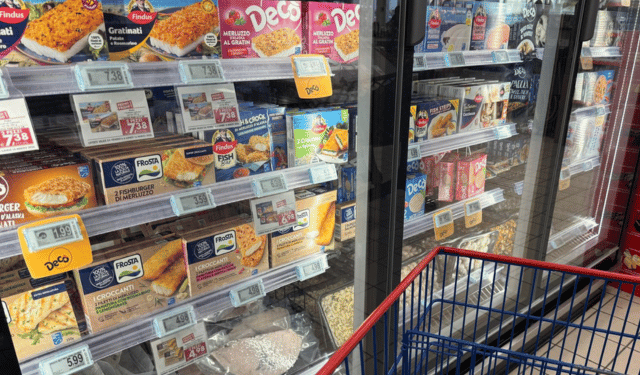
The CPG trends in the seafood sector highlighted by NIQ’s report Eight Predictions that will redefine CPG growth in a rapidly shifting marketplace offer a useful lens for understanding where the industry may be heading, especially in processed seafood, private label lines and higher value-added products. This is not about mechanically applying dynamics from mainstream grocery to seafood, but about recognizing signals that are already reshaping purchasing logic, market positioning and shelf presence. For companies operating in canned seafood, frozen products, smoked seafood, ready-to-eat items and fish-based prepared meals, the direction appears clear: 2026 will not be the year of shortcuts, but the year of relevance.
The first message emerging from the report concerns pressure on volumes. After a long phase in which price increases protected turnover, the pricing lever seems to have lost much of its effectiveness. In other words, simply raising prices will no longer be enough to sustain growth. Read through a seafood lens, this shift carries significant weight. Many seafood references have already gone through a delicate period in terms of perceived price, especially in segments where consumers closely compare alternative categories, promotions and pack sizes. If growth must once again come through volumes, then the issue becomes very concrete: which seafood products are still able to generate real rotation, which ones remain genuinely relevant to new consumption styles, and which instead risk being trapped in an increasingly fragile middle segment.
This is exactly where a second key issue comes into play: demand polarization. NIQ describes a market that is becoming increasingly divided between the search for affordability and the search for added value. On one side are consumers who still place price at the center of their decision-making. On the other are those who, while remaining selective, are willing to spend more on products that offer experience, wellness, perceived quality, distinctiveness or reassurance. For seafood, this reading is especially meaningful because it suggests that the undifferentiated middle ground is likely to lose further traction. That makes it more important to build a dual trajectory. On the one hand, there must be an accessible, easy-to-read offer aligned with everyday spending needs. On the other, there must be a premium offer capable of communicating ingredients, origin, processing, taste, convenience and usage more effectively.
Within this framework, the role of private label seafood growth is set to become even more relevant. This is something the seafood industry already knows well, but today it takes on an even sharper meaning. The issue is no longer limited to price competition. Retailer brands have now established a strong presence also in terms of credibility, perceived quality and consumer legitimacy. For many packaged seafood categories, this means competition will become more sophisticated. Companies supplying large-scale retail will need to be increasingly solid from an industrial perspective and increasingly lucid from a strategic one. Companies defending the market under their own brand, meanwhile, will have to avoid staying in a grey area: to resist private label pressure, it will no longer be enough to be just slightly better. They will need to be clearly more recognizable, more useful, more memorable or more coherent.
The report also offers a point that deserves major attention in seafood: the evolution of household structures and the resulting centrality of pack formats. If households are becoming smaller, if more consumers are buying for measured consumption, and if stockpiling is losing relevance, then seafood must also look more decisively at grammage, portions and packaging. In many seafood lines, format is still treated as a secondary issue, when in reality it directly affects purchase conversion. Consumers want to reduce waste, use the entire product and avoid the feeling of buying more than they need. That is why oversized packs or packs designed around standardized logic risk becoming less effective. By contrast, seafood packaging and household formats, single portions, intelligent formats, easy-open solutions, calibrated servings and packs designed for smaller households can become much stronger competitive levers than many operators may have assumed.
Then there is the issue of trust, which always matters in food, but in seafood may matter even more. When consumers choose a fish-based product, factors beyond simple brand recognition come into play: perceived quality, ingredients, transparency, reliability and consistency between promise and actual performance. The NIQ report insists on factors such as product quality, ingredient quality, perceived value, reputation and transparency. All of these are decisive in seafood. More than many other categories, seafood depends on tangible trust: origin, clean labeling, clarity of product name, processing, the presence or absence of unnecessary elements, tone of communication and brand credibility. In this sense, the issue goes beyond marketing alone and touches the construction of a stable relationship with the consumer. Those who can better communicate their reliability will hold a competitive advantage that goes beyond short-term promotion.
The report also shines a light on digital as an increasingly decisive space in purchasing choices. This is not entirely new, but the interesting point is that digital is described as a low-friction environment in which consumers reward ease, speed and convenience of use. If artificial intelligence increasingly enters habits of comparison, selection and repeat purchase, then seafood will also need to become more readable beyond the physical shelf. This means improving product pages, images, descriptions, claim clarity, naming consistency and overall findability within digital journeys. Looking ahead, it will not be enough merely to be present. Products will need to be chosen effortlessly. For categories that sometimes suffer from overly complex or overly technical communication, digital trends in seafood retail are far from a marginal issue.
Another interesting element concerns the ability of smaller brands to generate innovation and grow the category. This, too, offers useful reflections for seafood. In a market where major players and modern retail occupy substantial space, smaller brands can still carve out a credible role if they bring genuine novelty, identify needs that are not yet properly addressed, and build a distinctive proposition in terms of format, recipe, service or identity. Naturally, innovation does not mean chasing special effects. In seafood, perhaps more than elsewhere, innovation works when it makes the product easier to understand, easier to use, more suitable for everyday life or more convincing in terms of value.
In the end, the message the seafood sector can take from this report is simple, yet demanding. Consumer goods are entering a phase in which relevance, precision and coherence will matter more than inertia. It will no longer be enough just to be on shelf. Companies will need the right pack, the right positioning, the right language and, above all, a proposition that genuinely answers changing patterns of consumption. Seafood businesses operating in segments closest to grocery would do well to read these signals carefully. Because between volume pressure, private label seafood growth, selective premiumization, new household formats, the need to strengthen trust and the digitalization of purchasing, 2026 is shaping up to reward those who can be more relevant, not simply more visible.