• HOME
  • CHI SIAMO
  • CONTATTI
  • PARTNER
  • PUBBLICITÀ
  • NEWSLETTER
  • ARCHIVIO
    • Bandi e Opportunità
    • Speciali
    • Rubriche
    • Nutrizione e salute
    • Interviste
    • Video
martedì 15 Settembre, 2026
Pesceinrete
  • Pesca
  • Nutrizione e salute
  • Acquacoltura
    • Acquaponica
    • Algocoltura
  • Approfondimenti
  • Tecnologia
  • Sostenibilità
  • Mercati
  • OverseasNew
Nessun Risultato
Vedi tutti i Risultati
Pesceinrete
  • Pesca
  • Nutrizione e salute
  • Acquacoltura
    • Acquaponica
    • Algocoltura
  • Approfondimenti
  • Tecnologia
  • Sostenibilità
  • Mercati
  • OverseasNew
Nessun Risultato
Vedi tutti i Risultati
Pesceinrete
Nessun Risultato
Vedi tutti i Risultati

Home Overseas

Mediterranean White Seabream: A Complete Guide to Species in the Mediterranean

A deep dive into the five white seabream species of the Mediterranean: how to recognize them, where they live, and which ones are most valued on the market.

Roberto Gorgone by Roberto Gorgone
23 Luglio 2025
in Overseas
Mediterranean White Seabream A Complete Guide to Species in the Mediterranean

Mediterranean White Seabream A Complete Guide to Species in the Mediterranean

Mediterranean White Seabream: A Complete Guide to Species in the Mediterranean – The white seabream is a marine bony fish belonging to the Sparidae family, like the dentex, gilthead seabream (orata), and pagro. In the Mediterranean Sea, five species of white seabream are commonly found: white seabream (Diplodus sargus), sharpsnout seabream, zebra seabream (Diplodus vulgaris), annular seabream, and the rare zebra seabream (Diplodus cervinus).

These species differ significantly in appearance, size, habitat, and diet, making identification essential for both fishermen and consumers. Among them, the white seabream (Diplodus sargus) is considered the most valuable, followed by the increasingly rare Diplodus cervinus. The sharpsnout and annular varieties are less appreciated: the former for its flavor, the latter for its small size.

Fresh white seabream can be identified by its silvery body, firm and curved flesh, purple-red gills, clear protruding eyes, and well-attached shiny scales.

Nutritional Properties

White seabream meat contains about 5–6% fat, classifying it as semi-fat fish. Rich in minerals, it’s ideal for adolescents, athletes, recovering patients, and the elderly. It provides 103 kcal per 100 grams of fresh product.

Sharpsnout Seabream (Diplodus puntazzo)

Also known as sharpsnout white seabream, this species stands out for its pointed snout and prominent vertical stripes that remain visible even hours after death. It can reach 40 cm in length and weigh over 1 kg.

  • Distribution and Habitat: Common in the Mediterranean, Black Sea, and Eastern Atlantic. It inhabits rocky seabeds, often found in ports and artificial reefs between 20 and 50 meters.

  • Fishing: Rarely caught with gillnets, more often by hook and line, using both animal and plant baits. It has low market value, sometimes mislabelled as more prized white seabream species.

  • Diet: Mainly algae, similar to the salema (Sarpa salpa), occasionally mollusks and small invertebrates.
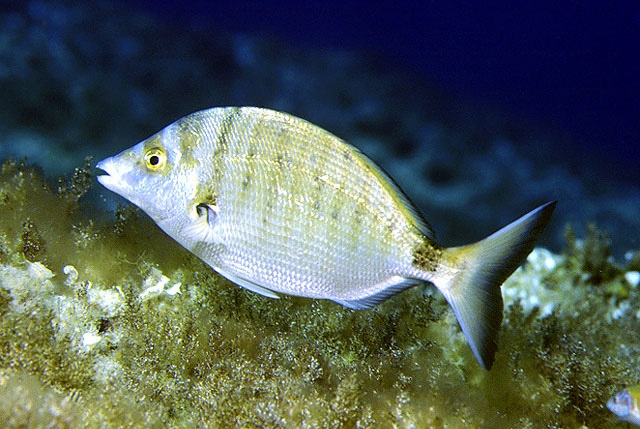


Diplodus puntazzo
Diplodus puntazzo – Fonte: Fishbase


Annular Seabream (Diplodus annularis)

The annular white seabream is the smallest species in the Mediterranean, rarely exceeding 25 cm and 300 g. It features a silver body with yellowish hues, yellow ventral fins, and a distinct black spot on the caudal peduncle.

  • Distribution and Habitat: Present throughout the Mediterranean, Black Sea, and some Atlantic coasts. Prefers shallow coastal zones (0–20 m), particularly Posidonia oceanica and Zostera meadows.

  • Fishing: Caught using all recreational fishing techniques with natural bait and frequently in gillnets. Not commercially valued due to bland flavor and small size.

  • Diet: Feeds on algae, nematodes, mollusks, crustaceans, and echinoderms.

Diplodus annularis
Diplodus annularis – Fonte: Wikipedia

Zebra Seabream (Diplodus vulgaris)

Often referred to as striped white seabream, this species is recognized by its two vertical black bands—one near the gill cover, the other near the tail—and a dark band above the eyes.

  • Distribution and Habitat: Found in the Mediterranean, Black Sea, and Atlantic Ocean, generally in rocky coastal waters down to 30 meters, though it can reach depths of 160 meters.

  • Fishing: Highly prized by both amateur and professional fishermen, caught with gillnets, longlines, and handlines.

  • Diet: Classic sparid diet—crustaceans, mollusks, cephalopods, and marine worms.

  • Size: Can grow up to 45 cm and 1.3 kg.


Diplodus vulgaris
Diplodus vulgaris – Fonte: Fishbase

White Seabream (Diplodus sargus)

The true white seabream (Diplodus sargus) is the most iconic and valued species in Mediterranean cuisine. It has a grey-silver body, with five black vertical stripes (more visible in juveniles) and a black blotch before the tail.

  • Distribution and Habitat: Widespread in the Mediterranean and Eastern Atlantic, inhabiting rocky bottoms, sandy substrates, Posidonia beds, and even brackish lagoons.

  • Size and Lifespan: Reaches up to 45 cm, 2 kg, and lives up to 10 years. Juveniles are gregarious, while adults are typically solitary.

  • Diet: Prefers sea urchins, especially when mature enough to crush their spiny shells. Also consumes crustaceans, benthic invertebrates, and some algae.

  • Fishing: Caught using gillnets, longlines, traps, and rods. Its flesh is highly prized in the seafood market.
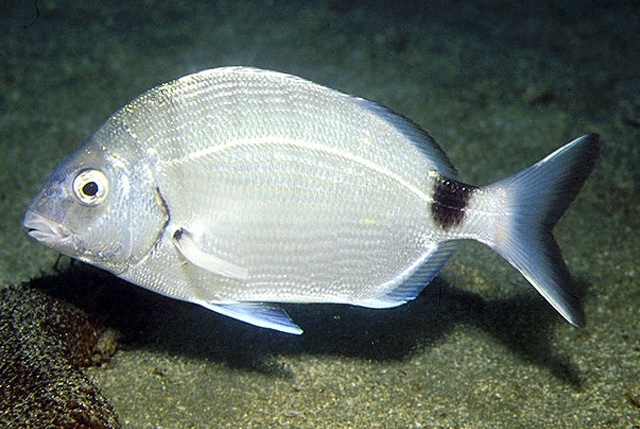
 

Diplodus sargus
Diplodus sargus – Fonte: Fishbase

Zebra Seabream (Diplodus cervinus)

The largest and rarest white seabream in the Mediterranean, Diplodus cervinus is also known as the zebra seabream. It features 5–6 broad dark vertical bands and prominent lips.

  • Distribution and Habitat: Found in the North-East Atlantic and Mediterranean, more common along North African coasts, rarer in Italy but occasionally found in Sicily. Lives on natural rocky seabeds up to 200 meters.

  • Size: Can grow up to 55 cm and 3 kg.

  • Diet: Omnivorous, feeding on aquatic plants and small invertebrates.

  • Fishing: Rarely caught via gillnets, longlines, traps, and lines. Its rarity makes it a highly sought-after delicacy.


Diplodus cervinus
Diplodus cervinus – Fonte: Fishbase

Among the various types of white seabream in the Mediterranean, Diplodus sargus stands out for its culinary quality, nutritional benefits, and market popularity. Understanding how to distinguish these species is key for ethical fishing, responsible consumption, and avoiding commercial mislabeling.

Subscribe to the Pesceinrete weekly newsletter for exclusive seafood industry news.

NEWSLETTER

Mediterranean White Seabream: A Complete Guide to Species in the Mediterranean
Tags: Diplodus identificationfishing white seabreamMediterranean white seabream speciesseabream taste and nutritiontypes of white seabream
CondividiTweetCondividiPinInviaCondividiInvia
Articolo precedente

Prysmian joins AERO: boost for Italy’s offshore wind

Prossimo articolo

La Pietra, inaccettabili tagli UE a pesca e agricoltura

Roberto Gorgone

Roberto Gorgone

Biologo marino e biologo nutrizionista Roberto Gorgone è biologo marino e biologo nutrizionista. Per Pesceinrete firma contenuti dedicati alle specie ittiche, alla nutrizione, all’acquacoltura, alla qualità del prodotto e alla divulgazione scientifica. Il suo contributo aiuta a raccontare il pesce con rigore, chiarezza e attenzione al rapporto tra mare, alimentazione e salute.

Articoli Correlati

Fishing vessel at sea as warmer ocean temperatures and El Niño shift fish distribution and fishing grounds

El Niño is set to become very strong. Warmer seas are redrawing the geography of fishing

by Luca Di Noto
15 Settembre 2026

What happens to fisheries when seas become warmer? Warmer seas do not simply mean fewer fish. They can change where...

Imported caviar at the centre of the European debate on origin transparency

Imported caviar, European aquaculture calls for clearer origin information

by Mariella Ballatore
11 Settembre 2026

Imported caviar from non-EU countries has become a test case in European aquaculture’s call for greater origin transparency. FEAP warns...

Italian seafood presented to buyers at Seafood Expo Asia in Singapore

From blue crab to red shrimp, buyers put Italy’s seafood supply chain to the test in Singapore

by Redazione
9 Settembre 2026

From blue crab seeking an industrial supply chain to traceable bivalve molluscs and red shrimp for fine dining, Italy is...

Salmon fillet on the processing line at Freezco Eesti in Tallinn

Freezco expands salmon processing for the italian market

by Davide Ciravolo
7 Settembre 2026

Freezco has expanded salmon processing for the Italian market through Freezco Eesti, a facility in Tallinn launched in May 2026....

Lascia un commento Annulla risposta

Il tuo indirizzo email non sarà pubblicato. I campi obbligatori sono contrassegnati *

Questo sito utilizza Akismet per ridurre lo spam. Scopri come vengono elaborati i dati derivati dai commenti.


Articoli più letti

  • 10 pesci costosi e prelibati
  • Le specie di sarago del Mediterraneo
  • Pesci con più e meno mercurio
  • Molva, una ricchezza del Mare del Nord
  • Molluschi bivalvi: descrizione e caratteristiche
  • Congelare il tonno in scatola
  • Gattuccio e palombo, gli squali buoni da mangiare
  • Triglia: caratteristiche e proprietà nutrizionali
  • Mangiare il tonno crudo: vantaggi e pericoli
  • Sgombro e lanzardo, pesce azzurro per il cuore
Pesceinrete

Pesceinrete è la testata giornalistica unica in Italia ad occuparsi di pesca commerciale ed acquacoltura. In quanto canale tematico e dai contenuti specializzati, si rivolge direttamente agli operatori della filiera con una comunicazione targettizzata che risponde alle esigenze del settore.

Segui le nostre pagine social

Stock images by Depositphotos

Newsletter

Categorie

  • News Ittico
  • Pesca
  • Acquacoltura
  • Associazioni di categoria
  • Sindacati
  • ONG
  • Tecnologia
  • Sostenibilità
  • Mercati
  • Eventi e Fiere
  • Overseas
  • Nutrizione e salute
  • Approfondimenti
  • Chi siamo
  • Policy editoriali
  • Partner
  • Contatti
  • Pubblicità
  • Newsletter
  • Mappa del sito

© 2026 INRETE S.R.L. P.Iva: 02557660814 - Pesceinrete - Il quotidiano del settore ittico | Credits

Pesceinrete
Gestisci Consenso

Usiamo cookie tecnici per far funzionare il sito, e cookie statistici (anche di terze parti) per capire come viene usato e migliorarlo. Puoi accettare tutto, rifiutare tutto o scegliere quali attivare — restando comunque libero di navigare senza restrizioni.

Funzionale Sempre attivo
L'archiviazione tecnica o l'accesso sono strettamente necessari al fine legittimo di consentire l'uso di un servizio specifico esplicitamente richiesto dall'abbonato o dall'utente, o al solo scopo di effettuare la trasmissione di una comunicazione su una rete di comunicazione elettronica.
Preferenze
L'archiviazione tecnica o l'accesso sono necessari per lo scopo legittimo di memorizzare le preferenze che non sono richieste dall'abbonato o dall'utente.
Statistiche
L'archiviazione tecnica o l'accesso che viene utilizzato esclusivamente per scopi statistici. L'archiviazione tecnica o l'accesso che viene utilizzato esclusivamente per scopi statistici anonimi. Senza un mandato di comparizione, una conformità volontaria da parte del vostro Fornitore di Servizi Internet, o ulteriori registrazioni da parte di terzi, le informazioni memorizzate o recuperate per questo scopo da sole non possono di solito essere utilizzate per l'identificazione.
Marketing
L'archiviazione tecnica o l'accesso sono necessari per creare profili di utenti per inviare pubblicità, o per tracciare l'utente su un sito web o su diversi siti web per scopi di marketing simili.
  • Gestisci opzioni
  • Gestisci servizi
  • Gestisci {vendor_count} fornitori
  • Per saperne di più su questi scopi
Personalizza
  • {title}
  • {title}
  • {title}
  • Home
  • Nutrizione e salute
  • Pesca
  • Acquacoltura
  • Approfondimenti
  • Tecnologia
  • Sostenibilità
  • Mercati
  • Overseas English NEW
  • Archivio
  • Chi siamo
  • Contatti
  • Partner
  • Pubblicità
  • Newsletter
Nessun Risultato
Vedi tutti i Risultati

© 2026 INRETE S.R.L. P.Iva: 02557660814 - Pesceinrete - Il quotidiano del settore ittico | Credits