• HOME
  • CHI SIAMO
  • CONTATTI
  • PARTNER
  • PUBBLICITÀ
  • NEWSLETTER
  • ARCHIVIO
    • Bandi e Opportunità
    • Speciali
    • Rubriche
    • Nutrizione e salute
    • Interviste
    • Video
mercoledì 16 Settembre, 2026
Pesceinrete
  • Pesca
  • Nutrizione e salute
  • Acquacoltura
    • Acquaponica
    • Algocoltura
  • Approfondimenti
  • Tecnologia
  • Sostenibilità
  • Mercati
  • OverseasNew
Nessun Risultato
Vedi tutti i Risultati
Pesceinrete
  • Pesca
  • Nutrizione e salute
  • Acquacoltura
    • Acquaponica
    • Algocoltura
  • Approfondimenti
  • Tecnologia
  • Sostenibilità
  • Mercati
  • OverseasNew
Nessun Risultato
Vedi tutti i Risultati
Pesceinrete
Nessun Risultato
Vedi tutti i Risultati

Home Overseas

Stockfish finds a new home in Milan

According to Nielsen data, Lombardy was the Italian region with the highest growth in stockfish consumption in 2024, with Milan leading the trend.

Davide Ciravolo by Davide Ciravolo
31 Ottobre 2025
in Overseas
Stockfish finds a new home in Milan

Stockfish finds a new home in Milan

If you say stockfish, your mind likely travels to Veneto — to kitchens scented with patience and tradition, to dishes like baccalà alla vicentina or baccalà mantecato, symbols of a culinary culture that turned a northern fish into an Italian story.
Yet today, surprisingly, the new gravitational center of stockfish in Italy is Milan.

According to Nielsen data, Lombardy was the Italian region with the highest growth in stockfish consumption in 2024, with Milan leading the trend. This says much about how the meaning of tradition is changing — from nostalgic memory to rediscovered ingredient, now interpreted through an urban lens that speaks to contemporary audiences.

Behind this evolution lies not only a market figure but a cultural shift. Milan is a city that welcomes and blends influences: Venetians, Ligurians, Calabrians, Campanians — communities that brought their culinary habits with them — have made stockfish part of everyday life, even far from the coast. And when tradition moves, it changes shape.

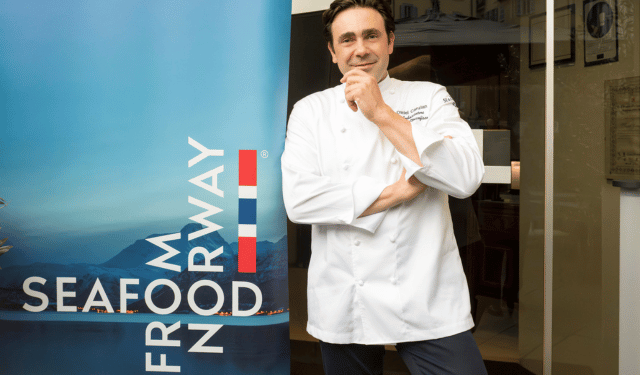
In this context stands Daniel Canzian — a Veneto-born, Milan-adopted chef renowned for combining technical precision with modern sensibility. Recently named Stockfish Ambassador in Italy by the Norwegian Seafood Council, Canzian embodies an ideal synthesis of skill, geography, and vision. His cuisine, often described as “subtractive,” refocuses attention on the essence of ingredients — simplicity elevated to elegance.

At his Milan restaurant, stockfish isn’t a relic of the past but a living ingredient — relevant and renewed without losing its memory. His version of stockfish stewed with carrots and ginger is a statement of intent: a perfect balance between the natural flavor of Norwegian fish and the lightness of a modern touch.

Beyond the recipe lies a deeper theme. In a market where overall stockfish consumption has slowed — hindered by rising cod prices and evolving eating habits — the real goal for Norwegian producers and exporters is to reposition the product. The challenge is to strengthen its perceived value, keeping consumers willing to recognize its quality even in a higher-price context. Choosing an ambassador like Canzian is part of a medium-term strategy focused on major cities, where the greatest potential for growth and cultural renewal lies.

Milan, in this sense, is the perfect laboratory. Here, consumers are more open to ready-made recipes, gourmet products, and dishes that merge roots and innovation. Here, stockfish can once again become a star — not only in restaurant kitchens but also on supermarket shelves, where demand for traditional products reimagined for modern life is growing.

Norwegian stockfish, then, is no longer just a symbol of the past. It’s a raw material suited for a new culinary and cultural narrative — one that connects two extremes of Europe: Norway’s Lofoten Islands, where it’s born from the cold Barents Sea, and Italy, where for centuries it has been transformed into culture, identity, and collective memory.

And if we say stockfish today, perhaps it’s time to think not only of the past, but of how this ancient product is finding, in Milan — and across Italy — a new sense of modernity.

Stay updated with the most relevant news in the seafood industry—subscribe to our weekly newsletter.

NEWSLETTER

Tags: Daniel CanzianItalian seafood traditionsMilan gastronomyNorwegian Seafood CouncilNorwegian stockfish
CondividiTweetCondividiPinInviaCondividiInvia
Articolo precedente

Se diciamo stoccafisso? Oggi si pensa a Milano

Prossimo articolo

Scognamiglio: Ue prolunga fermo pesca Tirreno, governo media e riduce danni

Davide Ciravolo

Davide Ciravolo

Autore Pesceinrete, retail ittico e mercati seafood Davide Ciravolo è autore Pesceinrete. Si occupa di mercati, distribuzione e scenari commerciali della filiera ittica, con particolare attenzione al rapporto tra prodotto, retail e consumi. La sua esperienza come ex buyer di Esselunga gli permette di osservare il settore seafood anche dal punto di vista della GDO e delle dinamiche di assortimento.

Articoli Correlati

Fishing vessel at sea as warmer ocean temperatures and El Niño shift fish distribution and fishing grounds

El Niño is set to become very strong. Warmer seas are redrawing the geography of fishing

by Luca Di Noto
15 Settembre 2026

What happens to fisheries when seas become warmer? Warmer seas do not simply mean fewer fish. They can change where...

Imported caviar at the centre of the European debate on origin transparency

Imported caviar, European aquaculture calls for clearer origin information

by Mariella Ballatore
11 Settembre 2026

Imported caviar from non-EU countries has become a test case in European aquaculture’s call for greater origin transparency. FEAP warns...

Italian seafood presented to buyers at Seafood Expo Asia in Singapore

From blue crab to red shrimp, buyers put Italy’s seafood supply chain to the test in Singapore

by Redazione
9 Settembre 2026

From blue crab seeking an industrial supply chain to traceable bivalve molluscs and red shrimp for fine dining, Italy is...

Salmon fillet on the processing line at Freezco Eesti in Tallinn

Freezco expands salmon processing for the italian market

by Davide Ciravolo
7 Settembre 2026

Freezco has expanded salmon processing for the Italian market through Freezco Eesti, a facility in Tallinn launched in May 2026....

Lascia un commento Annulla risposta

Il tuo indirizzo email non sarà pubblicato. I campi obbligatori sono contrassegnati *

Questo sito utilizza Akismet per ridurre lo spam. Scopri come vengono elaborati i dati derivati dai commenti.


Articoli più letti

  • 10 pesci costosi e prelibati
  • Le specie di sarago del Mediterraneo
  • Pesci con più e meno mercurio
  • Molva, una ricchezza del Mare del Nord
  • Molluschi bivalvi: descrizione e caratteristiche
  • Congelare il tonno in scatola
  • Gattuccio e palombo, gli squali buoni da mangiare
  • Triglia: caratteristiche e proprietà nutrizionali
  • Mangiare il tonno crudo: vantaggi e pericoli
  • Sgombro e lanzardo, pesce azzurro per il cuore
Pesceinrete

Pesceinrete è la testata giornalistica unica in Italia ad occuparsi di pesca commerciale ed acquacoltura. In quanto canale tematico e dai contenuti specializzati, si rivolge direttamente agli operatori della filiera con una comunicazione targettizzata che risponde alle esigenze del settore.

Segui le nostre pagine social

Stock images by Depositphotos

Newsletter

Categorie

  • News Ittico
  • Pesca
  • Acquacoltura
  • Associazioni di categoria
  • Sindacati
  • ONG
  • Tecnologia
  • Sostenibilità
  • Mercati
  • Eventi e Fiere
  • Overseas
  • Nutrizione e salute
  • Approfondimenti
  • Chi siamo
  • Policy editoriali
  • Partner
  • Contatti
  • Pubblicità
  • Newsletter
  • Mappa del sito

© 2026 INRETE S.R.L. P.Iva: 02557660814 - Pesceinrete - Il quotidiano del settore ittico | Credits

Pesceinrete
Gestisci Consenso

Usiamo cookie tecnici per far funzionare il sito, e cookie statistici (anche di terze parti) per capire come viene usato e migliorarlo. Puoi accettare tutto, rifiutare tutto o scegliere quali attivare — restando comunque libero di navigare senza restrizioni.

Funzionale Sempre attivo
L'archiviazione tecnica o l'accesso sono strettamente necessari al fine legittimo di consentire l'uso di un servizio specifico esplicitamente richiesto dall'abbonato o dall'utente, o al solo scopo di effettuare la trasmissione di una comunicazione su una rete di comunicazione elettronica.
Preferenze
L'archiviazione tecnica o l'accesso sono necessari per lo scopo legittimo di memorizzare le preferenze che non sono richieste dall'abbonato o dall'utente.
Statistiche
L'archiviazione tecnica o l'accesso che viene utilizzato esclusivamente per scopi statistici. L'archiviazione tecnica o l'accesso che viene utilizzato esclusivamente per scopi statistici anonimi. Senza un mandato di comparizione, una conformità volontaria da parte del vostro Fornitore di Servizi Internet, o ulteriori registrazioni da parte di terzi, le informazioni memorizzate o recuperate per questo scopo da sole non possono di solito essere utilizzate per l'identificazione.
Marketing
L'archiviazione tecnica o l'accesso sono necessari per creare profili di utenti per inviare pubblicità, o per tracciare l'utente su un sito web o su diversi siti web per scopi di marketing simili.
  • Gestisci opzioni
  • Gestisci servizi
  • Gestisci {vendor_count} fornitori
  • Per saperne di più su questi scopi
Personalizza
  • {title}
  • {title}
  • {title}
  • Home
  • Nutrizione e salute
  • Pesca
  • Acquacoltura
  • Approfondimenti
  • Tecnologia
  • Sostenibilità
  • Mercati
  • Overseas English NEW
  • Archivio
  • Chi siamo
  • Contatti
  • Partner
  • Pubblicità
  • Newsletter
Nessun Risultato
Vedi tutti i Risultati

© 2026 INRETE S.R.L. P.Iva: 02557660814 - Pesceinrete - Il quotidiano del settore ittico | Credits