• HOME
  • CHI SIAMO
  • CONTATTI
  • PARTNER
  • PUBBLICITÀ
  • NEWSLETTER
  • ARCHIVIO
    • Bandi e Opportunità
    • Speciali
    • Rubriche
    • Nutrizione e salute
    • Interviste
    • Video
mercoledì 16 Settembre, 2026
Pesceinrete
  • Pesca
  • Nutrizione e salute
  • Acquacoltura
    • Acquaponica
    • Algocoltura
  • Approfondimenti
  • Tecnologia
  • Sostenibilità
  • Mercati
  • OverseasNew
Nessun Risultato
Vedi tutti i Risultati
Pesceinrete
  • Pesca
  • Nutrizione e salute
  • Acquacoltura
    • Acquaponica
    • Algocoltura
  • Approfondimenti
  • Tecnologia
  • Sostenibilità
  • Mercati
  • OverseasNew
Nessun Risultato
Vedi tutti i Risultati
Pesceinrete
Nessun Risultato
Vedi tutti i Risultati

Home Overseas

Young Bluefin Tuna Diet Is Shifting in the Mediterranean, Revealing Key Ecosystem Changes

The work offers a crucial perspective on how the trophic balance of the western Mediterranean is shifting in response to human pressures and climate change.

Tiziana Indorato by Tiziana Indorato
24 Novembre 2025
in Overseas
Young Bluefin Tuna Diet Is Shifting in the Mediterranean, Revealing Key Ecosystem Changes

Young Bluefin Tuna Diet Is Shifting in the Mediterranean, Revealing Key Ecosystem Changes

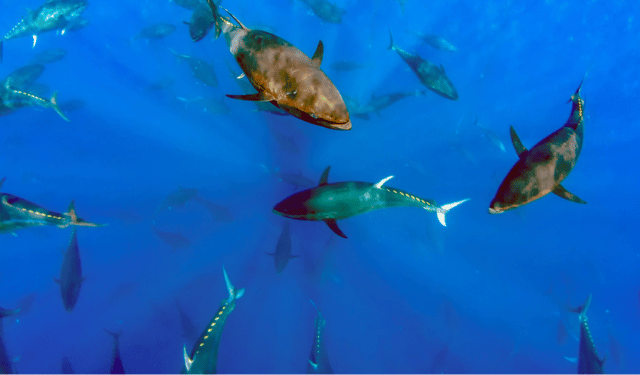
The diet of young Atlantic bluefin tuna in the Mediterranean has changed profoundly over the past thirty years, revealing the remarkable adaptability of one of the most iconic predators in our sea. This is confirmed by a new study published in Estuarine, Coastal and Shelf Science and led by researchers from the Institute of Marine Sciences (ICM-CSIC) and the Spanish Institute of Oceanography (IEO-CSIC). The work offers a crucial perspective on how the trophic balance of the western Mediterranean is shifting in response to human pressures and climate change.

The study analyzes three distinct periods — 1989, 2012–2014, and 2018–2019 — using an integrated approach that combines stomach content examination with stable isotope analysis. This methodology allows researchers to “reconstruct” the diet of juvenile tuna over time with unusual precision, providing a dynamic picture of ecosystem evolution in the Gulf of Valencia.

The first clear finding concerns prey composition. As sardine and anchovy populations have declined — species historically central to the bluefin tuna diet — the trophic gap has been filled by a growing consumption of horse mackerel (Trachurus spp.). This shift reflects not a preference but a functional response to an environment that now offers different prey availability compared to the past.

According to Joan Giménez, researcher at the Malaga Oceanographic Centre (IEO-CSIC) and lead author of the study, this evolution confirms the opportunistic nature of Atlantic bluefin tuna: a “plastic” predator, quick to adjust its feeding behavior to ensure survival even under strong environmental pressures. This trait allows the species to maintain its top-predator role in the Mediterranean food web despite increasing habitat alteration.

Another key conclusion challenges a recurring concern within the fishing sector — the belief that growing bluefin tuna populations (Thunnus thynnus) may worsen the already fragile state of sardine and anchovy stocks. Instead, the analyses show that the impact of juvenile tuna on these species is minimal. Their presence in the current diet is “very low,” notes Marta Coll, researcher at ICM-CSIC and co-author of the study. There is no evidence that the recovery of bluefin tuna — a major achievement of international management efforts — is further deteriorating the condition of small pelagic species.

The decline of sardine and anchovy in the western Mediterranean, the research team suggests, is rooted in deeper and more complex drivers: overexploitation, rising temperatures, and changes in plankton structure seem to carry far more weight than bluefin tuna predation.

The study, part of the SEINE-ETP and PELWEB projects funded by the Ocean Stewardship Fund and the Spanish Ministry of Science, stands out for the breadth of scientific collaboration involved, including ICM-CSIC, IEO-CSIC, the University of Cádiz, and the International Campus of Excellence of the Sea (CEI·MAR). Tuna sampling was enabled through the monitoring program of the Tuna Group at the Malaga Oceanographic Centre.

For the Mediterranean fisheries sector, these findings offer a more mature and less reactionary interpretation: bluefin tuna is neither an adversary of small-scale fisheries nor the “culprit” behind the decline of pelagic species. Rather, it is a biological indicator of a sea in transformation — and of the ecosystem’s ability, or inability, to maintain balance within its communities. Understanding the species’ feeding behavior therefore means gaining deeper insight into the Mediterranean itself and the future pathways for managing its resources.

Stay ahead of change in the blue economy. Subscribe to our newsletter and get insights on sustainability, innovation, and market trends shaping the seafood sector.

NEWSLETTER

Tags: anchovy declinebluefin tunaClimate change impactsecosystem changeFisheries managementfisheries sciencegulf of valenciahorse mackerelICM-CSICIEO-CSICjuvenile tunamarine ecosystemsmarine researchmediterranean seaocean stewardshippelagic speciessardine declinetrophic balancetuna diet shiftwestern mediterranean
CondividiTweetCondividiPinInviaCondividiInvia
Articolo precedente

Parliamo di mare: a Pozzallo si apre il confronto nazionale su pesca, acquacoltura e ricerca

Prossimo articolo

Baccalà e stoccafisso: due vie della stessa sostenibilità. La visione di Unifrigo Gadus

Tiziana Indorato

Tiziana Indorato

Autrice Pesceinrete Tiziana Indorato scrive per Pesceinrete occupandosi di seafood, sostenibilità, mercati, innovazione e scenari internazionali. I suoi articoli seguono l’evoluzione della filiera ittica con attenzione ai cambiamenti ambientali, commerciali e regolatori che incidono sul lavoro delle imprese e sulla percezione del prodotto ittico.

Articoli Correlati

Fishing vessel at sea as warmer ocean temperatures and El Niño shift fish distribution and fishing grounds

El Niño is set to become very strong. Warmer seas are redrawing the geography of fishing

by Luca Di Noto
15 Settembre 2026

What happens to fisheries when seas become warmer? Warmer seas do not simply mean fewer fish. They can change where...

Imported caviar at the centre of the European debate on origin transparency

Imported caviar, European aquaculture calls for clearer origin information

by Mariella Ballatore
11 Settembre 2026

Imported caviar from non-EU countries has become a test case in European aquaculture’s call for greater origin transparency. FEAP warns...

Italian seafood presented to buyers at Seafood Expo Asia in Singapore

From blue crab to red shrimp, buyers put Italy’s seafood supply chain to the test in Singapore

by Redazione
9 Settembre 2026

From blue crab seeking an industrial supply chain to traceable bivalve molluscs and red shrimp for fine dining, Italy is...

Salmon fillet on the processing line at Freezco Eesti in Tallinn

Freezco expands salmon processing for the italian market

by Davide Ciravolo
7 Settembre 2026

Freezco has expanded salmon processing for the Italian market through Freezco Eesti, a facility in Tallinn launched in May 2026....

Lascia un commento Annulla risposta

Il tuo indirizzo email non sarà pubblicato. I campi obbligatori sono contrassegnati *

Questo sito utilizza Akismet per ridurre lo spam. Scopri come vengono elaborati i dati derivati dai commenti.


Articoli più letti

  • 10 pesci costosi e prelibati
  • Le specie di sarago del Mediterraneo
  • Pesci con più e meno mercurio
  • Molva, una ricchezza del Mare del Nord
  • Molluschi bivalvi: descrizione e caratteristiche
  • Congelare il tonno in scatola
  • Gattuccio e palombo, gli squali buoni da mangiare
  • Triglia: caratteristiche e proprietà nutrizionali
  • Mangiare il tonno crudo: vantaggi e pericoli
  • Sgombro e lanzardo, pesce azzurro per il cuore
Pesceinrete

Pesceinrete è la testata giornalistica unica in Italia ad occuparsi di pesca commerciale ed acquacoltura. In quanto canale tematico e dai contenuti specializzati, si rivolge direttamente agli operatori della filiera con una comunicazione targettizzata che risponde alle esigenze del settore.

Segui le nostre pagine social

Stock images by Depositphotos

Newsletter

Categorie

  • News Ittico
  • Pesca
  • Acquacoltura
  • Associazioni di categoria
  • Sindacati
  • ONG
  • Tecnologia
  • Sostenibilità
  • Mercati
  • Eventi e Fiere
  • Overseas
  • Nutrizione e salute
  • Approfondimenti
  • Chi siamo
  • Policy editoriali
  • Partner
  • Contatti
  • Pubblicità
  • Newsletter
  • Mappa del sito

© 2026 INRETE S.R.L. P.Iva: 02557660814 - Pesceinrete - Il quotidiano del settore ittico | Credits

Pesceinrete
Gestisci Consenso

Usiamo cookie tecnici per far funzionare il sito, e cookie statistici (anche di terze parti) per capire come viene usato e migliorarlo. Puoi accettare tutto, rifiutare tutto o scegliere quali attivare — restando comunque libero di navigare senza restrizioni.

Funzionale Sempre attivo
L'archiviazione tecnica o l'accesso sono strettamente necessari al fine legittimo di consentire l'uso di un servizio specifico esplicitamente richiesto dall'abbonato o dall'utente, o al solo scopo di effettuare la trasmissione di una comunicazione su una rete di comunicazione elettronica.
Preferenze
L'archiviazione tecnica o l'accesso sono necessari per lo scopo legittimo di memorizzare le preferenze che non sono richieste dall'abbonato o dall'utente.
Statistiche
L'archiviazione tecnica o l'accesso che viene utilizzato esclusivamente per scopi statistici. L'archiviazione tecnica o l'accesso che viene utilizzato esclusivamente per scopi statistici anonimi. Senza un mandato di comparizione, una conformità volontaria da parte del vostro Fornitore di Servizi Internet, o ulteriori registrazioni da parte di terzi, le informazioni memorizzate o recuperate per questo scopo da sole non possono di solito essere utilizzate per l'identificazione.
Marketing
L'archiviazione tecnica o l'accesso sono necessari per creare profili di utenti per inviare pubblicità, o per tracciare l'utente su un sito web o su diversi siti web per scopi di marketing simili.
  • Gestisci opzioni
  • Gestisci servizi
  • Gestisci {vendor_count} fornitori
  • Per saperne di più su questi scopi
Personalizza
  • {title}
  • {title}
  • {title}
  • Home
  • Nutrizione e salute
  • Pesca
  • Acquacoltura
  • Approfondimenti
  • Tecnologia
  • Sostenibilità
  • Mercati
  • Overseas English NEW
  • Archivio
  • Chi siamo
  • Contatti
  • Partner
  • Pubblicità
  • Newsletter
Nessun Risultato
Vedi tutti i Risultati

© 2026 INRETE S.R.L. P.Iva: 02557660814 - Pesceinrete - Il quotidiano del settore ittico | Credits