Overseas


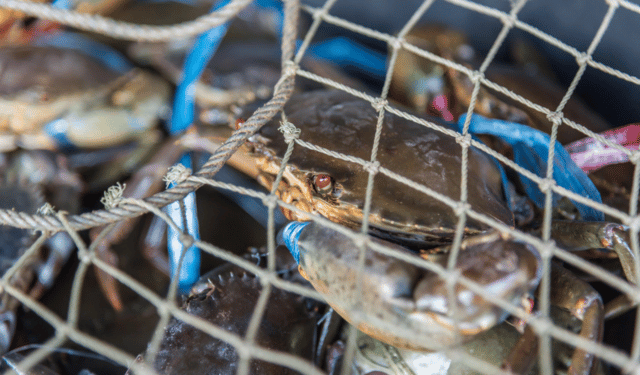
Blue crab larval control project takes a decisive step forward in Italy with the launch of ZoeAI, a pilot initiative announced by AGCI and funded by the Regione Lazio under the Feampa programme. Coordinated by the AGEI, the project introduces an innovative and ecosystem-based approach to managing one of the most critical invasive species currently affecting Mediterranean fisheries and aquaculture.
Developed in collaboration with CREA, University of Rome Tor Vergata and the Parco Nazionale del Circeo, ZoeAI is built on a key scientific insight: targeting the blue crab at its larval stage rather than focusing solely on already established adult populations.
Acting on larvae to restore ecological balance
ZoeAI uses advanced monitoring systems to detect the entry of zoea larvae into coastal lagoons, a critical yet historically underexplored phase of the species’ life cycle. These larvae, measuring just about one millimetre, represent the most vulnerable stage of the blue crab.
Andrea Fusari, biologist at AGEI, summarises the approach clearly: instead of reacting to the problem when the species is already damaging ecosystems and production systems, the strategy intervenes earlier, leveraging natural ecological processes.
The model developed by AGEI is based on the targeted release of juveniles of native fish species, particularly Sparidae and Mugilidae. In their early growth stages, these fish feed on zooplankton, including blue crab larvae. Thanks to the data generated by ZoeAI, the introduction of these juveniles can be synchronised with the presence of zoea, especially in areas close to channels connecting lagoons to the sea.
This targeted intervention restores natural trophic dynamics, reducing the number of individuals reaching adulthood and consequently limiting impacts on biodiversity, fisheries and aquaculture.
From pilot project to national model
Although developed in Lazio, ZoeAI is designed as a scalable model with potential application across all Italian and Mediterranean coastal regions affected by the spread of the blue crab.
Its strength lies in a combination of sustainability and operational feasibility. The exclusive use of native species avoids ecological side effects, while costs remain relatively low thanks to existing aquaculture supply chains, such as hatchery production of species like seabream. At the same time, the focus on the most sensitive phase of the crab’s biological cycle significantly increases the potential effectiveness of the intervention.
Research and innovation shaping future management
The support of the Regione Lazio highlights a growing institutional commitment to addressing environmental challenges through science-based and forward-looking solutions.
If the results of ZoeAI meet expectations, AGCI believes the model could become a reference framework for coastal management strategies, promoting biological control approaches that work with natural processes rather than against them.
As stated by Enrico Casola, the project also reinforces the role of cooperatives as drivers of innovation and sustainability at the local level, offering a concrete contribution toward transforming a national emergency into an opportunity for smarter resource management.