• HOME
  • CHI SIAMO
  • CONTATTI
  • PARTNER
  • PUBBLICITÀ
  • NEWSLETTER
  • ARCHIVIO
    • Bandi e Opportunità
    • Speciali
    • Rubriche
    • Nutrizione e salute
    • Interviste
    • Video
mercoledì 16 Settembre, 2026
Pesceinrete
  • Pesca
  • Nutrizione e salute
  • Acquacoltura
    • Acquaponica
    • Algocoltura
  • Approfondimenti
  • Tecnologia
  • Sostenibilità
  • Mercati
  • OverseasNew
Nessun Risultato
Vedi tutti i Risultati
Pesceinrete
  • Pesca
  • Nutrizione e salute
  • Acquacoltura
    • Acquaponica
    • Algocoltura
  • Approfondimenti
  • Tecnologia
  • Sostenibilità
  • Mercati
  • OverseasNew
Nessun Risultato
Vedi tutti i Risultati
Pesceinrete
Nessun Risultato
Vedi tutti i Risultati

Home Overseas

Atlantic Bluefin Tuna is not disappearing. It is changing home

Warming oceans are driving Atlantic bluefin tuna northward, reshaping spawning grounds, fishing areas and the future of fisheries management.

Tiziana Indorato by Tiziana Indorato
20 Febbraio 2026
in Overseas
Atlantic Bluefin Tuna Is Not Disappearing. It Is Changing Home

Atlantic Bluefin Tuna Is Not Disappearing. It Is Changing Home

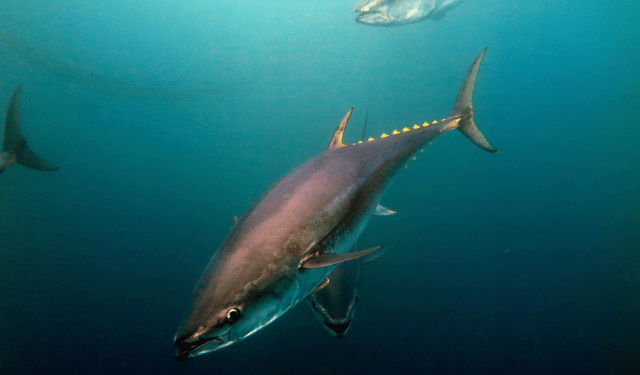
Atlantic bluefin tuna is not disappearing. It is changing home.

This apparently reassuring detail reveals one of the most profound transformations the ocean is undergoing under the pressure of climate change.

This is not anecdotal evidence from those who live and work at sea. It is the outcome of an international scientific study led by AZTI, which analyzed how rising ocean temperatures are reshaping — and will continue to reshape — the feeding grounds, spawning areas and overall distribution of Atlantic bluefin tuna throughout the 21st century.

The picture that emerges is clear. As oceans warm, Atlantic bluefin tuna is progressively shifting northward in search of cooler and more productive waters. This is not a temporary fluctuation, but a gradual and structural redistribution that could redraw global fisheries maps and challenge balances that have been considered stable for decades.

Mediterranean Sea and Gulf of Mexico: From Spawning Strongholds to Critical Zones

For decades, the Mediterranean Sea and the Gulf of Mexico have represented the two primary spawning hubs of Atlantic bluefin tuna. These areas have been central to the species’ life cycle and to the overall resilience of the stock.

Scientific projections now suggest that these very regions may become progressively less suitable for reproduction. In particular, the Mediterranean Sea could face a significant decline in habitat quality for egg deposition, while the Gulf of Mexico may experience an even sharper reduction in spawning suitability.

This does not point to an immediate collapse. Rather, it signals a structural trend that, if confirmed, could place long-term pressure on the species’ ability to ensure generational renewal. The implications extend beyond ecosystem dynamics and directly affect the sustainability of one of the most monitored and economically valuable fish stocks in the world.

A Resilient Species — But Not an Infinite One

Atlantic bluefin tuna is an extraordinarily adaptable species. It can migrate thousands of kilometers, exploit diverse marine environments and respond to substantial environmental variability.

Yet resilience has limits.

When feeding areas, spawning grounds and fishing zones no longer overlap as they once did, the equilibrium becomes more fragile. The risk is not only biological but also managerial. A highly mobile stock that rapidly shifts its distribution becomes more difficult to govern using regulatory tools designed for a relatively static ocean.

New Latitudes, New Equilibria

While southern regions may lose relative suitability, simulations indicate increasingly favorable conditions at higher latitudes. Northern Europe, the northeastern Atlantic and even waters surrounding Greenland could become more central to the future distribution of Atlantic bluefin tuna.

A similar pattern is observed in several prey species, including sardines, mackerel and cephalopods, which are following comparable northward trajectories. In these emerging zones of predator–prey overlap, genuine “climate refugia” may form — areas where bluefin tuna can find optimal conditions despite a profoundly altered ocean.

The Real Challenge Lies in Governance, Not in the Ocean

The most delicate issue is not whether Atlantic bluefin tuna can adapt. Evidence suggests it can. The real challenge lies in our capacity to adapt fisheries management frameworks to a stock that no longer respects historical spatial boundaries.

Rules, quotas and monitoring systems have been structured around relatively predictable distribution patterns. If the fish changes sea, governance models must evolve accordingly. Otherwise, the risks are twofold: reduced effectiveness in stock conservation and increased tensions among fleets, nations and production systems.

Integrating climate change into fisheries management strategies is no longer a theoretical perspective. It is a concrete necessity that directly concerns the long-term sustainability of Atlantic bluefin tuna and the economic future of coastal communities that depend on it.

Looking Ahead Before It Is Too Late

Atlantic bluefin tuna is already responding to climate change. It is adjusting its migration routes, redefining its core habitats and adapting to an ocean that is no longer the one we once knew.

The question today is not whether the species will survive.

It is whether we will be able to manage it with governance tools capable of matching an ocean that has fundamentally changed.

For more insights on the future of Italian and European fisheries and the blue economy, follow ongoing coverage and analysis on Pesceinrete.

NEWSLETTER

Tags: Atlantic bluefin tunabluefin tuna migrationclimate changefish stock sustainabilityFisheries managementGreenland watersGulf of Mexicomarine ecosystemsmediterranean seaNorth Atlanticocean temperature riseThunnus thynnustuna distribution shifttuna spawning groundswarming oceans
CondividiTweetCondividiPinInviaCondividiInvia
Articolo precedente

Meno pesce nei mangimi, più danni all’ambiente: il paradosso dell’acquacoltura

Prossimo articolo

Blue News Sicilia 17 | Roadshow, microplastiche e Blue Economy

Tiziana Indorato

Tiziana Indorato

Autrice Pesceinrete Tiziana Indorato scrive per Pesceinrete occupandosi di seafood, sostenibilità, mercati, innovazione e scenari internazionali. I suoi articoli seguono l’evoluzione della filiera ittica con attenzione ai cambiamenti ambientali, commerciali e regolatori che incidono sul lavoro delle imprese e sulla percezione del prodotto ittico.

Articoli Correlati

Fishing vessel at sea as warmer ocean temperatures and El Niño shift fish distribution and fishing grounds

El Niño is set to become very strong. Warmer seas are redrawing the geography of fishing

by Luca Di Noto
15 Settembre 2026

What happens to fisheries when seas become warmer? Warmer seas do not simply mean fewer fish. They can change where...

Imported caviar at the centre of the European debate on origin transparency

Imported caviar, European aquaculture calls for clearer origin information

by Mariella Ballatore
11 Settembre 2026

Imported caviar from non-EU countries has become a test case in European aquaculture’s call for greater origin transparency. FEAP warns...

Italian seafood presented to buyers at Seafood Expo Asia in Singapore

From blue crab to red shrimp, buyers put Italy’s seafood supply chain to the test in Singapore

by Redazione
9 Settembre 2026

From blue crab seeking an industrial supply chain to traceable bivalve molluscs and red shrimp for fine dining, Italy is...

Salmon fillet on the processing line at Freezco Eesti in Tallinn

Freezco expands salmon processing for the italian market

by Davide Ciravolo
7 Settembre 2026

Freezco has expanded salmon processing for the Italian market through Freezco Eesti, a facility in Tallinn launched in May 2026....

Lascia un commento Annulla risposta

Il tuo indirizzo email non sarà pubblicato. I campi obbligatori sono contrassegnati *

Questo sito utilizza Akismet per ridurre lo spam. Scopri come vengono elaborati i dati derivati dai commenti.


Articoli più letti

  • 10 pesci costosi e prelibati
  • Le specie di sarago del Mediterraneo
  • Pesci con più e meno mercurio
  • Molva, una ricchezza del Mare del Nord
  • Molluschi bivalvi: descrizione e caratteristiche
  • Congelare il tonno in scatola
  • Gattuccio e palombo, gli squali buoni da mangiare
  • Triglia: caratteristiche e proprietà nutrizionali
  • Mangiare il tonno crudo: vantaggi e pericoli
  • Sgombro e lanzardo, pesce azzurro per il cuore
Pesceinrete

Pesceinrete è la testata giornalistica unica in Italia ad occuparsi di pesca commerciale ed acquacoltura. In quanto canale tematico e dai contenuti specializzati, si rivolge direttamente agli operatori della filiera con una comunicazione targettizzata che risponde alle esigenze del settore.

Segui le nostre pagine social

Stock images by Depositphotos

Newsletter

Categorie

  • News Ittico
  • Pesca
  • Acquacoltura
  • Associazioni di categoria
  • Sindacati
  • ONG
  • Tecnologia
  • Sostenibilità
  • Mercati
  • Eventi e Fiere
  • Overseas
  • Nutrizione e salute
  • Approfondimenti
  • Chi siamo
  • Policy editoriali
  • Partner
  • Contatti
  • Pubblicità
  • Newsletter
  • Mappa del sito

© 2026 INRETE S.R.L. P.Iva: 02557660814 - Pesceinrete - Il quotidiano del settore ittico | Credits

Pesceinrete
Gestisci Consenso

Usiamo cookie tecnici per far funzionare il sito, e cookie statistici (anche di terze parti) per capire come viene usato e migliorarlo. Puoi accettare tutto, rifiutare tutto o scegliere quali attivare — restando comunque libero di navigare senza restrizioni.

Funzionale Sempre attivo
L'archiviazione tecnica o l'accesso sono strettamente necessari al fine legittimo di consentire l'uso di un servizio specifico esplicitamente richiesto dall'abbonato o dall'utente, o al solo scopo di effettuare la trasmissione di una comunicazione su una rete di comunicazione elettronica.
Preferenze
L'archiviazione tecnica o l'accesso sono necessari per lo scopo legittimo di memorizzare le preferenze che non sono richieste dall'abbonato o dall'utente.
Statistiche
L'archiviazione tecnica o l'accesso che viene utilizzato esclusivamente per scopi statistici. L'archiviazione tecnica o l'accesso che viene utilizzato esclusivamente per scopi statistici anonimi. Senza un mandato di comparizione, una conformità volontaria da parte del vostro Fornitore di Servizi Internet, o ulteriori registrazioni da parte di terzi, le informazioni memorizzate o recuperate per questo scopo da sole non possono di solito essere utilizzate per l'identificazione.
Marketing
L'archiviazione tecnica o l'accesso sono necessari per creare profili di utenti per inviare pubblicità, o per tracciare l'utente su un sito web o su diversi siti web per scopi di marketing simili.
  • Gestisci opzioni
  • Gestisci servizi
  • Gestisci {vendor_count} fornitori
  • Per saperne di più su questi scopi
Personalizza
  • {title}
  • {title}
  • {title}
  • Home
  • Nutrizione e salute
  • Pesca
  • Acquacoltura
  • Approfondimenti
  • Tecnologia
  • Sostenibilità
  • Mercati
  • Overseas English NEW
  • Archivio
  • Chi siamo
  • Contatti
  • Partner
  • Pubblicità
  • Newsletter
Nessun Risultato
Vedi tutti i Risultati

© 2026 INRETE S.R.L. P.Iva: 02557660814 - Pesceinrete - Il quotidiano del settore ittico | Credits