Overseas


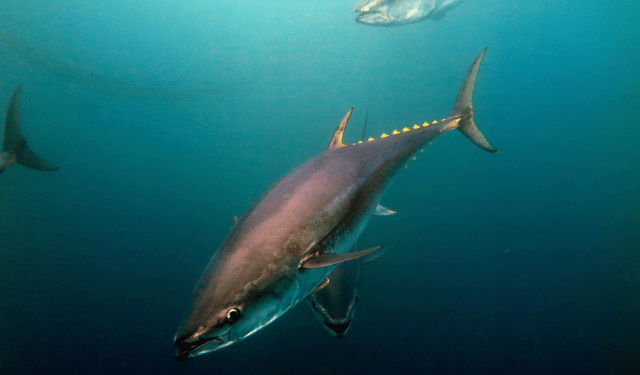
Atlantic bluefin tuna is not disappearing. It is changing home.
This apparently reassuring detail reveals one of the most profound transformations the ocean is undergoing under the pressure of climate change.
This is not anecdotal evidence from those who live and work at sea. It is the outcome of an international scientific study led by AZTI, which analyzed how rising ocean temperatures are reshaping — and will continue to reshape — the feeding grounds, spawning areas and overall distribution of Atlantic bluefin tuna throughout the 21st century.
The picture that emerges is clear. As oceans warm, Atlantic bluefin tuna is progressively shifting northward in search of cooler and more productive waters. This is not a temporary fluctuation, but a gradual and structural redistribution that could redraw global fisheries maps and challenge balances that have been considered stable for decades.
Mediterranean Sea and Gulf of Mexico: From Spawning Strongholds to Critical Zones
Scientific projections now suggest that these very regions may become progressively less suitable for reproduction. In particular, the Mediterranean Sea could face a significant decline in habitat quality for egg deposition, while the Gulf of Mexico may experience an even sharper reduction in spawning suitability.
This does not point to an immediate collapse. Rather, it signals a structural trend that, if confirmed, could place long-term pressure on the species’ ability to ensure generational renewal. The implications extend beyond ecosystem dynamics and directly affect the sustainability of one of the most monitored and economically valuable fish stocks in the world.
A Resilient Species — But Not an Infinite One
Atlantic bluefin tuna is an extraordinarily adaptable species. It can migrate thousands of kilometers, exploit diverse marine environments and respond to substantial environmental variability.
Yet resilience has limits.
When feeding areas, spawning grounds and fishing zones no longer overlap as they once did, the equilibrium becomes more fragile. The risk is not only biological but also managerial. A highly mobile stock that rapidly shifts its distribution becomes more difficult to govern using regulatory tools designed for a relatively static ocean.
New Latitudes, New Equilibria
A similar pattern is observed in several prey species, including sardines, mackerel and cephalopods, which are following comparable northward trajectories. In these emerging zones of predator–prey overlap, genuine “climate refugia” may form — areas where bluefin tuna can find optimal conditions despite a profoundly altered ocean.
The Real Challenge Lies in Governance, Not in the Ocean
The most delicate issue is not whether Atlantic bluefin tuna can adapt. Evidence suggests it can. The real challenge lies in our capacity to adapt fisheries management frameworks to a stock that no longer respects historical spatial boundaries.
Rules, quotas and monitoring systems have been structured around relatively predictable distribution patterns. If the fish changes sea, governance models must evolve accordingly. Otherwise, the risks are twofold: reduced effectiveness in stock conservation and increased tensions among fleets, nations and production systems.
Integrating climate change into fisheries management strategies is no longer a theoretical perspective. It is a concrete necessity that directly concerns the long-term sustainability of Atlantic bluefin tuna and the economic future of coastal communities that depend on it.
Looking Ahead Before It Is Too Late
Atlantic bluefin tuna is already responding to climate change. It is adjusting its migration routes, redefining its core habitats and adapting to an ocean that is no longer the one we once knew.
The question today is not whether the species will survive.
It is whether we will be able to manage it with governance tools capable of matching an ocean that has fundamentally changed.
For more insights on the future of Italian and European fisheries and the blue economy, follow ongoing coverage and analysis on Pesceinrete.